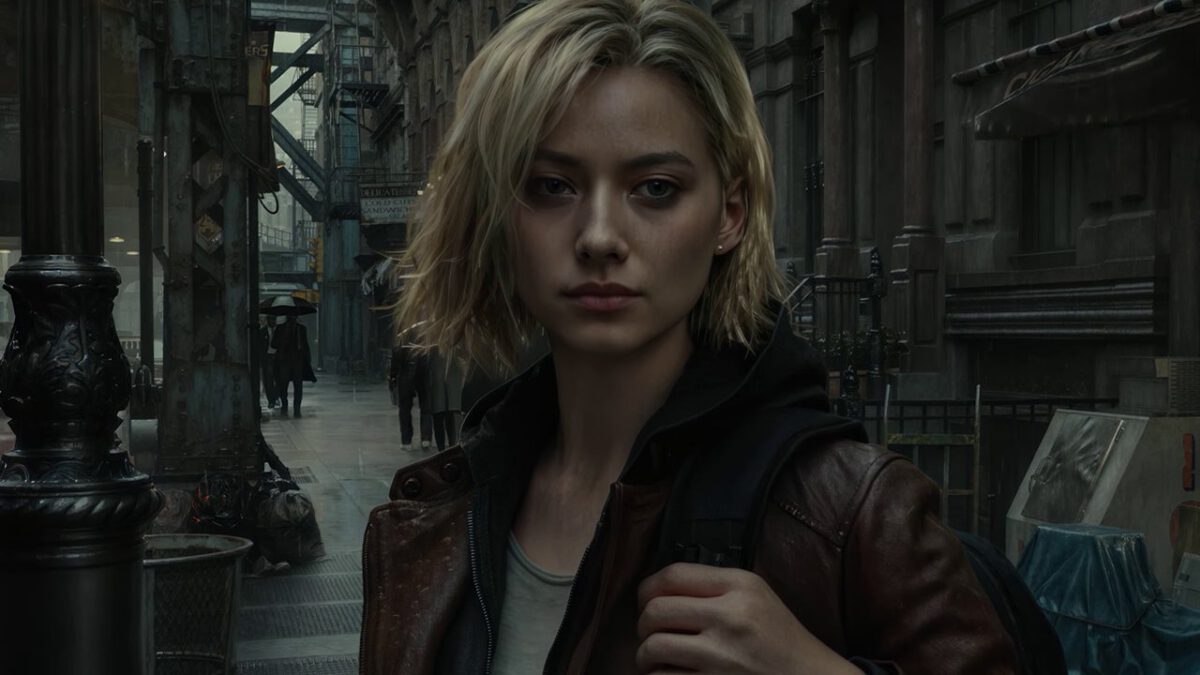
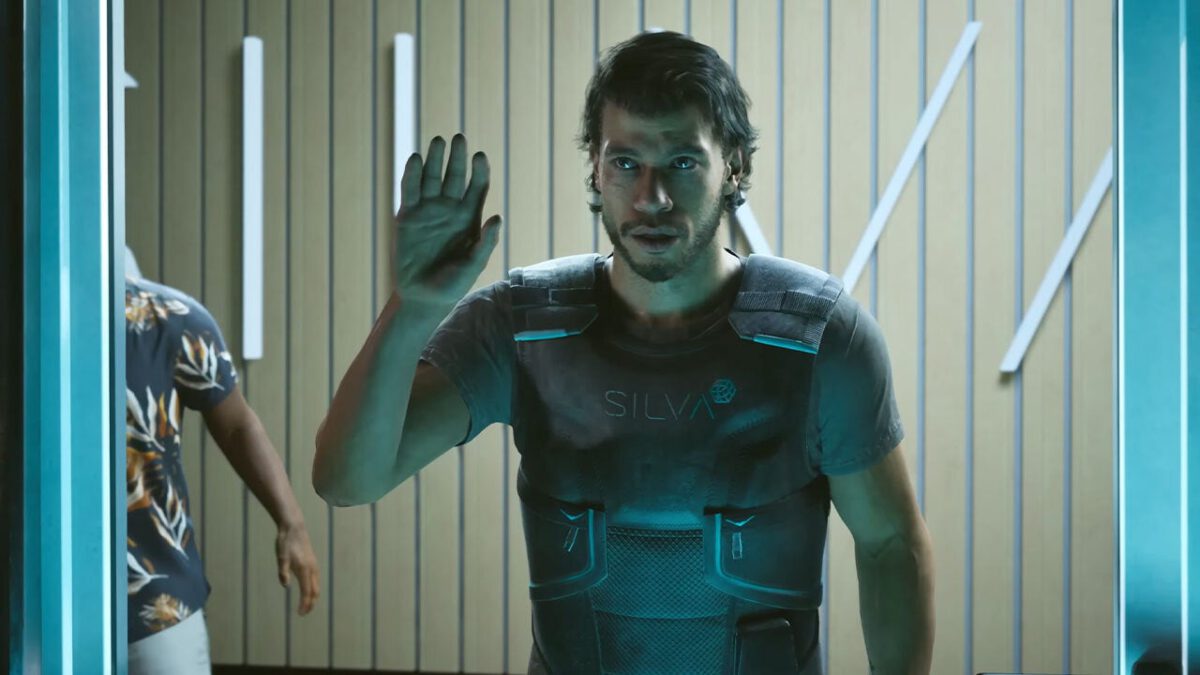
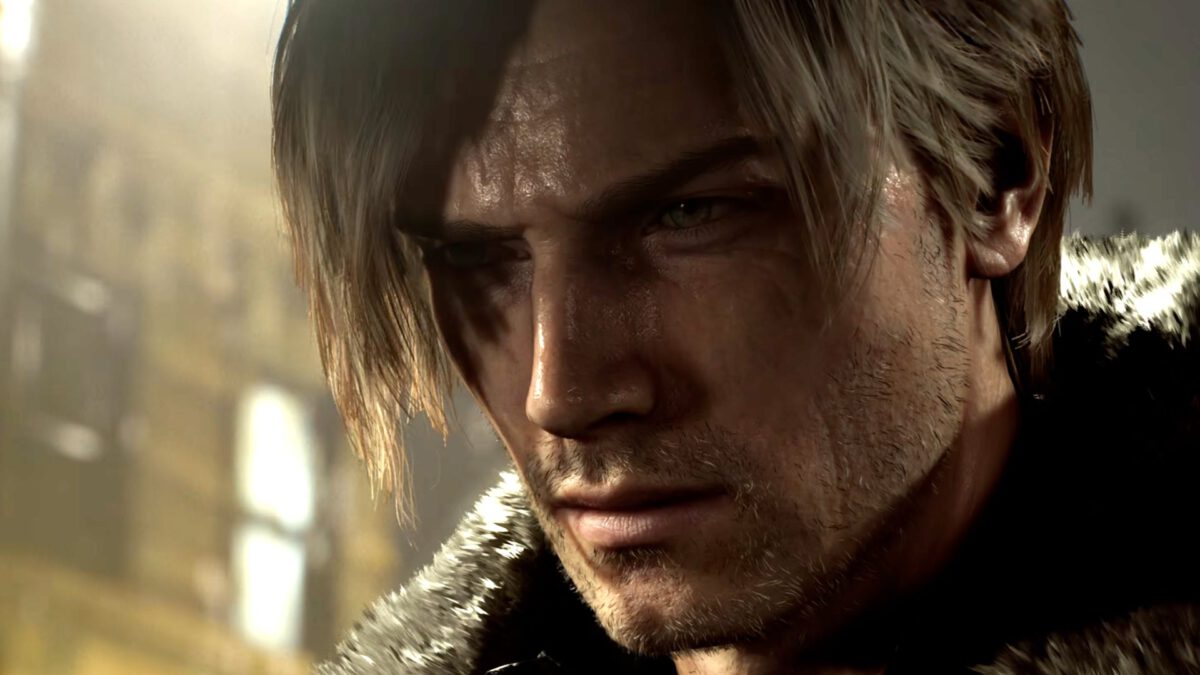
At a press Q&A event at the GPU Technology Conference, Jensen Huang took a question from Tom’s Hardware’s Paul Alcorn about the backlash to the technology, saying that “Well, first of all, they’re completely wrong,” while reiterating that control over the implementation remains with the game developers.
“DLSS 5 fuses controllability of the of geometry and textures and everything about the game with generative AI,” Huang said. “It’s not post-processing, it’s not post-processing at the frame level, it’s generative control at the geometry level.”
And while that might be the case, much of the backlash seems to be over the aesthetic changes shown off in the trailer, rather than how the technology works. In that case, it’s hard to suggest that what people see with their eyes is wrong, but according to Nvidia’s CEO, well, it is.
We still don’t know what this technology will actually look like when it launches sometime this fall, but I suspect Nvidia will be looking for ways to show it off in a more flattering light as the year marches on. I’ve reached out to Nvidia for comment on this, and I’ll update this story if and when I hear back.
Until then, we’ll just have to wait and see how DLSS 5 shapes up over the next few months.
Jackie Thomas is the Hardware and Buying Guides Editor at IGN and the PC components queen. You can follow her @Jackiecobra
IOI Partners has announced today it will no longer publish MindsEye, leaving all publishing rights and responsibilities in the hands of developer Build A Rocket Boy.
As shared in a press release today, the transition is effective as of March 16, 2026 and IOI Partners will no longer be involved with MindsEye except as necessary to make the transition happen. In addition, a planned crossover event between IOI’s Hitman: World of Assassination and MindsEye has been canceled.
IOI peacing out of this isn’t shocking given the mess that’s been MindsEye. The game was developed by Build a Rocket Boy, a studio headed up by Leslie Benzies who produced several entries in Grand Theft Auto, which lent it significant anticipation. Originally, it was planned to be a part of Everywhere, a sort of “Roblox for adults” that would allow creation of custom game experiences within it. Everywhere never materialized, but MindsEye itself launched in 2025. It was a flop, earning a 4/10 from IGN and currently sitting at a 38 critic score on Metacritic, and a 2.6 user score. It has struggled to find an audience ever since – as of publishing this story, just 17 people are playing it on Steam, and it peaked at merely 3,302 concurrent players.
In the months since, Build a Rocket Boy has released several patches to fix the game’s worst performance issues. Last month, MindsEye got its biggest patch yet, which included more bug fixes and polish, as well as refined AI behavior, but it has yet to introduce promised major content updates as time has instead been spent fixing what’s already there.
In the wake of all this, co-CEO Mark Gerhard has repeatedly claimed that there is a “concerted effort” to “trash the game and the studio” and has suggested people were being paid to post negative things about it, including pointing the finger at an unnamed other studio. IOI has denied the claims.
The studio has nowundergone multiple rounds of layoffs, the most recent wave of which involved Gerhard claiming that the studio was investigating “criminal activity” around the game’s launch, saying there was “overwhelming evidence” of “organized espionage and corporate sabotage” against MindsEye. A group of over 90 staff signed onto an open letter last October demanding an apology from company leadership for “mistreatment” of staff as well as “proper compensation” for those laid off.
When asked about MindsEye’s disasterous launch, IOI CEO Hakan Abrak simply said, “Well, that was definitely tough, right?” and affirmed it wasn’t the reception IOI had hoped for.
Rebekah Valentine is a senior reporter for IGN. Got a story tip? Send it to rvalentine@ign.com.
Epic Games has released key artwork for the next season of Fortnite, confirming the return of Dwayne “The Rock” Johnson and the inclusion of Bugs Bunny.
Showdown, which goes live later this week, features the highly-anticipated return of Johnson’s Fortnite hero The Foundation — something that followers of Fortnite lore have been awaiting for years, and Epic Games has been teasing for some time.
The next season will also see Looney Tunes characters join Fortnite, with the suggestion here that Bugs Bunny (and all the other skins seen in the image) will be included within the next battle royale battle pass. (Separately, leakers have suggested that Daffy Duck and Lola Bunny will land in the item shop for purchase separately.)
Fortnite is back fully leaning into its storyline, which is set to see The Foundation lead the game’s remaining heroes into battle against a similarly-returned Ice King. The battle pass character line-up also includes a new version of fellow Seven member The Order, and a new version of the ever-popular Chapter 2 character Jules.
With four returning favorites, the next battle pass holds the most familiar faces seen in a single pass ever — though this seems fitting for a season which seems set to return to Fortnite’s older story roots. What looks to be a cute ice troll Sidekick pet is also included.
Embark Studios has published Arc Raiders update 1.20.0, revealing a somewhat short list of patch notes with two noticeable changes: nerfs for the Il Toro shotgun and energy clips.
Patch notes for today’s update were published on the extraction shooter’s website today. Highlights for the update, which is now live across PC, PlayStation 5, and Xbox Series X | S, include the new Rawhide outfit and new haircuts, as well as several fixed glitches, but the real game-changers will affect PvP and PvE players across the board.
The Il Toro has prevailed as one of the more popular – and powerful – weapons for PvP players in Arc Raiders. Its close-range damage, coupled with well-timed dodge rolls, feels almost unstoppable in the right hands, with the punch line being that this shotgun has remained a fan-favorite despite only being an uncommon (green) weapon.
The 1.20.0 update finally brings it down a peg, reducing its damage and fire-rate while increasing its base dispersion and reload time. Embark says these changes arrive not only as a response to feedback but also to make the Il Toro feel “more like a weapon of its rarity.”
“We will of course continue to keep a close eye on this to see how it plays out in practice, and make additional adjustments when needed,” Embark said. “Thank you for your feedback and patience!”
Arc Raiders fans have long hoped to see changes to the Il Toro as it took over PvP-focused lobbies, but today’s update also comes with another, slightly more surprising change. Energy clips, which have been collected and sold by Raiders for 1000 coins for months, are now only worth 200 coins. In other words, if you’ve been farming energy ammunition to save up for that next Expedition, you may want to find a new resource to trade.
“Energy Clips have unintentionally become a very profitable craft,” the patch notes say, “so we are reducing the sell price to make the value profitability in line with other crafts.”
Arc Raiders update 1.20.0 arrives ahead of this month’s highly anticipated roadmap addition, Flashpoint. Unlike February’s Shrouded Sky update, we know little about how Flashpoint will make traveling topside more rewarding and dangerous. Highlights for the update, which is expected to drop in the next two weeks, include a new map condition, Arc threat, player project, and a mysterious Scrappy update.
Embark finds itself tackling fan feedback in between major updates but has made headlines for a few different reasons in recent days. While speaking with GamesIndustry.biz, CEO Patrick Söderlund told players that Arc Raiders now contains fewer AI voice lines than it did at launch. He also took that time to praise the Bungie team for their work on their newly released extraction shooter, Marathon. Meanwhile, the company just announced that it has “mutually agreed to part ways” with co-founder and CCO Rob Runesson following allegations that he engaged in sexual misconduct with a popular The Finals streamer.
Finally, you can check out the full patch notes from today’s update below.
Arc Raiders Update 1.20.0 Patch Notes
Raiders!
Patch 1.20.0 is rolling out on all platforms, please restart your game to download.
Rawhide Outfit.
Two new haircuts.
Il Toro Balancing:
Dev Note: This is an adjustment many of you requested. We have tuned the Il Toro to address its DPS and effectiveness at range, especially when combined with a choke. We’re also making some changes so it performs more like a weapon of its rarity (less versatile at lower upgrade levels and more dependent on upgrades and mods). Most notably, fire-rate and reload time have been reduced, which will make it more important to fully utilize positioning, cover, and timing to defeat your opponents. We will of course continue to keep a close eye on this to see how it plays out in practice, and make additional adjustments when needed. Thank you for your feedback and patience!
Pellet Damage reduced from 7.5 to 7
Base Fire-Rate reduced from 43 to 38
Base Dispersion increased from 4.5 to 6
Total Reload Time increased from 4.3s to 5.7s
Looping Reload Entry increased from 0.8s to 1s
Looping Reload Time increased from 0.5s to 0.7s
Damage loss from Falloff increased from 40% to 50%
Fixed an issue that would cause persistent audio from destroyed Comets and Fireballs.
Fixed an issue where players could get pushed through the wall and stuck on the Dam Controlled Access Zone.
Fixed missing collision issues near the east elevator and under pipes on Spaceport.
Reduced Energy Clips sell price from 1000 to 200 coins.
Dev note: Energy Clips have unintentionally become a very profitable craft, so we are reducing the sell price to make the value profitability in line with other crafts.
See you topside,
Ossen
Michael Cripe is a freelance writer with IGN. He’s best known for his work at sites like The Pitch, The Escapist, and OnlySP. Be sure to give him a follow on Bluesky (@mikecripe.bsky.social) and Twitter (@MikeCripe).
Introducing seasons in Forza Horizon 4 was a huge shift for the series. Bringing Britain to life four times over, in four distinct seasons, was obviously a significant undertaking. However, what it injected into the game was a reward for returning week after week. That proved extremely valuable. Each week, things would be a little different, and it kept Forza Horizon 4 fascinatingly fresh.
It was a particular novelty for myself, to virtually visit a world with such distinct variety. Where I live in Australia, it’s either hot and sunny, or it’s cool and sunny – and unless they’re on fire, gum trees are green 365 days a year. That is, it would’ve been a lot easier for Playground Games to have debuted seasons in Forza Horizon 3, but noticing the differences might’ve been a major problem.
To an extent, Forza Horizon 5’s Mexican seasonal changes are a little less overt than those in Britain, and seasons in that game are typically more defined by the changing weather that accompanies them. Forza Horizon 6, however, is a return to dramatic seasonal shifts that have significant effects on the surrounding landscape – from frigid, snowy winters to postcard-perfect springs.
“Obviously, a lot of people have an idea what Japan is in their minds, and a lot of that is seasonality,” says art director Don Arceta. “And that was one of the big things we saw when we were doing our research and in pre-production, and we really wanted to capture that.
“As you mentioned, the changes between seasons are so striking, we just wanted to make sure that we captured that authentically. And with that, the seasons are overtly different and quite distinct from past games.”
“I think an interesting thing, as well, is it represented both an opportunity and a challenge,” adds production director Mike Bennett. “So yeah, it was an opportunity to, from a visual perspective, do something with much more obvious visual contrast. So between seasons you can really feel something that’s very different from where you were the week prior.
“But also it’s a challenge because, when we think back to the lessons that we learned from the previous games, there were components of Horizon 4 that people were maybe less fond of when it came to certain seasons. And a great example of that would be winter.”
When we think back to the lessons that we learned from the previous games, there were components of Horizon 4 that people were maybe less fond of when it came to certain seasons.
Bennett notes that, in Forza Horizon 4, winter wasn’t just an immediately recognisable visual change compared to other seasons – it also represented a profound change in car handling characteristics compared to other seasons.
“We made the decision to have the roads covered in snow and ice, and that was somewhat based on the fun that we’d enjoyed with Blizzard Mountain on Horizon 3,” says Bennett. “And I think that was pretty fun at first but, I think as we found with time, players eventually started to grow a little bit tired of all the roads being covered in snow all the time.
“So we wanted to learn from that and think, ‘Okay, how can we approach what is authentically Japanese – which is a predominantly snow-covered visual in winter in our version of Japan – yet also not penalise players that predominantly want to drive on asphalt?’ So I think we came up with a really great compromise there, where we leveraged what we saw within the reference, which is, ‘Hey, the Japanese are actually pretty good at keeping the roads clear.’ So, our asphalt roads, generally those are clear from snow. But, if you start to venture off road onto the gravel roads, the dirt roads, we keep a bit more snow on those.
“So if you’re someone that’s seeking that more rough and ready off-road feel, you’re going to get that more authentic snow experience in winter. And then the really cool thing that we’ve got is, because we have our new Alpine region, we’ve got snow year round up there. You go there any season and you’re experiencing Blizzard Mountain again, and that’s really cool. So, up there, all the roads are covered in snow; you can throw on some snow tyres, have a lot of fun, get in the offroaders. If that’s the experience you’re looking for, you can find it there, whatever the season. Yet, if you’re someone who doesn’t really want to spend a lot of time on snow roads in winter, you’re not going to have to go through that experience.”
Bennett explains that it wasn’t that there was necessarily a drop-off in players every four weeks, but the team was simply picking up on some general weariness with slippery winters.
“I’m not sure whether the data really showed that, but it was definitely a sentiment that we saw when we were working with our community team and looking at our forums,” he says. “There was a fatigue.
“Some people loved winter. And, interestingly, it was kind of a surprise when we moved onto Horizon 5 that we actually saw this counter-sentiment, where people were saying, ‘Hey, kind of miss the snow; where’s the snow?’ And yeah, it was there, but it was confined to the top of the volcano because again, we were sort of grounded within the truth of the location that we built that time around. So yeah, I think the opportunity with Japan is it allowed us to hopefully address both cohorts of players, and satisfy both of them there.”
According to Playground, Japan’s seasons are filled with tiny details players may not immediately notice. It’ll be hard to miss the changing palette of susuki grass, or Japan’s iconic blossom trees in bloom – but many of Forza Horizon 6’s details are much more subtle. Yes, Playground Games is adding bugs to Forza Horizon 6 – just not the type that break games.
“So fireflies, obviously you can only experience them in our summer season, and only in a handful of areas in the map,” says Arceta. “So that’s something that you’ll come across.
“Other seasonal touches we have, we have these amazing koi carp fish that are dotted about ponds in front of temples and shrines. And in certain seasons you can see them and observe them, which is one of those nice touches. You can never hit them, but you can drive near them and then they scurry away, which is really nice.”
Cars will also now produce visible exhaust in cold conditions, as water vapour riding the hot exhaust gases hits the crisp air and condenses.
“One thing we really wanted to capture was we wanted to treat this car as a living, breathing machine,” explains Arceta. “And one of those touches was water vapour when it gets really cold.
“I remember growing up in Canada myself that you see that exhaust just pouring out all that water vapour, and we wanted to capture that, just sell that the car is alive. And we represent that obviously in our winter season and in the Alpine region as well throughout every season, but also in the colder hours of autumn and spring.”
I remember growing up in Canada myself that you see that exhaust just pouring out all that water vapour, and we wanted to capture that, just sell that the car is alive.
Another important element of Forza Horizon 6’s Japanese seasons is the human component of those seasons, and Playground has made sure to integrate a variety of Japanese matsuri – traditional Japanese celebrations and festivals – into the backdrop of the game.
“That was an area that we really felt we got a lot of value out of our cultural consultant to really help us understand what was going on there,” says Bennett. “So there’s some really cool details.”
“There’s so many local festivals in Japan,” adds Arceta. “We couldn’t do all of them, but we chose ones that are very iconic, to not only the Japanese, but the rest of the world.
“So, yeah, in spring you’ll see koinobori carp celebrating Children’s Day. In autumn, you’ll see lantern festivals where lanterns are let up into the air and across rivers. In our summer we have our kite festival, so you’ll see people having kites up in the air. And then one of the little touches in there is we wanted to keep it driver, car-related. So we have certain symbols on there that relate back to car culture and the Forza Horizon world.”
With the evolving world approach the team used to great effect in Forza Horizon 5, there’s also an opportunity for Playground to look at doing more with this in the future.
“Yeah, potentially, for sure,” says Bennett. “I mean, we’ve carried forward that technology to the next game. I think we feel that was one of the best investments that we made on Horizon 5.
“And we’ve gone to some lengths to ensure that we’re able to do a bit more with that this time around, as well. Moving forward from the Xbox One generation of consoles has freed our hands a little bit there to give us some more potential. So yeah, we’ve learned how to celebrate key moments through the year based on the previous game, and I think we’ll definitely look forward to exploring those opportunities through the live program on Horizon 6 as well.”
Of course, the changes aren’t just visual. They also have major effects on the racing itself, although Playground always aims to never have a best or worst season to complete certain events within.
“When we were out in the farmlands, for example, the rice paddies are probably one of the areas that you see really big seasonal change,” says Bennett. “So, in the winter, they’re frozen over, they’re hard. In the autumn and summer seasons they’re saturated, they’re full of water.
“So if you’re in an offroader and you’re cruising through that biome, it’s going to feel very different. And consequently, if you do off-road or cross country events while you’re driving through that area, it’s going to feel very different in the car as well. So there’s a level of depth that comes with that as well. You might find, in the dryer months, a more traditional, slightly more road-focused vehicle might be more optimal there. But when these things are really saturated with water, you want something with big travel, big wheels that you can wade through that water and have some fun.
“It definitely factors into the considerations that the team make. Ideally, we want to build our events where there’s as much versatility and usage within them. So, ideally, they feel different, but they don’t necessarily penalise you based on the season in which you’re playing them. We want you to be able to go back and feel like you can experience something fresh. We don’t want people to feel like, ‘Hey, I shouldn’t go and do that event in that season because it’s not going to be as fun.’ It should just feel different. That’s the general ethos of them.”
The Playground team has found itself invigorated by returning to an environment with such drastic cosmetic changes from season to season. Arceta is especially fond of autumn right now, but Bennett is finding it more difficult to choose.
“Japan has, in real-life, 72 micro seasons and, with those micro seasons, foliage changing, there’s wildlife changes, and us breaking that down into the four main ones was real exciting,” says Arceta. “Just capturing the most beautiful version of that season in the location. It’s such striking differences between each season. I know our environment team were super excited to just jump on and build this version of Japan that we have.
It’s such striking differences between each season.
“I waffle between two. So spring, obviously, you get the iconic cherry blossoms, but I think autumn. Autumn is my favourite season just because of the amount of colour and contrast of color that you get in that season. It also features a unique weather type that’s new to this game called unkai, which is our sea of clouds. So I think autumn is growing to become my favourite season for this game.”
“I think I kind of waver around on any given day, based on my mood,” smiles Bennett. “If I had to pick one, I’m always drawn towards summer. I think, particularly at this time of year when it’s kind of cold outside, being able to jump into the game and see all those lush greens – that kind of Ghibli-esque visual – it’s just a really nice environment to spend time just cruising around and exploring the game world.
“But yeah, it is tricky. Like, Don spoke about autumn there. I think one of the really nice things is the vibrancy of the colour palette in autumn on Horizon 6. I think we’ve really pushed that compared to Horizon 4. So it’s a more colourful, maybe a more pleasant visual, relative to that. But yeah, they’ve all got something unique to offer. Even when it comes to the small details, like the snow, our environment team has really gone and amped that up. There’s small granules of snow, little snowbanks, so there’s more detail there relative to what we’ve been able to do on the previous games as well. Tough to choose, for sure.”
While the workload is high, and it quadruples the amount of times the team needs to sit down and review and test the game in action, the team maintains the result is worth the effort.
“Yeah, it’s a huge amount of work, and I think it’d be safe to say a large proportion of that work falls on Don and our visual teams,” says Bennett. “It’s the game world, making sure that that visual is cohesive; trying to make sure that people don’t have an obvious favourite, where the world looks its best.
“You want all of them to be singing and have their own unique moments that you’re looking forward to, so that when you jump in the game week to week, ‘Oh, I’m going to go and check out the snowy offroad areas again, or I want to go and capture some glimpses of those unkai clouds.’
“To put it in really simple terms, if you went back to Horizon 3 – where we just had one, really strong visual palette with no seasonality – we would sit down, we would review the game and we would look at it. What we now have to do is sit down, review the game, and look at it four times.
What we now have to do is sit down, review the game, and look at it four times.
“So, it’s not just a case of, ‘Hey, go and author that tree and make it look like the best version of that tree.’ It’s, ‘Make sure that we have researched how that tree changes through the seasons and we accurately represent that.’ And then when we come to tuning the performance of the game, we have to optimise our content differently. If you take the leaves off of a tree, the performance cost of rendering that tree is different to how it was when it was fully in leaf.
“So even from a rendering optimisation perspective, there’s a ton of extra work that has to go into making sure that the game works. So it’s not just the visuals, it’s not just the authoring side – it’s the performance side. We get unique bugs that pop up in one season that we don’t see in others. So there is a lot of additional legwork that has to be done to go into that.
“But it’s such a great vehicle to leverage to bring players back to the game week on week, because they know it’s going to feel fresh and we can plug in our seasonal events to that. It’s a lot of work, but I think we see a lot of value in it. And equally, as Don said, with every location we go to, we find fun new things to do for it.”
There’s still content to come from IGN on Forza Horizon 6 throughout the rest of March, including a look at the game’s new customisation options, plus a look at the new Rush events.
Luke is a Senior Editor on the IGN reviews team. You can track him down on Bluesky @mrlukereilly to ask him things about stuff.
Saudi Arabia now owns 10% of Capcom, after Saudi Crown Prince Mohammed Bin Salman’s Electronic Gaming Development Company (EGDC) acquired a 5% stake.
Gamebiz.jp reports that the EGDC’s acquisition, part of the Crown Prince’s MISK Foundation, is “pure investment.” Added to the Saudi Arabia Public Investment Fund (PIF)’s existing 5% stake, EGDC’s acquisition of an additional 26.78 million shares raises the country’s ownership of the developer and publisher to around 10%.
The increased ownership comes as Resident Evil Requiem has now sold six million copies, making it the fastest-selling instalment of the horror game since it all kicked off in Raccoon City thirty years ago.
Vikki Blake is a reporter for IGN, as well as a critic, columnist, and consultant with 15+ years experience working with some of the world’s biggest gaming sites and publications. She’s also a Guardian, Spartan, Silent Hillian, Legend, and perpetually High Chaos. Find her at BlueSky.
The first Turtle creature on our list, Donatello, Gadget Master, is a 3/2 with the Sneak keyword. When he deals damage, create a token that’s a copy of a target artifact you control.
Michelangelo, Weirdness to 11 (Showcase Fracture Foil)
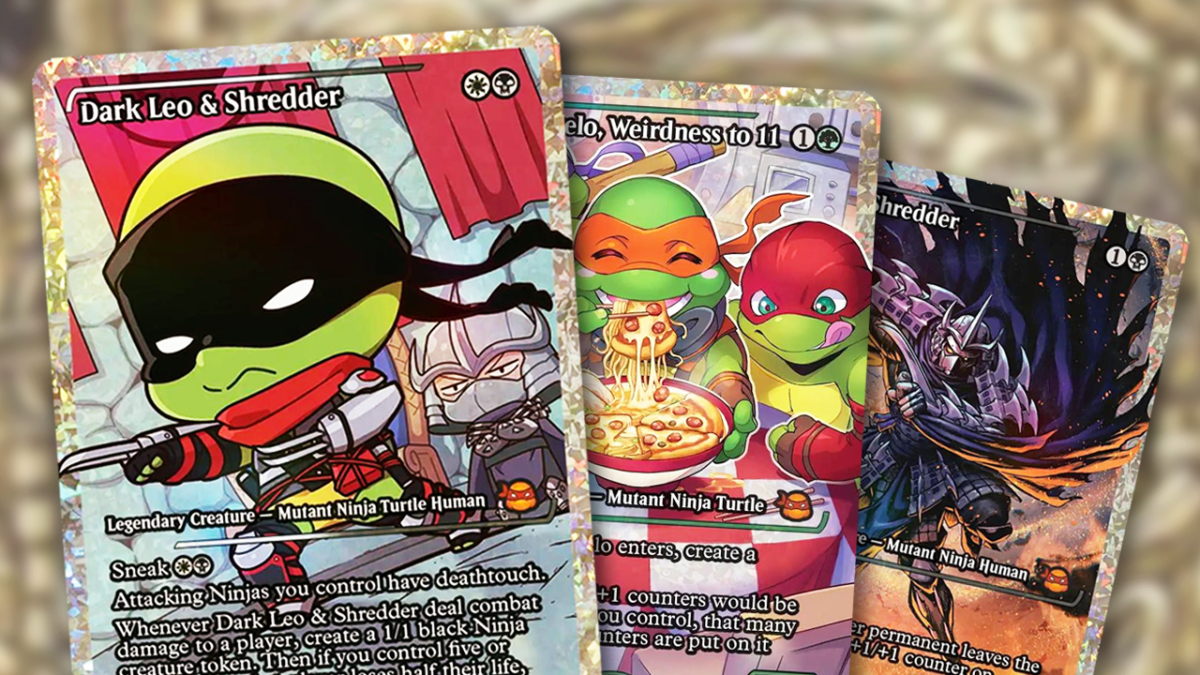
Surely the cutest card on this list, Michelangelo, Weirdness to 11, shows adorable versions of our heroes gathered around Mikey’s bizarre choice of meal.
This two-cost, 1/1 gives you a Mutagen token when it enters, then doubles +1/+1 counters. It’s sitting around $240 right now.
Dark Leo & Shredder (Showcase Fracture Foil)
Talk about an odd couple: Dark Leo and Shredder is a two-cost 1/3 that creates ninja tokens when it deals damage, gives those ninjas deathtouch when you attack, and then slices a player’s life total in half when you have five or more ninjas.
The first of just two Gold-Stamped, Kevin Eastman-signed cards on this list, Michelangelo, Improviser, is going for around $2,000 at the time of writing.
It has the Sneak keyword and lets you bring land and/or creatures into play when it deals damage.
Donatello, Mutant Mechanic is a four-cost 3/5 with the tap ability to put counters on an artifact to make it a creature. When it dies, those counters keep moving. That’s tough to read with Kevin Eastman’s signature on it, though.
Where To Find The Most Valuable TMNT Cards
While you have a slim (and we mean slim) chance of finding them in Play Boosters, you’re infinitely more likely to find these desirable (read: valuable) cards in Collector Boosters.
These packs are $37.99 each, but include all foil and alternate art treatments so you’ve got a much better chance of finding expensive cards in them.
The trouble is that scalpers are aware of this – so Collector Boosters are tough to track down.
TCGplayer: Score 15% Off with International Ordering
Including: UK, EU, Australia, and more.
If you are looking to buy cards from the US, that’s easily remedied with TCGplayer’s huge catalog, but it’s now even easier to buy cards from the site without being in the US yourself.
“International package forwarding services give you a local shipping address in the U.S, receive purchases for you, and then consolidate and forward them to your home address at competitive global shipping rate,” the retailer says, and many locations can receive a 15% discount on their first shipment.
Lloyd Coombes is an experienced freelancer in tech, gaming and fitness seen at Polygon, Eurogamer, Macworld, TechRadar and many more. He’s a big fan of Magic: The Gathering and other collectible card games, much to his wife’s dismay.
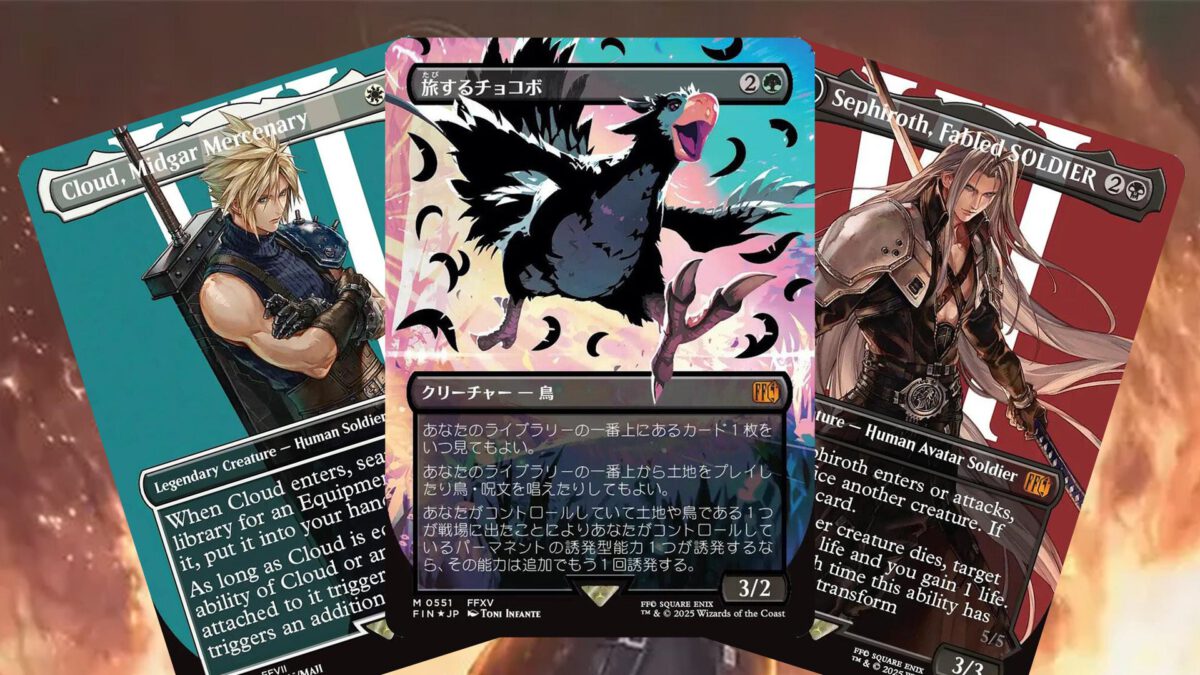
Magic: The Gathering’s Universes Beyond lineup of crossovers is becoming more prevalent in 2026, but Final Fantasy remains arguably the best example of what it looks like when done right.
The set was the most popular in Magic’s long history when it launched last year, and since then, new Chocobo Track Foil cards have shaken up its most valuable chase cards.
These are the priciest Final Fantasy cards you can buy right now, thanks to data from TCGPlayer, including those that have been recently added.
The Most Valuable MTG Final Fantasy Cards Right Now
Fan-favorite Tifa’s Chocobo Track Foil is sitting at around $90. It’s a great card, too, powering up as land enters (at least until the end of the turn).
Kefka, Court Mage (Borderless – Surge Foil) puts the clown front-and-center, while offering a transformation into Kefka, Ruler of Ruin on the other side – yours for just over $110.
Its market value is around $131, but it’s selling for more if you do happen to have one.
Yuna, Hope of Spira (Borderless – Surge Foil) – $148
Yuna, Hope of Spira (Borderless – Surge Foil) is one of the best-looking surge foil treatments in the set, giving the legendary summoner a card befitting of her status in Final Fantasy X.
It’s dropped to around $150, but the card remains sought after.
Travelling Chocobo (Borderless – Neon Ink) – Various
These Borderless, Neon Ink treatments of Final Fantasy’s most iconic bird creature are fetching huge prices, and while they’ve dropped in the months since launch, they’re still worth a small fortune.
Travelling Chocobo (Borderless – Japan Exclusive) – $4,836.47
The Travelling Chocobo (Borderless – Japan Exclusive) is the most expensive card of any 2025 Magic: The Gathering set, racking up a total of around $6,000. It’s still fluctuating regularly, but it’s ahead by a long shot.
Lloyd Coombes is an experienced freelancer in tech, gaming and fitness seen at Polygon, Eurogamer, Macworld, TechRadar and many more. He’s a big fan of Magic: The Gathering and other collectible card games, much to his wife’s dismay.
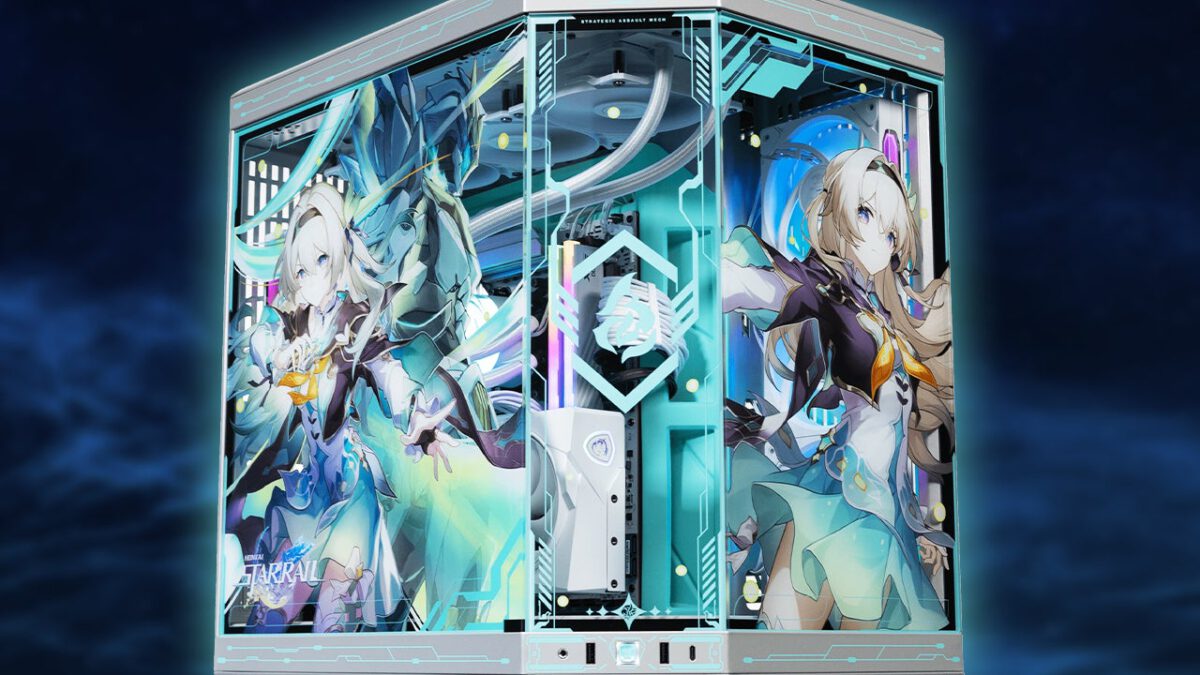
For all of you Honkai Star Rail superfans, there’s a custom PC built just for you. iBuypower released a powerful GeForce RTX 5080 prebuilt gaming PC that’s housed in Hyte’s limited edition Honkai Star Rail Firefly Y70 computer case. The configuration is priced at $3,599, but you can save $200 off with coupon code “DUNK“. It’s admittedly more expensive than other similarly equipped gaming PCs on the market, but nowhere else you can source an officially licensed Honkai-themed gaming PC outside of getting it from iBuypower or building your own using Hyte’s chassis.
Now Available: Hyte Y70 Honkai Star Rail Themed Case
What’s really special about this case is the custom themed artwork. The system is housed in a gorgeous Hyte Y70 computer chassis adorned with artwork inspired by Honkai Star Rail’s 5-star character Firefly. The artwork is professionally UV printed onto all three glass panels; they don’t peel off like vinyl stickers and they’re applied on the interior side of the panels so they’re less prone to scratching. The case’s blue and sliver color scheme tastefully matches Firefly’s aesthetic.
You’d expect a gaming PC named after one of the more meta characters in HSR to be quite powerful, and iBuypower certainly doesn’t disappoint. The Y70 gaming PC is equipped with a liquid cooled AMD Ryzen 7 9800X3D CPU, GeForce RTX 5080 16GB GPU, 32GB of DDR5-6000MHz RAM, and 2TB SSD.
AMD Ryzen 7 9800X3D is the best gaming CPU for most people
The AMD Ryzen 7 9800X3D is considered to be one of the best gaming processors on the market and outperforms any Intel or AMD non-X3D chip in games thanks to AMD’s 3D-V-Cache technology. It only has eight cores, but that makes no difference in gaming since most games can’t utilize more than eight cores (if that) anyways. That’s why its gaming performance is nearly identical to the pricier 9900X3d and 9950X3D.
The GeForce RTX 5080 GPU will run any game in 4K
Performance-wise, the RTX 5080 is no slouch. It’s one of the fastest cards on the market, bested only by the $2,000 RTX 5090 and the discontinued $1,600 RTX 4090. This is a phenomenal card for playing the latest, most demanding games in 4K resolution at high settings and ray tracing enabled. The recent DLSS 4.5 update has further optimized multi-frame gen and upscaling so you can push really high framerates even in 4K. More games are supporting this feature, including Doom: The Dark Ages, Clair Obscur: Expedition 33, Borderlands 4, Stellar Blade, and, of course, Honkai: Star Rail. Check out our Nvidia GeForce RTX 5080 FE review for our hands-on impressions.
You can also get the case by itself
You can also build out your own system using this case. Hyte, iBuypower’s sister site, is currently selling the standalone HSR Firefly Y70 case for $329.99 with free shipping. If you’re looking for additional matching accessories, Hyte also sells a matching keycap set, fan grill set, and and extra large mousepad.
Eric Song is the IGN commerce manager in charge of finding the best gaming and tech deals every day. When Eric isn’t hunting for deals for other people at work, he’s hunting for deals for himself during his free time.
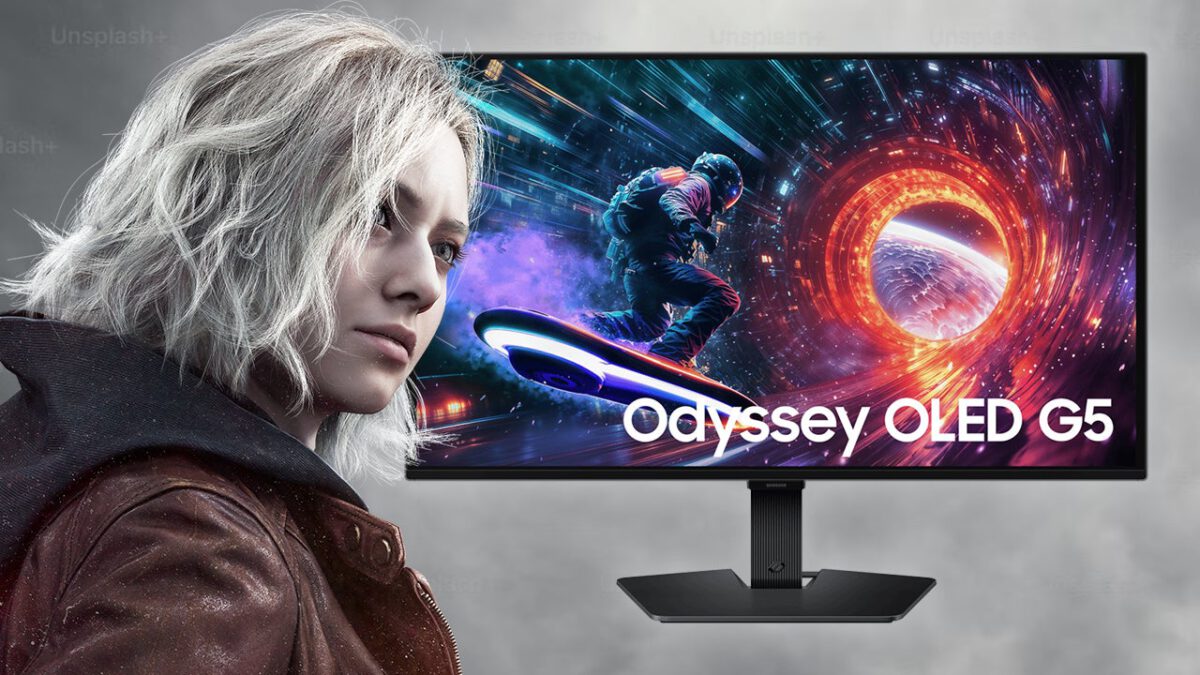
The best gaming monitor deal of 2026 is back. Amazon has discounted the 2025 27″ Samsung G5 OLED to $349.99, making it the lowest price I’ve ever seen for an OLED monitor. It also includes a free digital copy of the recently released Resident Evil: Requiem with purchase. The offer will automatically be applied during checkout. This monitor also comes standard with an industry-best 3 year warranty that includes OLED burn-in coverage.
27″ Samsung Odyssey OLED G5 Gaming Monitor for $349.99
Free Resident Evil: Requiem game code with purchase
The Samsung Odyssey OLED G5 (G50SF) is a 2025 model 27″ display with a 2560×1440 or QHD resolution, measuring out to a respectable pixel density of 108ppi. It’s equipped with a quantum dot OLED panel that boasts a near-instantaneous 0.03ms response time, near infinite contrast ratio, and true black levels. QD OLED panels are considered better than traditional W-OLED panels because they are brighter and offer a wider color gamut.
This monitor also features a fast 180Hz refresh rate and Nvidia G-Sync compatibility. If you pair it with an Nvidia GeForce RTX 5070 graphics card or higher, you should be able to hit that 180fps ceiling on older games like Fortnite, Apex Legends, and Valorant. For newer games like Battlefield 6 or Black Ops 7, you might need to step up to an RTX 5070 Ti or Radeon 9070 XT to achieve that 180fps ceiling. The display comes equipped with both DisplayPort and HDMI ports.
As mentioned earlier, this monitor has a 3 year warranty that includes OLED burn-in coverage. That’s still pretty uncommon across most OLED brands, especially when you’re looking at the less expensive models. Most come with just a 1 year warranty with no burn-in protection.
Eric Song is the IGN commerce manager in charge of finding the best gaming and tech deals every day. When Eric isn’t hunting for deals for other people at work, he’s hunting for deals for himself during his free time.