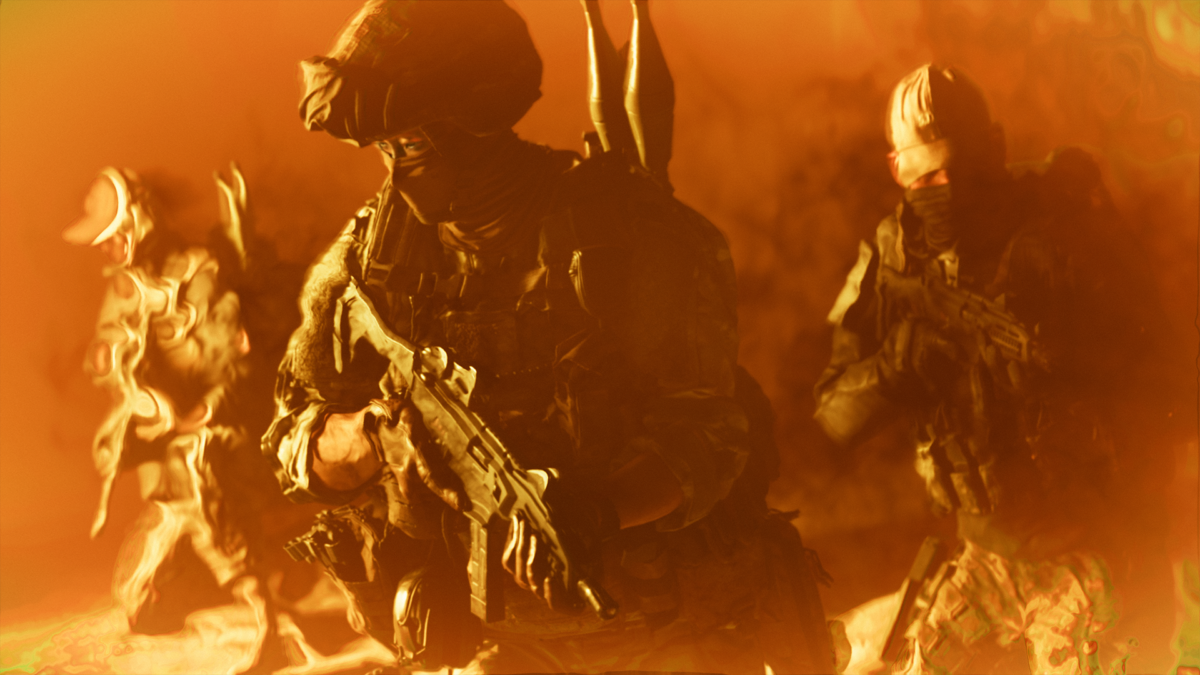
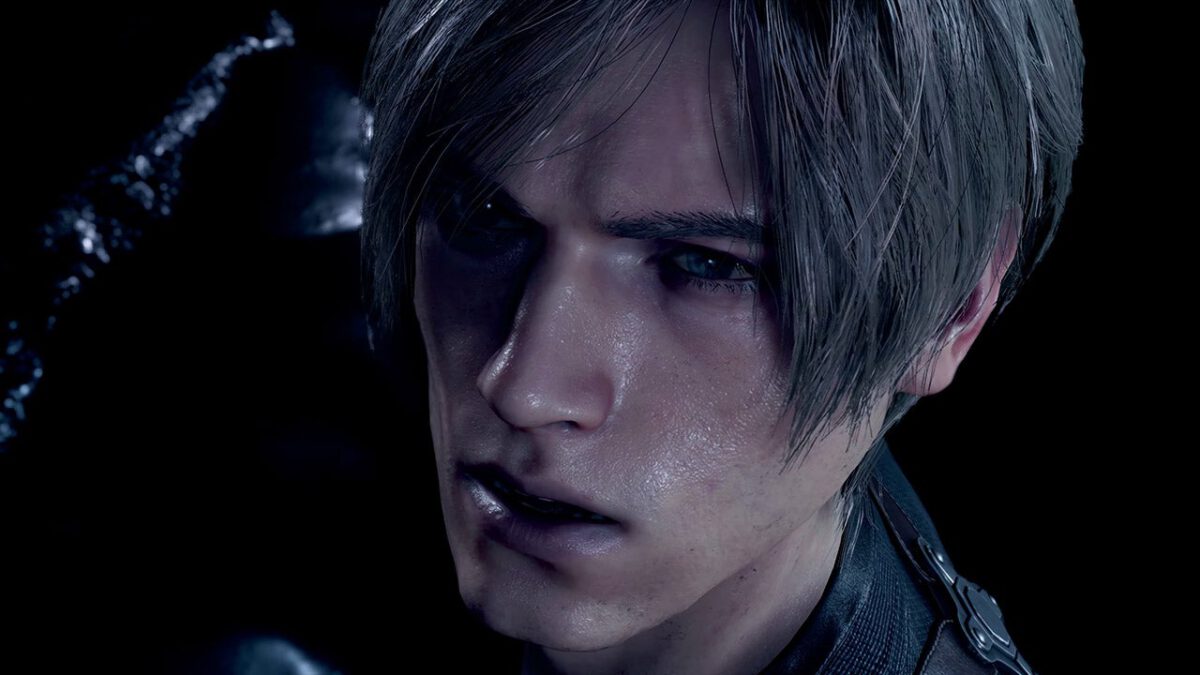
Wildlight has announced that it will be permanently shutting down Highguard on March 12. Before then, it will release one final update that adds a new Warden, a new weapon, account level progression, and skill trees for those who want to get their final matches in.
Wildlight shared the news on X/Twitter, saying, “Today we’re sharing difficult news. We have made the decision to permanently shut down Highguard on March 12.
“Since launch, more than 2 million players stepped into Highguard’s world. You shared feedback, created content, and many believed in what we were building. For that, we are deeply grateful.
“Despite the passion and hard work of our team, we have not been able to build a sustainable player base to support the game long term. Servers will remain online until March 12th. We hope you’ll jump in with us one more time to show your support and get those final great matches in while we still can.
“The team is excited to release one final game update to enjoy in the remaining life of the game. We’ll be adding a new Warden, a new weapon, account level progression, and skill trees! Full patch notes are coming, and we’re targeting tonight or tomorrow morning for patch release.
“From all of us at Wildlight, thank you for playing, for supporting us, and for being part of Highguard’s story.”
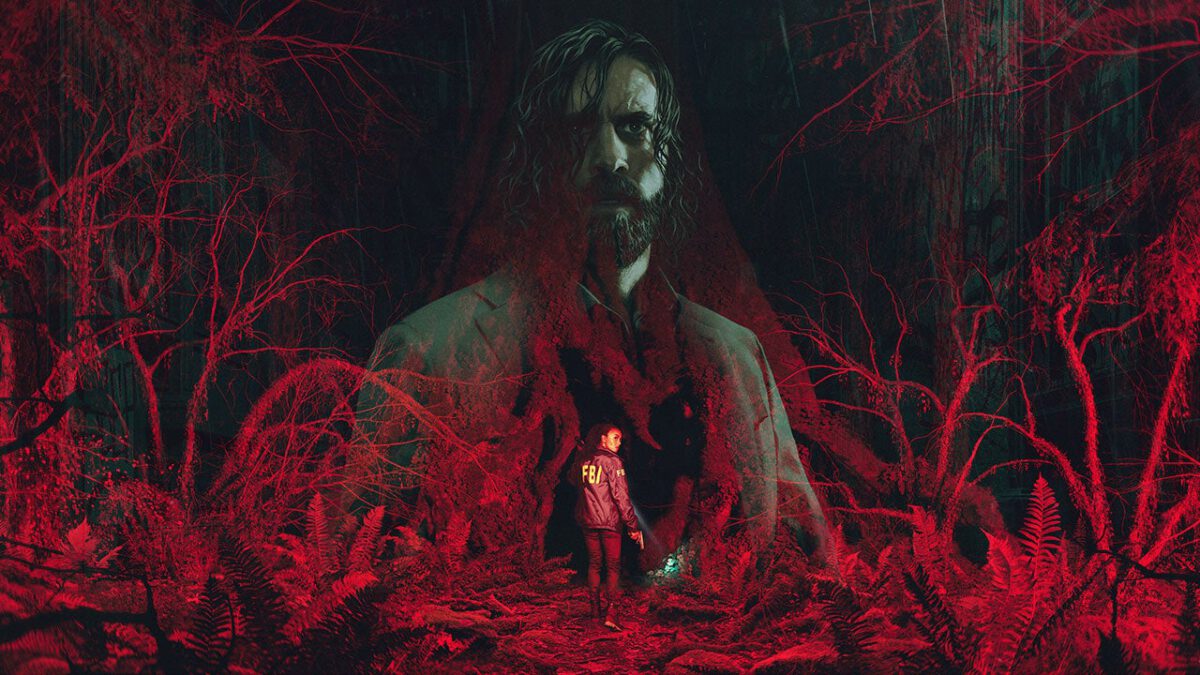
The arrival of a new Remedy game this year is a great excuse to jump back into some of the studio’s older releases. Alan Wake 2, in particular, is one we absolutely love (our favorite horror game of 2023, actually). If you haven’t added it to your library yet, this is an excellent time to do it as its PS5 Deluxe Edition has hit a new low price at Amazon of $34.96 (see it here). Head to the link below to scoop it up at this price while it’s still on sale.
Alan Wake 2 Deluxe Edition (PS5) for $35
There’s quite a lot to enjoy with this Deluxe Edition as well. Not only does it come with the main game, but you’ll also get the two expansions, Night Springs and the Lake House. It also comes with cosmetics and items for both protagonists, Alan and Saga, including the Nordic Shotgun Skin, Crimson Windbreaker, and Lantern Charm for Saga, and Celebrity Suit and Parliament Shotgun Skin for Alan. In addition, you’ll even get the digital edition of Alan Wake Remastered, so you can play through Alan’s complete story across both games. It’s a real treat for just $35 with this deal.
As mentioned before, it took home our top prize as the best horror game of 2023. As for why it earned this acknowledgement, IGN’s Matt Purslow said “On the surface, Alan Wake 2 looks like Resident Evil, but beyond that familiar over-the-shoulder perspective is a game with unmatched vision. Its confident direction, using all manner of visual and audio tricks, drags you into a creepy world that offers unexpected surprises in every chapter.”
Of course, our review had very high praise for it as well. IGN’s Tristan Ogilvie said it, “delivers one of the boldest and most brain-bending survival-horror storylines this side of Silent Hill 2, presents it with uniformly immaculate art direction and audio design, and reinvigorates the series’ signature light-based shooting as though it’s been locked and loaded with a fresh pack of Energizers.”
Hannah Hoolihan is a freelancer who writes with the guides and commerce teams here at IGN.
Bungie has outlined what to expect from Marathon upon launch, and confirmed plans for seasonal wipes that mean all players lose their gear every few months.
Seasonal updates will introduce new gameplay, including gear, Runner shells, zones, events, and more, Bungie said, and they’ll be free for all players to access or earn, so there’sno expansions or DLC required.
Each season brings a “clean slate for the whole community,” Bungie explained, with progression resets that include everyone’s gear, contract progression, faction progression, and player level.
However, players will keep their achievements and cosmetics, titles, and other rewards from reaching milestones. Your Codex progression also carries over. Elsewhere, your liaison contract progression carries over, so you don’t need to unlock the factions every season.
“Seasonal resets mean that the game stays dangerous, loot feels meaningful, and there’s always a good opportunity to get back into the game or bring a friend in without feeling behind the curve,” Bungie said, explaining its decision. “It’s a way to say goodbye to the old, welcome the new, and kick off a journey from zero-to-hero with new ways to play, content to master, and things to discover.”
The extraction shooter launches on March 5 alongside Season 1, called First Step. This includes a community drive to unlock the way into orbit and the fourth zone, called Cryo Archive, although Bungie didn’t say what the community unlock will involve.
“Prepare your mind and shell to take on this end-game zone on the Marathon ship, where you’ll solve security puzzles, unseal frozen vaults, and come face-to-face with an entity even the UESC fears,” Bungie said. Then, during the second half of March, Ranked mode will unlock. We don’t have much information on how it will work, but Ranked mode will offer exclusive rewards.
Bungie also outlined the Marathon launch content:
Complete faction and contract progression
All six factions, including Sekiguchi Genetics
All six launch Runner shells, including Thief
Three zones, including Outpost
Outpost will unlock the day after launch, giving the community time to gear up and unlock the zone at Runner Level 12
28 weapons, plus mods, implants, cores, and more to craft your perfect builds
Earnable cosmetics, achievements, and storytelling through the Codex
Bungie even went as far to reveal Season 2, called Nightfall, which will bring a nighttime version of Dire Marsh, a new Runner shell, and new weapons, mods, cores, and contracts. Nightfall will introduce the Cradle, a new system “designed to give you more autonomy over your Runner shell’s statistical strengths and weaknesses.”
“As we build upon each season, Marathon will continue to grow and evolve,” Bungie said. “The game and world today and a year from now should feel meaningfully different as we add new features and go on the journey of discovering what happened to the colonists of Tau Ceti… and what happens when you dig up secrets that are better left buried.”
Wesley is Director, News at IGN. Find him on Twitter at @wyp100. You can reach Wesley at wesley_yinpoole@ign.com or confidentially at wyp100@proton.me.
Bandai Namco, the publisher behind FromSoftware titles such as Dark Souls and Elden Ring, as well as its own RPG series such as Tales, has confirmed plans to reveal a new role-playing game.
The announcement will premiere via YouTube later this week on Thursday, March 5 at 3pm Pacific / 6pm Eastern / 11pm UK. A description for the yet-to-be revealed trailer simply states: “A serenity soon to be disturbed.”
Of course, there’s already speculation over what this game might be — and yes, Elden Ring 2 was one of the first suggestions (to be fair, the announcement’s lettering looks somewhat similar to Elden Ring’s logo). But an announcement of that magnitude seems better suited to a major announcement showcase, rather than just appearing online on a random Thursday.
So what else could it be? There’s a decent possibility this is the next game in Bandai Namco’s venerable Tales series, following 2021’s popular Tales of Arise. Five years on, it feels time for a glimpse at an all-new adventure.
Other possibilities exist too, though, including this being a new RPG for the Digimon franchise, which Bandai also owns the rights to. The company has also published FromSoftware’s Armored Core. Then there’s Bandai Namco’s Dragon Ball games.
“With an excellent story and cast and a reinvigorated combat system, Tales of Arise is the shot in the arm the long-running Tales RPG series needed to recapture its best moments,” we wrote in IGN’s Tales of Arise review, which returned a 9/10. Is it finally time for another chapter? Stay tuned for more later this week.
Tom Phillips is IGN’s News Editor. You can reach Tom at tom_phillips@ign.com or find him on Bluesky @tomphillipseg.bsky.social
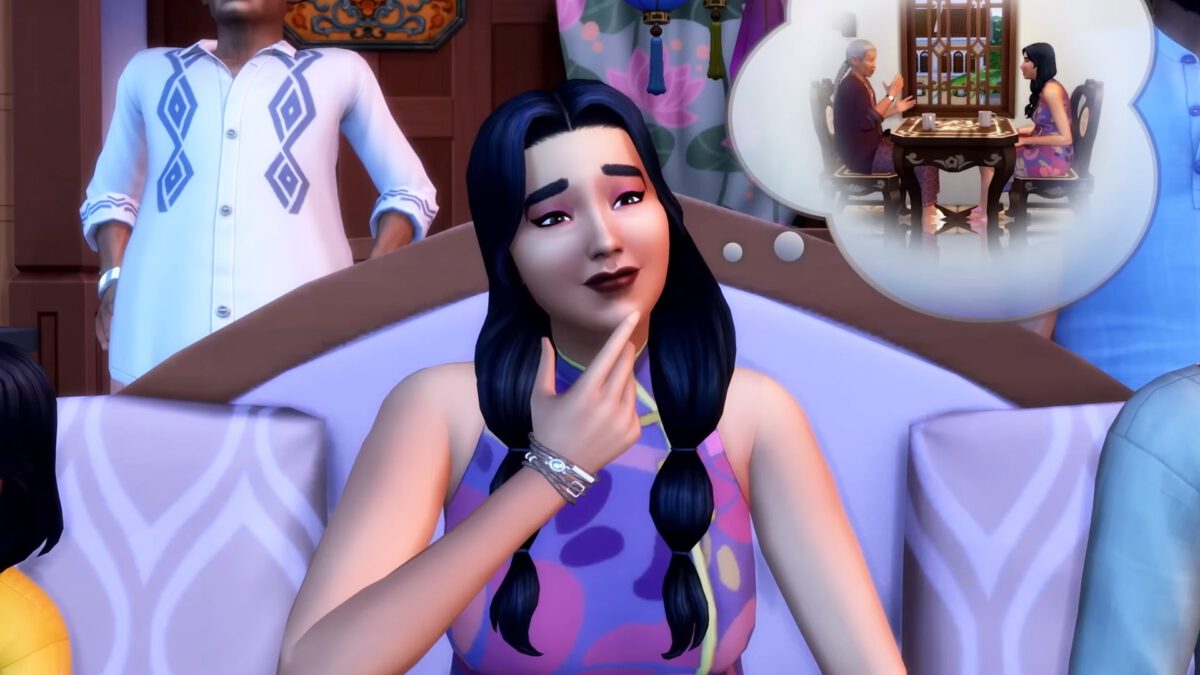
The Sims 4 will introduce a brand new “Maker” program, allowing content creators to publish and sell custom mod packs on an official marketplace.
This new was announced today by Maxis, which unveiled The Sims Maker Program and Marketplace. Beginning March 5, designers can apply to join the Maker program, which will allow them to submit their work to the Marketplace when it opens on March 17. Only vetted and approved Makers will be allowed to publish and sell their creations. Makers must be 18 years old or older, be able to communicate proficiently in English, cannot reside in one of EA’s embargoed regions, and must complete a technical evaluation by submitting two assets for review. Per Maxis, all submitted content will be reviewed by humans before it can be published.
The Marketplace itself will contain Expansion Packs, Game Packs, Stuff Packs, and Kits created internally by The Sims developers, as well as “Maker Packs” made by the Makers. Items on the Marketplace will be purchased with “Moola”, a virtual currency that can be purchased in set increments (200 Moola for $2.49, 500 for $4.99, 1,000 for $9.99, 2,600 for $24.99, and 5,500 for $49.99). Moola is the only way in which players can purchase Maker Packs, though official The Sims packs can still be bought directly with regular currency. There is no way to earn Moola in-game; it must be purchased, is non-refundable, and it does not transfer from platform to platform. Neither Moola nor Maker Packs can be transferred from player to player.
Makers will receive “approximately 30%” of the purchase price from each sale, with Maxis offering the example that if someone spends 100 Moola on a Maker Pack, that Maker gets $0.30 USD. Makers determine the contents and costs of their packs.
Maxis says that it will continue to allow mod makers to create and distribute work outside of the Marketplace, provided they do not charge for it and remains free, as is currently stipulated in The Sims’ mod policy. However, Maker publications on the Marketplace cannot be available for free or at a cost outside the Marketplace – they must be exclusive.
Marketplace will launch on March 17, 2026 on PC and Mac, and will come to PlayStation and Xbox at a later date.
If you’ve played Helldivers 2 for any length of time, you’ll know that friendly fire can be as lethal as enemy attacks. This is the nature of Arrowhead’s unpredictable and often hilarious action game; you never know where the next explosion is coming from, and death is never far away.
But what causes the most number of friendly fire incidents? It’s something I’ve wondered about as a fan of Helldivers 2, as someone who’s laughed down my mic at my teammates as I’ve inadvertently blown them up or shredded them to pieces with a turret. Ah, the turrets! More of a menace than a help, some would say.
Arrowhead has now provided some answers via an infographic that reveals all sorts of stats for Helldivers 2’s second year of service. We see that the Terminids are the most-killed enemy faction, which makes a lot of sense to me given there are a lot more of them, typically, and, well, they’re just the most fun enemy to face.
Things get a little more interesting when it comes to the most-deployed stratagems. The top three are no surprise (of course Reinforce is top, you use it to bring squadmates back in). The 500KG Bomb being second doesn’t surprise me either, given its eternal usefulness. Resupply makes a lot of sense in third.
But it’s the friendly fire list that has my attention. Top of the tree is the Eagle Strafing Run, which is by quite some distance the biggest offender of friendly fire incidents, and ahead of the battlefield nuisance that is the Hellbomb. I wouldn’t have thought the Eagle Strafing Run would have caused so much chaos! What I think is happening here is that Arrowhead is counting the DSS Eagle Storm, which triggers periodic, automatic Eagle Strafing Runs during missions. Players often bemoan the DSS for causing accidental friendly fire, and some actively avoid playing with it available.
“The DSS Eagle Storm is an active detriment to our operations on Cyberstan,” reads one recent reddit thread, posted amid the community push against the Cyborg homeworld.
“I just finished a D10 campaign with my fireteam where all four of us either died to an errant Eagle Strafing Run or the game crashed because of an Eagle Strike. I feel like instead of random map wide strike we should be given a low/zero cooldown Eagle Strafing stratagem. The reinforcement budget spent fixing Eagle-1’s mistakes is (in my opinion) egregious and totally fixable.”
“Yeah, those DSS Eagle pilots really need to work on their coordination,” added another.
Meanwhile, I am not surprised to see the Guard Dog on the list, though. Damn that thing! And the less said about mines, the better.
Wesley is Director, News at IGN. Find him on Twitter at @wyp100. You can reach Wesley at wesley_yinpoole@ign.com or confidentially at wyp100@proton.me.
Microsoft has announced the Xbox Game Pass March 2026 lineup, confirming the addition of CD Projekt’s Cyberpunk 2077.
It’s the headline game for Wave 1 of this month, which also includes Planet of Lana II: Children of the Leaf as a day one release, and Hollow Knight: Silksong on Game Pass Premium, according to Xbox Wire.
Out today, March 3 (and already announced), are Final Fantasy III (Cloud, Xbox Series X|S, and PC) and Kingdom Come: Deliverance II (Cloud, Xbox Series X|S, and PC), both on Game Pass Ultimate, Game Pass Premium, and PC Game Pass.
Tomorrow, March 4, sees the addition of to a T (Cloud, Xbox Series X|S, and PC), now with Game Pass Premium, and EA Sports F1 25 (Cloud, Xbox Series X|S, and PC) via Game Pass Ultimate and PC Game Pass.
March 5 sees the day one launch of Planet of Lana II: Children of the Leaf (Cloud, Xbox Series X|S, Handheld, and PC) on Game Pass Ultimate and PC Game Pass. Moving on to March 10, and subscribers have Construction Simulator (Cloud, Console, and PC) via Game Pass Ultimate, Game Pass Premium, and PC Game Pass, and the aforementioned Cyberpunk 2077 (Cloud and Console) via Game Pass Ultimate and Game Pass Premium.
PC Game Pass was not mentioned for Cyberpunk, and in a follow-up announcement, CD Projekt said Cyberpunk will be available to Premium and Ultimate plan subscribers on Xbox Series X and S and Xbox One consoles, with no mention of PC.
“Cyberpunk 2077 on Xbox Series X and S comes with every update released for the game since launch, which brought myriad technical improvements, new features, and additional content such as quests, vehicles, and character customization options,” CD Projekt said. “Players on Xbox Series X can also play Cyberpunk 2077 at 60 frames per second in Performance Mode or with 4K Ultra HD visuals in Quality Mode. Players on Xbox One will receive Cyberpunk 2077 and everything released up to and including Update 1.6 — the Edgeruners Update.”
Then, on March 12, Hollow Knight: Silksong (Cloud, Console, Handheld, and PC) joins Game Pass Premium (it’s already on Game Pass Ultimate and PC Game Pass). rounding out Wave 1 of March’s lineup is DreamWorks Gabby’s Dollhouse: Ready to Party (Cloud, Xbox Series X|S, and PC) on March 17, via Game Pass Ultimate, Game Pass Premium, and PC Game Pass.
Xbox Game Pass March 2026 Wave 1 lineup:
to a T (Cloud, Xbox Series X|S, and PC) – March 4, Now with Game Pass Premium; joining Game Pass Ultimate and PC Game Pass
EA Sports F1 25 (Cloud, Xbox Series X|S, and PC) – March 4, Game Pass Ultimate, PC Game Pass
As always, a number of games are set to leave Game Pass. You can save up to 20% off your purchase to keep playing.
Games leaving Xbox Game Pass on March 15, 2026:
Bratz Rhythm & Style (Cloud, Console, and PC)
Enter the Gungeon (Cloud, Console, and PC)
F1 23 (Cloud, Console, and PC)
He is Coming (PC)
Lightyear Frontier (Cloud, Console, and PC)
Mythwrecked: Ambrosia Island (Cloud, Console, and PC)
Wesley is Director, News at IGN. Find him on Twitter at @wyp100. You can reach Wesley at wesley_yinpoole@ign.com or confidentially at wyp100@proton.me.
Arachnophobia sufferers are having a tough time with Resident Evil Requiem, but there is help at hand from fellow players — as well as in the shape of a certain cheery choo choo train.
Warning: Spoilers for Resident Evil Requiem follow
Requiem features a giant spider as a major boss fight in Raccoon City, and the knowledge that this sequence is in the game has spawned many, many, many different threads on reddit from Resident Evil fans who experience arachnophobia. In most cases, fans are requesting more information on how horrible the game’s spider section is (it’s quite horrible), while others who made it through the battle are reporting in with their experiences.
Some fans are stuck in a dilemma — they want to play the big new Resident Evil game, but are also dreading reaching a section with a very realistic giant spider boss that’s creepy enough even for those without an actual phobia.
“Trying to be as vague as possible in the title, how is that f***ing giant spider mid-game?” reads one such message, from reddit user saekhama. “Does it come in a jumpscare or you can predict the moment it’s gonna make its first appearance/attack? For reference, I’d say the Skyrim and Witcher 3 spiders are some of the worst, as they’re hairy, realistic and move fast. I don’t think I’m gonna not buy the game because of it, but I might ask a friend to come and play this part for me.”
“It’s horrible,” answered another fan, Tasty_James, in reply. “As someone who can’t get through the Aragog/Shelob scenes in their respective [Harry Potter and Lord of the Rings] films, this has been a f***ing nightmare. It’s huge, hairy, detailed, and f***ing fast… Genuinely the most terrifying experience I’ve ever had during any videogame (and I could probably expand that to all media as well, tbh).
In other discussion threads, players have been offering tips on how to kill the spider boss fast, in order to get it off their screens as quickly as possible.
“I got to the spider boss section! I wasn’t expecting that until the last minute I was like ‘Wait a damn minute… these are webs!’ took me a while to realize it then BOOM, big spooder: Hello There >:)” wrote TheSkateDude6. “How many shots or melee attacks does it take to finish it off? I’ll be playing without my glasses since it will help slightly in a way. If it’s too much for me, I’ll wait for an arachnophobia mode.”
Common tips for this section are to make use of the areas explosive barrels, and of course your Requiem gun. (IGN’s walkthrough also has plenty of advice — and you can find the spider boss fight section here.) Some fans with arachnophobia have reported using less conventional tactics, meanwhile, such as playing without wearing their glasses, or even moving to a smaller TV screen.
“My strategy so far has been to take off my glasses (I’m severely near-sighted),” Tasty_James said, “and sort of look vaguely away from the screen so as to keep it blurry and in my peripheral vision at all times. I haven’t beaten its boss fight yet, obviously, and I have no idea if I’m going to be able to.”
“I played this without my glasses, it’s a blessing in disguise somehow,” wrote Typical-Mixture4376 in another thread. “The smaller ones are freaking me out more than the large one lol,” EqualAd-1348 wrote, in yet another conversation. “Thankfully, I think I will at least be able to manage by playing that segment on my other TV (32″).”
As well as an enormous spider that Leon has to fight, a swarm of mini baby spiders is also featured as part of the same area. On the upside, though, once outside of the one spider section, the game does not feature the enemies ever again.
“It was genuinely the worst experience I’ve ever had with my arachnophobia in a video game,” concluded TheUberMensch123. “It fucking sucks, and in a way is a complement, that the thing moves and looks so goddamn real. I almost had to shut the game off. Hopefully an arachnophobia mod comes out soon.”
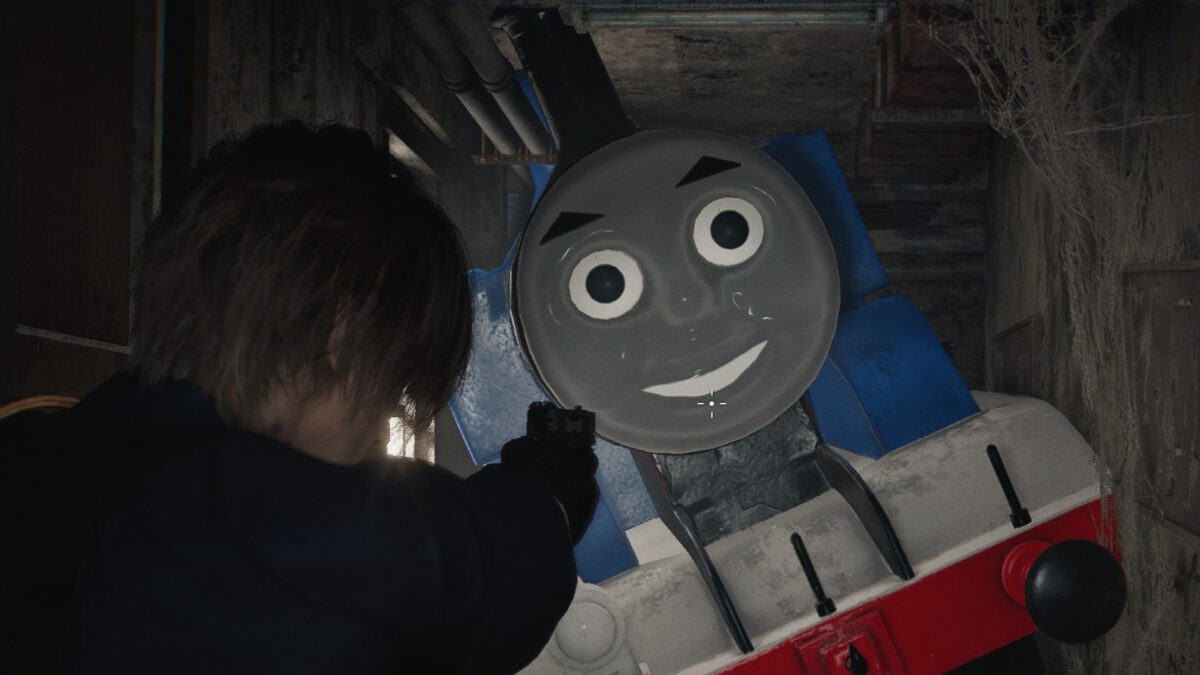
While there isn’t an arachnophobia mode add-on yet, NexusMods does host the customary Thomas the Tank Engine mod. While unavailable on consoles, PC players can at least choo choo choose to see Thomas’ giant smiling face bearing down upon Leon rather than that of an enormous arachnid. We’ll leave it up to you to decide which is worse.
Whether you’re battling spiders or zombies, IGN’s Resident Evil: Requiem guide will help you every step of the way through RE9. Take note of these key tips and tricks before you get started, and focus on finding these important items early. Plus, our comprehensive walkthrough will make sure you don’t miss a single Bobblehead or file as you try to survive from the Rhodes Hill Chronic Care Center all the way to Raccoon City.
Image credit: xZombieAlix.
Tom Phillips is IGN’s News Editor. You can reach Tom at tom_phillips@ign.com or find him on Bluesky @tomphillipseg.bsky.social
Battlefield 6 has unveiled what’s changing with update 1.2.1.5, which rolls out today (March 3).
Focusing on quality-of-life improvements and stability fixes, the new patch expects to resolve “several issues across gameplay,” including its UI, Battle Pass, and Battle Royale.
This update also restores missing store content and addresses “critical revive and gadget interactions.”
Here’s what’s rolling on to consoles and PCs later today.
Major Updates for 1.2.1.5
Implemented additional stability improvements to reduce client crashes.
Improved frontend tile loading times for a smoother menu experience.
Restored missing Store items to player inventory from the Bountiful Harvest, Pax Vanguard, and Devil Dogs bundles.
CHANGELOG
PLAYER
Addressed a crash that could occur during camera behaviour transitions.
Implemented further stability improvements to reduce client crashes.
Resolved an issue where initiating a revive while equipping a mask could cause the mask to remain in hand and block weapon usage.
Restored previously owned items that had disappeared from player inventories, including content from the Bountiful Harvest, Pax Vanguard, and Devil Dogs bundles.
WEAPONS
Improved the visual fidelity of the Objective Ace skin when viewed at longer distances.
MAPS & MODES
Updated spawn logic with an additional out-of-combat area check to prevent unintended spawn locations.
UI & HUD
Corrected an issue where the Tier Skip deeplink in the Bulletin directed players to an empty Store screen.
Improved frontend tile loading times to reduce delays when navigating menus.
Resolved an issue where Battle Pass rewards on the active path could display placeholder text or missing icons.
PORTAL
Addressed a crash related to area validation checks.
REDSEC
PLAYER
Resolved an issue in Battle Royale where the Tracking Pulse Recon trait could activate when destroying any deployable gadget.
UI & HUD
Addressed an issue in Battle Royale Duos where pings were not displayed in the elimination feed.
AUDIO
Resolved an issue in Gauntlet where Gas Mask voice-over lines would play while inside armoured vehicles.
Battlefield 6 got off to a strong start in 2025 but has faced backlash from its community in recent months, bringing its Steam user score down to ‘Mixed.’ As some players review-bombed its battle royale REDSEC offshoot and others pleaded for larger maps, many began to question if two maps per season were enough to keep players engaged. Confusion then reached new levels in January, when EA and BF Studios announced Season 2 was delayed to February 17.
Vikki Blake is a reporter for IGN, as well as a critic, columnist, and consultant with 15+ years experience working with some of the world’s biggest gaming sites and publications. She’s also a Guardian, Spartan, Silent Hillian, Legend, and perpetually High Chaos. Find her at BlueSky.
Capcom has removed a controversial new form of DRM from Resident Evil 4 Remake, following complaints that its recent addition was impacting performance.
An update to the game’s Steam database listing shows that the Enigma DRM was removed earlier today, March 3, after an earlier listing showing its addition at the beginning of February.
Capcom has not commented publicly on the changes, though fans were quick to spot the publisher replacing the game’s previous Denuvo anti-piracy protection with Enigma, and the hit to performance that followed.
It’s a subject recently covered by Digital Foundry, whose tests showed a 40 percent deficit in performance within the game’s intro cutscenes, though more modest differences during gameplay. In a video published last month, DF’s Alex Battaglia noted that Denuvo was believed to operate as a subscription service, and that at some point publishers typically remove the software when its cost outweighs any perceived losses from piracy.
It’s at this point that fans believe Capcom switched to Enigma instead — a decision it has now seemingly U-turned on.
“Updating years old software with new DRM is just stupid,” Battaglia said. “Like, stop, don’t do that in the first place. Regardless of any possible performance degradations, what it’ll do to your game is just piss off your audience. It’ll make your modding scene really upset.”
Now, word that Enigma DRM is gone from Resident Evil 4 is being celebrated by fans on reddit, even as the decision to add it in the first place is being criticized.
“This was the most mid level executive that’s detached from gaming move I’ve seen,” wrote Resident Evil fan CoDog. “Like who would’ve thought it was a good idea to put in DRM on a two year old game that’s been regularly on sale that tanks low to mid level pc hardware’s performance? Seriously mind boggling move from Capcom.”
It sounds like a good time to revisit Resident Evil 4 Remake, though not before you’re done with the brilliant Resident Evil Requiem first. If you’re still exploring Leon S. Kennedy’s latest adventure then IGN’s Resident Evil: Requiem guide will help you every step of the way through RE9. Take note of these key tips and tricks before you get started, and focus on finding these important items early. Plus, our comprehensive walkthrough will make sure you don’t miss a single Bobblehead or file as you try to survive from the Rhodes Hill Chronic Care Center all the way to Raccoon City.
Tom Phillips is IGN’s News Editor. You can reach Tom at tom_phillips@ign.com or find him on Bluesky @tomphillipseg.bsky.social