Marathon‘s set to see how well it can cater to folks who only have one friend, with Bungie having announced plans to add an experimental duos mode to the extraction shooter. It’ll stick around for two weeks or so, be “a bit jank”, and hopefully give the studio a firm idea of whether they should put resources into developing a fully fleshed-out version of paired play going forwards.
The Seven Deadly Sins: Origin is three things. Firstly, it is available now on Steam. Secondly, it is a splashy fantasy open world anime confection, all Disney towers and fluttering windmills and jaunty sailboats and some kind of porcine Space Hopper that transforms into a buzzard. Thirdly, it is a free-to-play game with gacha elements.
No matter how many times you walk through the Like A Dragon series’ nearly ever-present stomping ground of Kamurocho, odds are you’ll never get sick of seeing its streets and alleyways. RGG Studio are among many studios – Elden Ring developers Fromsoftware included – who’ve seen their creative asset reuse widely praised in recent years. While they’re far from the first to master leaning on previous bits of design top help save time and resources, Far Cry 4 and Assassin’s Creed 3 director Alex Hutchinson reckons it’s more key than ever right now that other studios follow their lead.
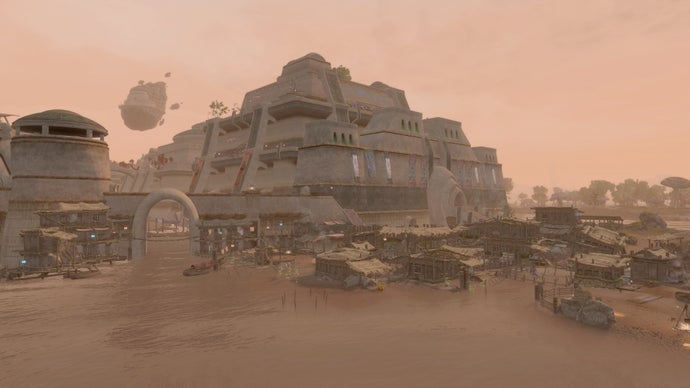
While not as close to release as its sibling-of-sorts Skyblivion, we’ve been getting regularlooks at what Morrowind remake mod Skywind for a looooong time now. The latest of these peeks at its team’s efforts to reinvent The Elder Scrolls 3 in Skyrim‘s engine came as part of a charity modding streamathon, and featured a nice stroll around Vivec.
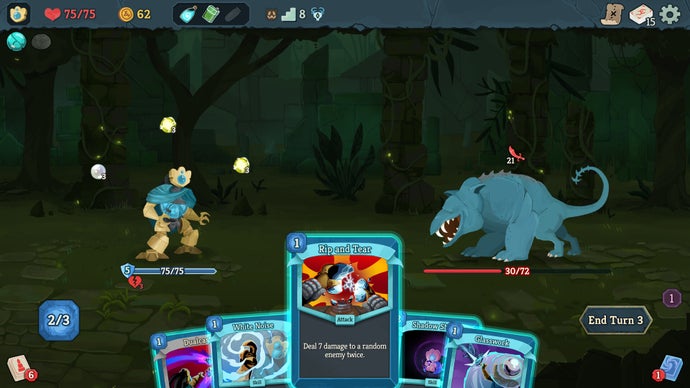
Roguelike deckbuilder Slay The Spire 2 continues its journey through early access with an update that fixes various crash bugs, adds new card art, changes how the game files mods, and implements some balancing changes. Item #1 on the balance change list: “Players, enemies, and pets can no longer have their HP increased above 999,999,999.” Yep, that sure sounds like a balancing problem. Thanks, Mega Crit.
I regret to announce that I have a theory. It involves handheld PCs, Project Helix – Microsoft’s next, PC game-running Xbox console – and least likely of all, an apparently sincere attempt at making Windows 11 less of a bulging, AI-infested colostomy bag. That attempt is better known as Xbox Full Screen Experience, and now that it’s finding its way onto portables outside the MS-branded Asus ROG Xbox Ally series (plus big-lad PCs as well), I’m convinced that it was introduced at least in part to test the waters of how a Windows PC/console hybrid could operate.
No. I, your dad, haven’t bought you any Christmas presents. No, that isn’t the wry smile of deceit you see nestled on my face. Yes, technically I could tell you that I haven’t bought you any Christmas presents without that being a lie if, in fact, I knew that your mum was buying all of your Christmas presents, while I’m paying for some other bill we need to settle. No, I’m not going to go and get her so that you can specifically ask her whether she’s bought you any Christmas presents. Why? Sorry, my lips are sealed. Perhaps, though, you should consider that I may simply not fancy expending the effort.
That, in an overly wordy nutshell, is how a social media interaction CD Projekt had the other day played out. The Cyberpunk 2077 developers decided it was necessary to tell a fan that the futuristic RPG doesn’t have any secret extra add-ons coming. Naturally, questions about the secret extra DLC rumoured to be coming for The Witcher 3 suddenly began bubbling up everywhere once again.
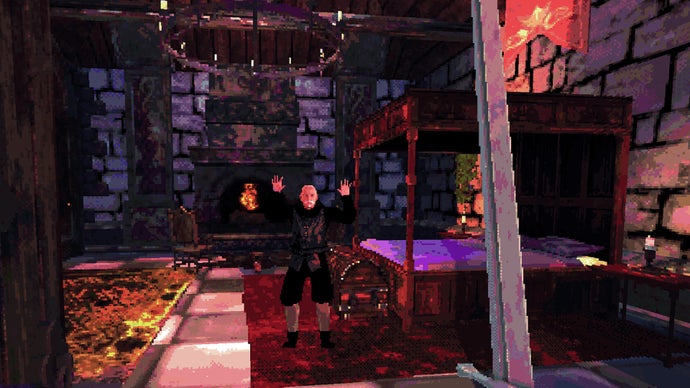
Shhhhhhh. I’m trying to sneak into this poor bloke’s castle. I’m doing it all stealthy, sneaky, and shadowy-like. I’m climbing in windows, jumping across rooftops, bamboozling guards. I’m taking the gold and gems while letting out a cackle deliberately stifled enough that no one can hear it but m-. Oh, bollocks. Hello, owner of these valuables. I hadn’t counted on you walking in at this very second.
That’s the sort of thing pixel art immersive heist sim Project Shadowglass will have in store when it releases in demo form at some point this year. Until then, there’s a fresh trailer which goes beyond the admirable dunking on GenAI that defined the game’s initial teasers.
All right, my old chuckaboo, it’s time to shake daddles and go mafficking. The toffs want us to pluck a few April showers from the insides of yon Ken Bowman. Cheese and crust! Now that’s a fancy crib. Look at the shine on these hardwood floors. Still, I don’t trust these shadows. Let’s step lively now and draw latches so we can shove off and powder our hair down the Bohemian Bungery.
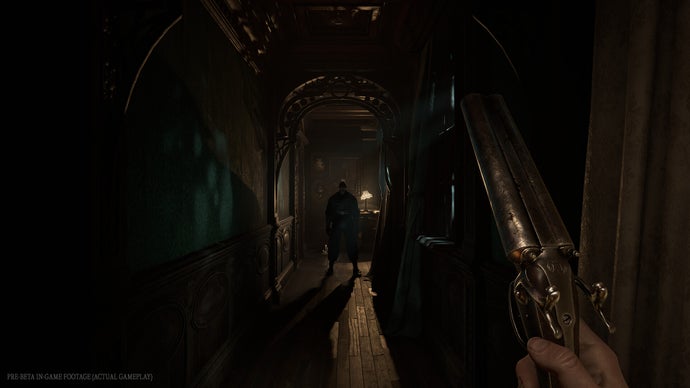
…Cordura is a one-to-four player horror game in which you play a Dishonored extra stealing magic roses from the bellies of shapeshifting mansions. “Science once dared to blur the boundaries of the Night, and now the darkness has returned to reclaim its own,” explains the Steam page. “Victorian buildings awaken corrupted by a primal influence, twisting their halls into procedural labyrinths and reducing inhabitants to empty shells that now stalk from the shadows.
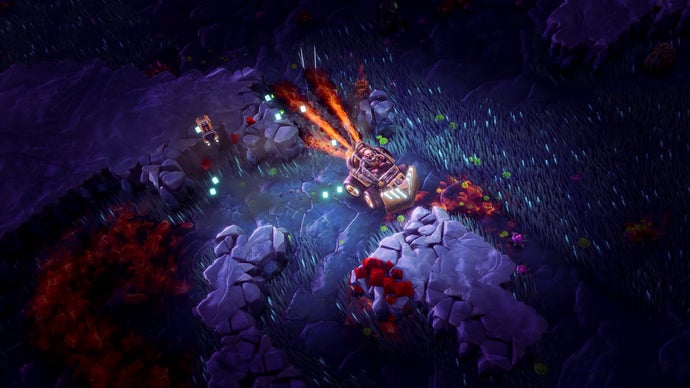
In today’s dwarf news, both Deep Rock Galactic spinoffs had announcements to make at the Future Games Show Spring Showcase. Loudest and crunchiest of the two was autoshooter Deep Rock Galactic: Survivor revealing its first new class, the bulldozer-riding Demolisher, who’ll get to work shifting shale on April 30th. Also approaching is co-op roguelike shooter Deep Rock Galactic: Rogue Core, which is launching into early access on May 20th.