Aniimo Preview: All the Fun of Creature-Catching With All the Transactions of Gacha

When you say the words “creature collector,” you already have my attention. I’ve been both curious and wary in equal measures since Aniimo was first announced. I’m far from the only person hungering for a worthy competitor in the creature-collection, monster-taming space, and I’ve dabbled in quite a few. Aniimo looks particularly vibrant, vast, and cutesy to boot. It’s the addition of gacha elements that has had me a little on the fence. If you’ve ever sunk hours into a gacha, you understand the trepidation. Will this be the sort of gacha experience that has me gleefully forking over my credit card info, or resenting every microtransaction?

After about four hours with Aniimo, I’d say I’m still cautiously optimistic. It has all the ingredients of my favorite games: open-world exploration set in a fantastical alien world, lots of critters to collect, challenges to complete, and… farming? Okay, there might be a few too many ingredients added to this pot, but I’m willing to let Aniimo cook.

Big Butts, Tiny Waist

We leap straight into creating our Aniimo character. I can easily sink hours into a good character creator, so I was pumped to give Aniimo’s a try. From the get-go, the character creator feels super in-depth. I was given six default presets for both a “male” and “female” avatar (not great for all my non-binary pals). You can combine up to three different face presets to get something a little different, or you could just dive head first into the face customization options.

Aniimo’s character creation allows you to adjust the position, prominence, and size of pretty much every facial feature, from your nasal wings to your eyelids. However, it didn’t take me long before I noticed one glaring oversight: skin tone. After searching for a bit, I finally found the options for skin tone buried under all the other menus for “makeup”. Don’t let the three default options take you aback – like it did me – Aniimo won a bunch of points in my book by including a color wheel for unlimited skin tone options.

Aniimo won a bunch of points in my book by including a color wheel for unlimited skin tone options.

However, the character customization lost me again in two areas: one, hair options are extremely limited. I can only assume – based on the “fashion” vouchers I saw redeemable later on in my playthrough – that you unlock more hairstyles through in-game currency or progression. Having appearance and cosmetics locked behind gacha mechanics might be expected. The fact that there is only one natural curly hair option – if you can even call it that – available from the start, however, is frankly disheartening.

And second, I was similarly disappointed in the body customization. While I had so much control over fine-tuning the shape of my face, the sliders for body proportions were lacking to say the least. I never expect much in terms of body diversity when it comes to this genre of game, but having to choose between being eerily thin or skinny with a nice butt and boobs was disconcerting.

Which Aniimo Are You?

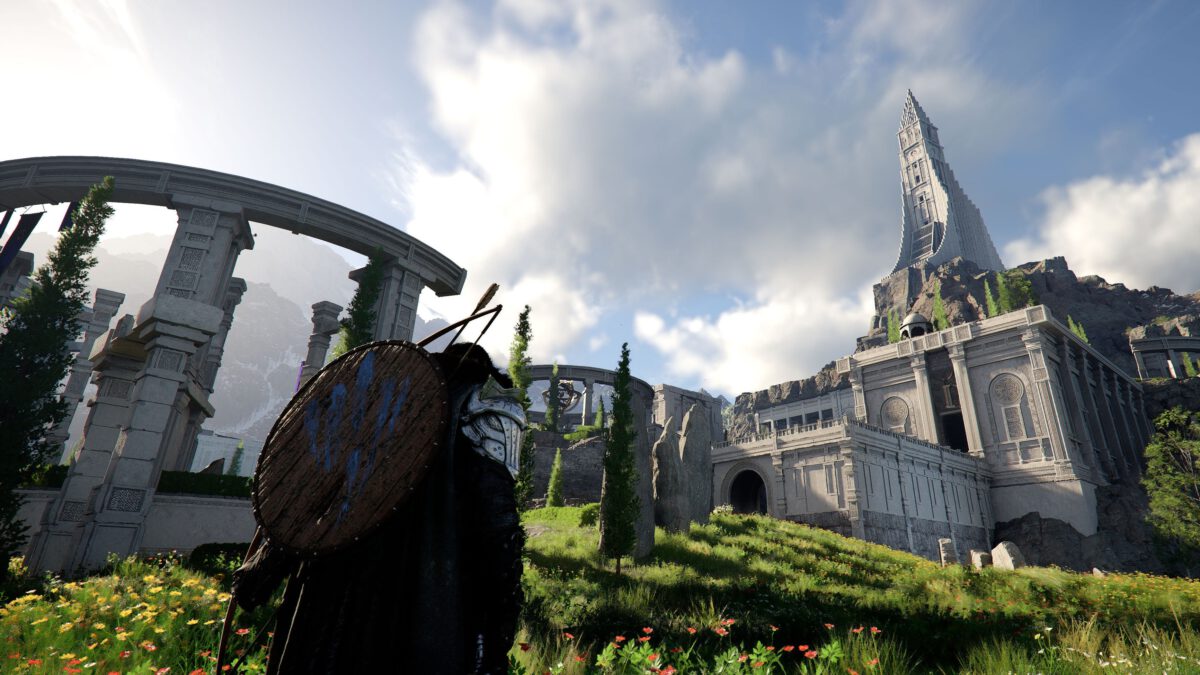
With character customization out of the way, I got my first look at my in-game self – and the adorable Aniimo! – in a cutscene reminiscent of a Twitch “IRL” livestream. The livestream overlay, complete with “real-time” chat bubbles from fictional viewers, threw me off a little bit, but luckily, we didn’t linger in the social media influencer realm for long. I found myself in the alien world of “Idyll”, an aptly named “idyllic” planet teeming with lush greenery and charming wildlife with unique powers, called Aniimo.

Our first Aniimo crosses our path – an adorable little fire-type Emberpup – smoothly introducing catch mechanics I’m already plenty familiar with. With an Emberpup at my side, my friend Nico laid down the basics of commanding Aniimo to use their abilities to remove obstacles or solve puzzles in the world. After catching a few more Aniimo and commanding my new pals to charge into deadly combat, the story began in earnest.

BINI, our little robo companion, is abruptly hijacked by a mysterious glowing D20 die, which pulls me and Nico into some sort of pocket dimension. In these strange ruins, I encountered murals on the wall depicting Aniimo I’ve yet to encounter. Each mural poses a cryptic question, ala a Buzzfeed personality quiz. The reason for this soul-searching became clear once I reached the glowing mural at the end of the path. The depictions of a yellow lion and blue fox in this mural materialized into two tiny Aniimo who can… talk? I was recommended to choose between Helion or Lunara, based on how I answered the murals’ questions earlier.

I really liked being offered a “sorting quiz” to guide me towards which “starter” Aniimo I should choose. After all, the “starter” you choose clearly says so much about you. Only having two options to choose from was a little unsatisfying, though it appears to tie into some sort of “sun and moon” mythology which could be central to Aniimo’s story. I went for Helion, personally, not only because he was recommended, but because of his sassy little personality. With Helion by my side, I was thrown into combat with my first big foe: a giant armored dragon Aniimo.

The combat was fun enough for my tastes, if a little button-mashy. I can imagine that timing your dodges and managing your cooldowns might take some deeper consideration as you progress. What really impressed me was the Twining mechanic. Yup, in Aniimo, you actually get to be the creatures. Playing as Helion – rather than just sitting back as a trainer – made for some engaging, brawly combat.

Getting Schooled

Just as quickly as I was transformed into Helion and defeated the dragon-type Aniimo, I was thrust into a whole new region. I found myself transported to the Polaris Institute, a futuristic academy devoted to studying Aniimo, located on my home planet of Astra. At this stage of the tutorial, things became a little bogged down in dialogue and instructional demos. To continue my adventure, I needed to become an official student at the Polaris Institute, instead of just a particularly precocious livestreamer, or whatever I was doing before.

To qualify to be a student, I was strong-armed into a combat simulation, which broke down the bare bones of accumulating “EP” and how to choose Aniimo that are elemental counters. Next up, I received my first free outfit – a school uniform – and sat through a quick Character menu breakdown. When I was finally teleported back down to Idyll with this hot anime guy and his hot wolf Aniimo – don’t judge me, you know that’s exactly what they were going for here – I hunkered down for another round of tutorials. After using the Report Terminal and building my Aniimo loadout, I finally had my first taste of exploration.

The Creatures

This is where I could start to see myself becoming hooked on Aniimo. There’s something so intrinsically appealing about running around a beautiful countryside and stopping to look at every shiny thing on the ground. There are fast travel spots to discover, new areas of the map to unveil, treasure chests to find, and most importantly, Aniimo to catch!

It quickly became clear that catching Aniimo has a bigger role to play than simply filling out your Aniilog or battling other Aniimo. Depending on their elemental type or other abilities, I relied on my Aniimo to help me solve environmental puzzles, like excavating buried treasure chests or floating on geysers of air. Getting to transform or “twine” with my Aniimo had me squealing with joy. Who doesn’t want to be a tiny little rock crab, walking through a field of flowers?

I quickly discovered how foundational the first Aniimo I caught were, as I swam across streams as Skippy, burned thorny obstacles with Emberpup, or glided around as Celestis. This gave me plenty of motivation to constantly be swapping around my “team” of Aniimo for a reason other than battle prowess. As I discovered later, even keeping starter evolutions – or “Lumin” stage – Aniimo is integral to completing some of the challenges and puzzles scattered around Idyll.

I spent a lot of time wandering around the map, catching new Aniimo, and collecting Lumin Amber to upgrade the Branch, a giant dandelion which improves the capture chance in that region, and completing miscellaneous milestone tasks, called “Elite Training”. These tasks felt a bit like chores: open “x” amount of chests, hatch “y” eggs, and so on, but completing them did fast track my level quickly while giving me a solid understanding of the core mechanics of Aniimo.

All of the Aniimo I caught while exploring were super cute, if a little… bland. I love some whimsy in my creature-collectors, a healthy mixture of adorable critters with some cursed-looking monstrosities. What’s neat about Aniimo, however, is that there seems to be a bunch of variations in each type. Most Aniimo have branching options for their second or final “stage” of evolution, and on top of the rare “Prismana” Aniimo which can be caught, I found a few fun “alternative” versions with different appearances based around the region I found them in.

#VanLife Influencer Era

A few hours into my playtime with Aniimo, I stumbled upon another of its key features: the RV. After discovering this NPC in the middle of a field, I abruptly found myself the proud owner of my own interdimensional RV. After a quick customization, I was prompted to teleport to the nearest “RV Park”. This vibrant campsite seems to be some sort of meeting place where you can get together with other Aniimo players and show off your own little outdoor deck.

As an aside, it wasn’t until I found the RV Park that I discovered that while – no, you cannot pet your Aniimo (boo) – you can pick up the Aniimo. Huh. That revelation made, I stepped through the interdimensional door in the back of my new RV and entered the “Homeland Space.” I assumed that this would be some sort of home-building mechanic, perhaps allowing me to decorate my own little space or interact with my Aniimo. Instead, I found myself on a small patch of barren farmland.

While no, you cannot pet your Aniimo (boo), you can pick up the Aniimo.

The Homeland tutorial had me clearing up the farm’s clutter and sowing my first seeds. Once grown, I was able to harvest my crops to sell. As reward, I received “Home Coins,” a currency I can only assume is unique to the Homeland section of Aniimo. With only this brief experience to go off of, I’m guessing that the Homeland farming is meant to be a sort of supplemental gameplay element which will let me idly generate currency every day. In exchange for my Home Coins, it appears that I can trade for other important in-game items, such as Eggs, or purchase “RV Welcome Packages”, which I’m hoping offer plenty of RV furniture and customization.

Honestly, the RV and Homeland feel a little discordant with the rest of my Aniimo experience. I love a good farming sim, but I cannot see myself motivated to spend time planting and selling crops every day if my only reward is just a slow grind to purchasing rare materials. Completing order requests just for extra Home Coins and coupons for RV furniture feels like it would quickly become a slog.

That said, I was pleasantly surprised during my time playing Aniimo. This is exactly the type of game I can see myself sinking hours into exploration and creature-collecting. The Aniimo were super adorable, and getting to play as the creatures you’re collecting is novel enough in itself to keep me interested. In some other areas, including the main story, Aniimo does feel admittedly empty or bland. I don’t imagine I’ll be filling out my entire Aniilog or progressing far enough to reach late-game mechanics. I’m still hyped to download Aniimo on my PC – maybe even on my mobile or Xbox Series X|S – when it releases, so I can run around as a little Nimbi once again.
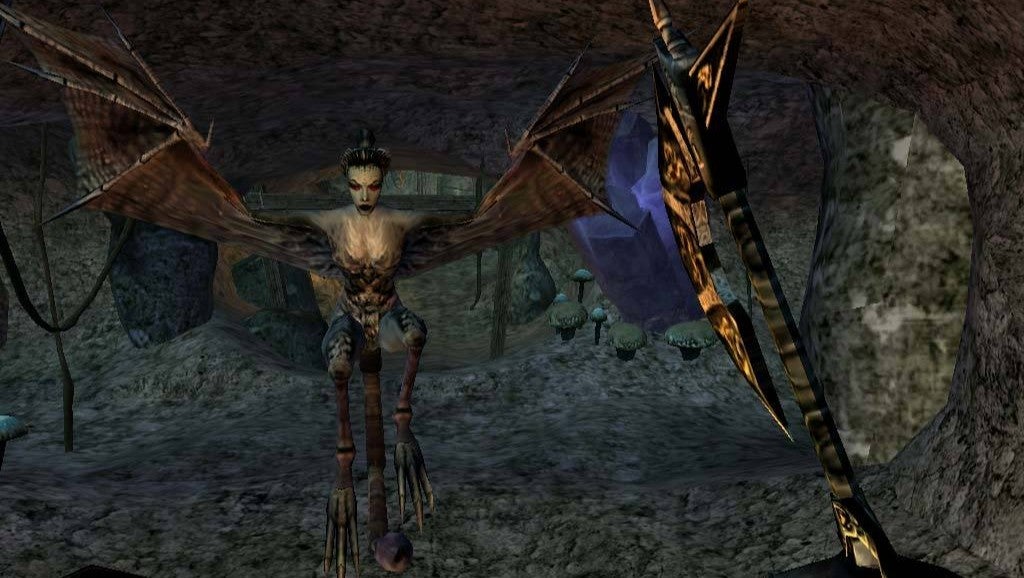
‘Go Back and Play Morrowind and Tell Me That’s the Game You Want to Play Again’ — Former Bethesda Veteran Delivers His Verdict on Potential The Elder Scrolls Remasters

A former veteran Bethesda developer has cast doubt on the possibility of a Morrowind remaster in the same vein as the recently released Oblivion remaster, saying going back to play The Elder Scrolls 3 now, over 20 years after it came out, would make fans “cringe.”

Bethesda is heavily rumored to be preparing Fallout remasters, with Fallout 3 and New Vegas suggested as in the works. But Morrowind — considered by many to be the greatest The Elder Scrolls game ever released — does not seem to be part of the remaster conversation.

Why? In an interview with Press Box PR, Bruce Nesmith, who left Bethesda in 2021 midway through the development of Starfield having worked at the company for over 17 years, highlighted a number of reasons why Morrowind probably won’t be top of Todd Howard’s remaster list.

“The problem with doing Morrowind is that I bet they don’t have the original code,” Nesmith said. “The game is so old. I don’t know if the original source code exists anymore. If it does, can you even compile it? When you’re looking at Oblivion, they still had the code. They could still compile it. Putting the code into the new version of the engine was a possibility.

“The other thing I would say is go back and play Morrowind and tell me that’s the game you want to play again. We all have these fond memories of things that were pivotal moments in our gaming fantasy histories that we absolutely move but you go back and play a 20 year old game and you will cringe.

“People even had cringe moments with the Oblivion remake but they forgave it because they’re reliving something, they’re enjoying the nostalgia. I worked on Oblivion. I’m even responsible for some of those cringe moments! The further back you go, the more that’s going to be an issue. The reality of playing Morrowind would not stand the test of time, in my opinion.

“Now if you were to completely remake Morrowind with the Skyrim engine, to try and rebuild it from the ground up, that’s a whole other story, but that’s an entire project. That’s a whole four-year development cycle. Why not go and make something new?

“Let’s revisit the lands of Morrowind and do a new story. You can include the giant crab palace and all of that stuff but make it new and avoid all the things that would not have survived the test of time.”

On that point, Nesmith suggested Morrowind could be an area Bethesda returns to in another game, perhaps The Elder Scrolls 6, alongside Hammerfell, High Rock, and Summerset Isle.

“If anything, there’s places that would be too interesting,” Nesmith suggested. “I think Elsweyr would be a challenge with its cat people who change the nature of their catness as they mature. That one might be a little challenging to do. But I think pretty much anywhere you go, there’s lots of cool, interesting stuff you could do.”

Earlier this month, Bethesda’s former Elder Scrolls loremaster revealed his idea for The Elder Scrolls 6 story, and how it would have set up The Elder Scrolls 7. In January last year, The Elder Scrolls 6 announcement became as old as predecessor Skyrim was when The Elder Scrolls 6 was announced. Skyrim was released on November 11, 2011, and The Elder Scrolls 6 was revealed on June 10, 2018 — 2,403 days afterwards. It is now seven-and-a-half years since the announcement, and we’re no closer, it seems, to the release of the game.

Wesley is Director, News at IGN. Find him on Twitter at @wyp100. You can reach Wesley at wesley_yinpoole@ign.com or confidentially at wyp100@proton.me.

Get Silent Hill f on PS5 for $36 During Woot’s Video Game Mega Sale

Woot (an Amazon-owned retailer) has refreshed its ‘Video Game Mega Sale!’, and there are some real gems included in it right now. Among the variety of gaming deals is Silent Hill f for PS5, which is marked down to $44.99 on the sale page. However, Woot’s offering the chance to save even more on this game right now by using the code ‘GAMER’ at checkout. This knocks that price down even lower to $35.99 (not including tax).

This saves you an extra 20% on top of the discount that’s already there. Considering it’s usually priced at $69.99, you’re saving 49% overall with this deal, which is an excellent offer to jump on. The sale page states that this bonus 20% off deal only runs through Sunday, February 1, though, so time is ticking to take advantage of it.

Save on Silent Hill f for PS5 at Woot

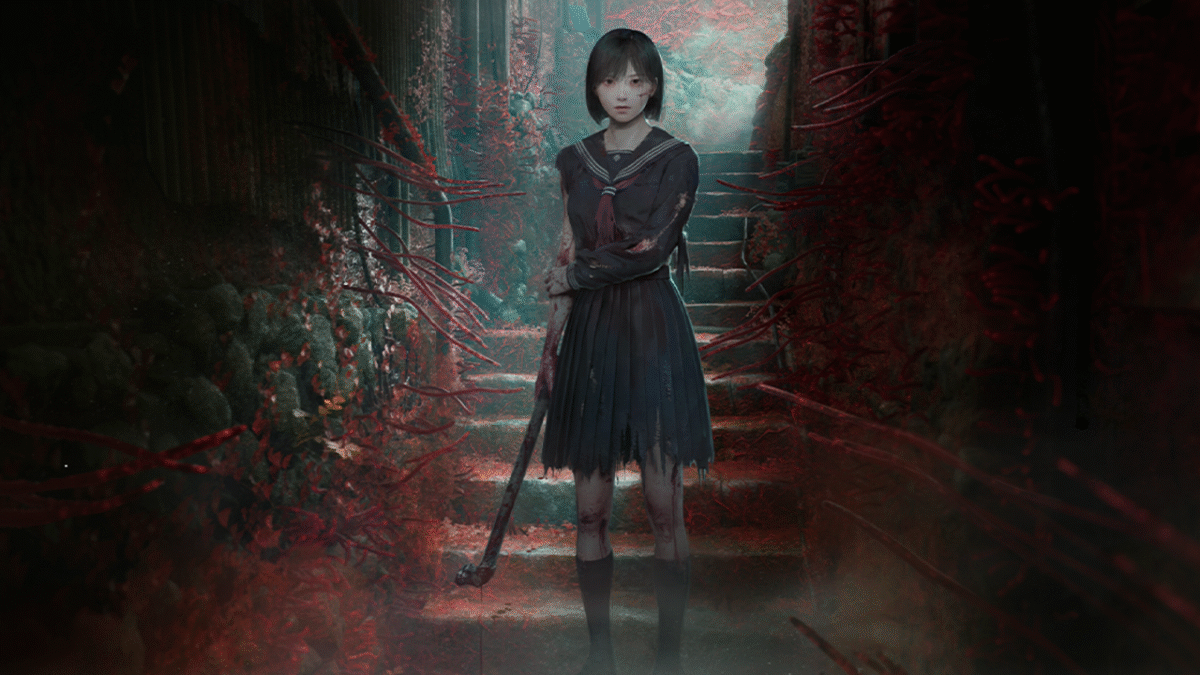
If you’re in the mood for a horror game, Silent Hill f can deliver, offering up a “fresh new Japanese setting to explore, a fascinatingly dark story to unravel, and plenty of twisted freaks to torment you with.” Our review from IGN’s Tristan Ogilvie continued on to say, “some spectacular art design, imaginative puzzles, and a compelling lead character means this latest mainline entry in Konami’s seminal survival horror series definitely earns a grade higher than a Silent Hill F; it’s probably closer to a Silent Hill B-.”

Alongside Silent Hill f, there are plenty of great game deals to explore right now in Woot’s ‘Video Game Mega Sale!’. In particular, a ton of Nintendo Switch game deals have caught our eye, which is good news for those with the handheld. The sale itself runs until February 6, so there’s still about a week to go to scoop up the offers that get your attention.

Hannah Hoolihan is a freelancer who writes with the guides and commerce teams here at IGN.

Huntdown: Overtime Is a Goofy, Retro, and Delightfully Violent Roguelike | IGN Game Preview

I confess that I had never heard of 2020’s pixelated arcade shooter Huntdown, but after playing (and replaying) through the demo for its upcoming prequel, Huntdown: Overtime, I immediately went back and did so. That’s because I was so completely hooked by the hour or so of roguelike action that I was fiending for more. Playing the original was also a lot of fun, but this followup seeks to improve in just about every way, making it a bit hard to go back. The cheeky retro ‘80’s tone appeals to my thirst for nonsense, the run-and-gun sidescrolling action channels the likes of Contra or Metal Slug, and the roguelike system of upgrades and repeated failure against daunting odds made it extremely hard to put down. I went from this not being on my radar at all, to eagerly anticipating when it comes to Steam Early Access later this year, making this an early contender for my most anticipated indie game of 2026.

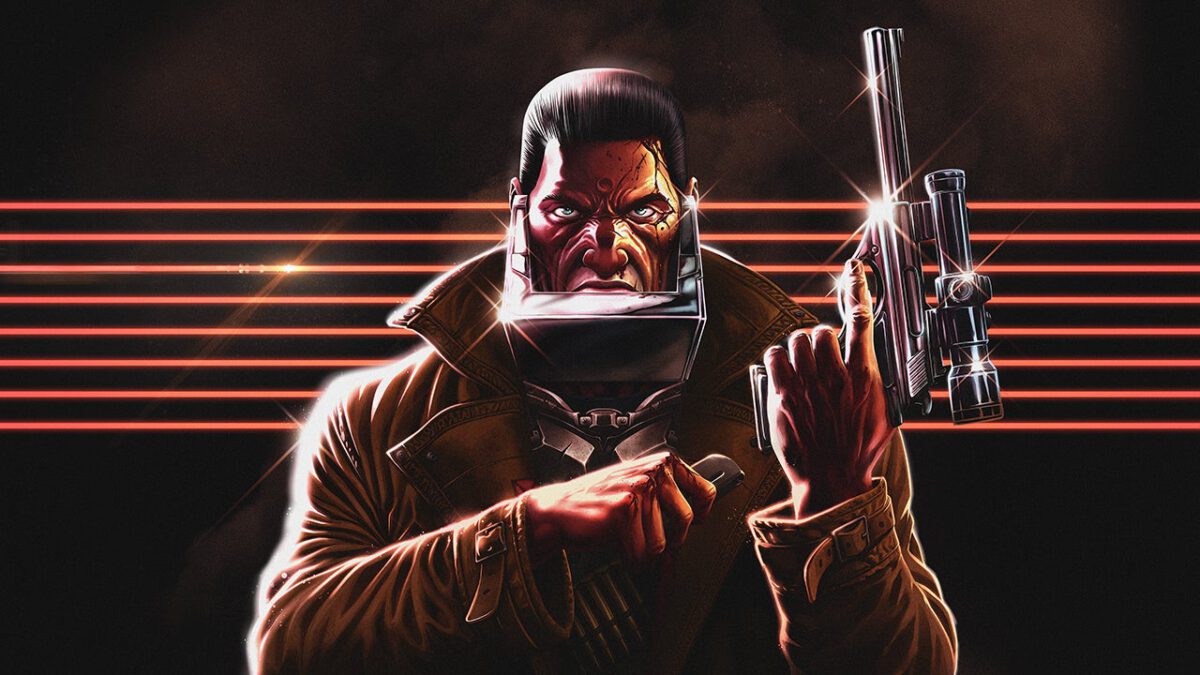
You can infer almost everything you need to know about Huntdown: Overtime’s absurd 80s pulp action vibe by its title alone. Taking place in the dystopian, crime-ridden city of Detroit in 2084, you play a cybernetic rogue robocop who battles against flamboyant street gangs like something out of every VHS action movie you’ve ever seen. You’ll go toe-to-toe against the likes of a shirtless bouncer who pummels you with his fists and climbs around on the ceiling like a monkey, to a six-fingered rockstar called Sammy Sixfingers who tries to kill you with an electric guitar while performing a guitar solo in front of a live audience. The whole thing is just incredibly over the top in the right kind of way, making it very easy to replay each section as you try and fail to get through levels in typical roguelike fashion.

It certainly helps that even when you’re replaying through the same series of levels, things are always a little different. For one, the bosses and levels you end up with on each run have a bit of randomness to them in terms of which you’ll get and in what order, which is aided by the fact that you’re given two routes to choose from if you’d like to avoid one you’ve seen more of than you’d like. The levels themselves seem to be procedurally generated as well, and kept me on my toes with slightly different layouts and enemies never appearing in the same order. This procedural component isn’t anything we haven’t seen before, and the level layouts and enemies you’ll find are similar enough playthrough-to-playthrough that you’ll figure out the patterns pretty quick and run out of things to be surprised by (at least in the short section I played).

It actually sort of reminded me of Hotline Miami, reimagined from a sidescrolling perspective.

Combat is also not anything new, modeled after the likes of Contra or Mega Man, where you’re running and jumping through 2D levels blasting everytc hing in sight as you avoid incoming bullets and environmental hazards. That said, though it doesn’t have many new tricks, the formula it apes is extremely polished here, even in this pre-release state. While initially I was dying a lot and felt destined to be outmaneuvered by the numerous gangsters coming after me, it took less than an hour before I was sliding around, flying through the air, and shooting my way through entire sections without taking a single hit. That’s the kind of rewarding mastery I look for in games like this. It actually sort of reminded me of Hotline Miami, reimagined from a sidescrolling perspective, because although you can take more than one hit, there’s something very pleasantly familiar about the crisp gunplay and melee combat, especially when you hit someone with a baseball bat and see their pink, pixelated giblets go soaring across the screen.

The highlight of each run is when you come into contact with the larger-than-life bosses that can be found in each level. Some of these appear in regular sidescrolling levels, whe re maybe someone named Frankie Starsimmon Sr. will attack you with a big ol’ shotgun and leave you with the option to damage her before taking her alive, or just killing her for a lesser bounty. The ability to take bounties alive for an added bonus to your reward is a particularly nice touch that I’m glad to see they added after the original. But things get especially crazy during the boss fights where you go up against someone with a dedicated boss health bar. The main fight in the demo was against a rockstar who used his stage’s pyrotechnics to try and burn you alive, and always had his stagehand nearby to hand him a new electric guitar after he lost the last one trying to hurl it through the back of your head. These fights can be really challenging, as roguelikes are wont to do, and nine times out of ten when I failed a run it was the fault of one of these deadly weirdos. But they were also some of my favorite moments, and made gearing up for the next big fight that much more exciting.

The retreaded ground you’ll encounter as part of the roguelike formula feels especially easy to get through because of the steady stream of unlockables, upgrades, and buildcrafting options that come with each new playthrough. In one playthrough, for example, you might decide to forgo guns for a pure melee weapon build, grabbing perks and upgrades that enhance your close-range combat skills, while in another you might get your hands on a new plasma rifle you just unlocked and blast your way through rows of thugs with ease. Like many of its genre peers, the joy is in having a build come together perfectly so you can bring it to bear against the string of challenging bosses that have been sending you back to the beginning again and again.

The impressive thing about Huntdown: Overtime is that, at least in the full region I played during the demo, I never started a new run without a ton of new stuff to level up and try out. Sometimes that meant I’d unlock a new weapon that could then be found and powered up during runs, while other times it meant buying a certain permanent upgrade that made my healing items more potent, made me move faster, or some other useful boon to give me an edge on my next run. The pace of unlocks and progression felt perfectly balanced so I never felt like I’d hit a wall or had nothing interesting and new to bring into battle next time. It was so easy to immediately go from one run to the next, that even though I originally sat down for a 20-minute session, I ended up playing until I beat every boss in the demo in a single sitting, completely unable to tear myself away when I was sure the next playthrough would bring me victory. And even after I had my first successful run, I then was returned to base to find even more stuff had unlocked that I just had to try, and found myself immediately going straight into my next run just to try out some new stuff. I can’t remember the last time I found myself so instantly hooked!

Even though I originally sat down for a 20-minute session, I ended up playing until I beat every boss in the demo in a single sitting, completely unable to tear myself away.

One thing that piqued my interest after I went back to play the original Huntdown is the fact that this prequel only has one playable character versus the numerous agents you could take on the role of in the first game. While it feels weird to go backwards with the number of playable characters, Overtime’s demo was so polished and finely tuned that I honestly didn’t feel like I was missing much. It seems to be their focusing in on one specific playstyle and trying to make that work extremely well vs. the buffet-style protagonists, each with their own bag of tricks, that was in the first Huntdown.

I wasn’t expecting to end up so completely won over by such a short glimpse into Huntdown: Overtime, especially after seeing its dorky story and retro art style, but you can count me among the believers. For any roguelike fans out there, this is absolutely one to watch.

Google AI Project Genie Allows You to Create Playable Worlds From Prompts, So of Course It’s Been Used to Rip Off Nintendo Games Like Mario and Zelda

Google has begun selling access to Project Genie, an interactive world creation tool that lets you generate playable environments from a prompt — including those featuring Nintendo characters.

The technology is certainly remarkable, as Google’s Genie 3 models playable 3D spaces in real time based upon user inputs, and allows you to run, swim, fly, or ride in vehicles around its AI-generated worlds.

But the AI technology has also launched with a telling lack of restrictions around copyrighted material — which the model also appears to have been trained upon. A preview of the possibilities published by The Verge shows its reporter able to create playable 3D scenes that look a direct copy of Super Mario 64, The Legend of Zelda: Breath of the Wild and Kingdom Hearts.

Footage published on social media shows gameplay clearly based on Nintendo’s actual Breath of the Wild, where a knock-off Link runs around a world similar to Hyrule, and accurately deploys a glider as he leaps off a cliff. Other creations include a generated world with similarities to Rockstar’s Grand Theft Auto.

Right now, Project Genie is limited to generating interactive experiences it can maintain for up to 60 seconds, with a resolution and frame rate capped at around 720p and 24fps. Still, Google is selling access as part of its Google AI Ultra subscription, its top level of access to AI features that costs $124.99 per month when signing up for a three-month package. (Also, Project Genie access is currently just for U.S. subscribers aged 18 or over.)

“Project Genie is an experimental research prototype designed to follow prompts a user provides,” Google Deepmind product manager Diego Rivas told The Verge when asked why the the product generated material that was clearly based on Nintendo intellectual property. “As with all experiments, we are monitoring closely and listening to user feedback.” The Verge noted that its ability to generate worlds based on Mario had subsequently been halted, with a warning message that blamed the “interests of third-party content providers.”

IGN has contacted Nintendo for comment.

The situation feels reminiscent to the rollout of OpenAI’s Sora 2 video model last October, which initially allowed users to generate clips featuring licensed Nintendo and Disney characters, including Mario, Darth Vader, Pikachu and an array of other Pokémon. Shortly after, OpenAI vowed to give copyright holders “more granular control” over the creation of what the company’s boss Sam Altman dubbed “interactive fan fiction.” Less than two months later, Disney said it was investing $1 billion into OpenAI to officially license 200 of its most popular characters for the AI model to use, in a move that the Mickey Mouse owner described as a way to “thoughtfully and responsibly extend” its storytelling.

Tom Phillips is IGN’s News Editor. You can reach Tom at tom_phillips@ign.com or find him on Bluesky @tomphillipseg.bsky.social

Crimson Desert Promises the World, But How Much Will It Deliver?

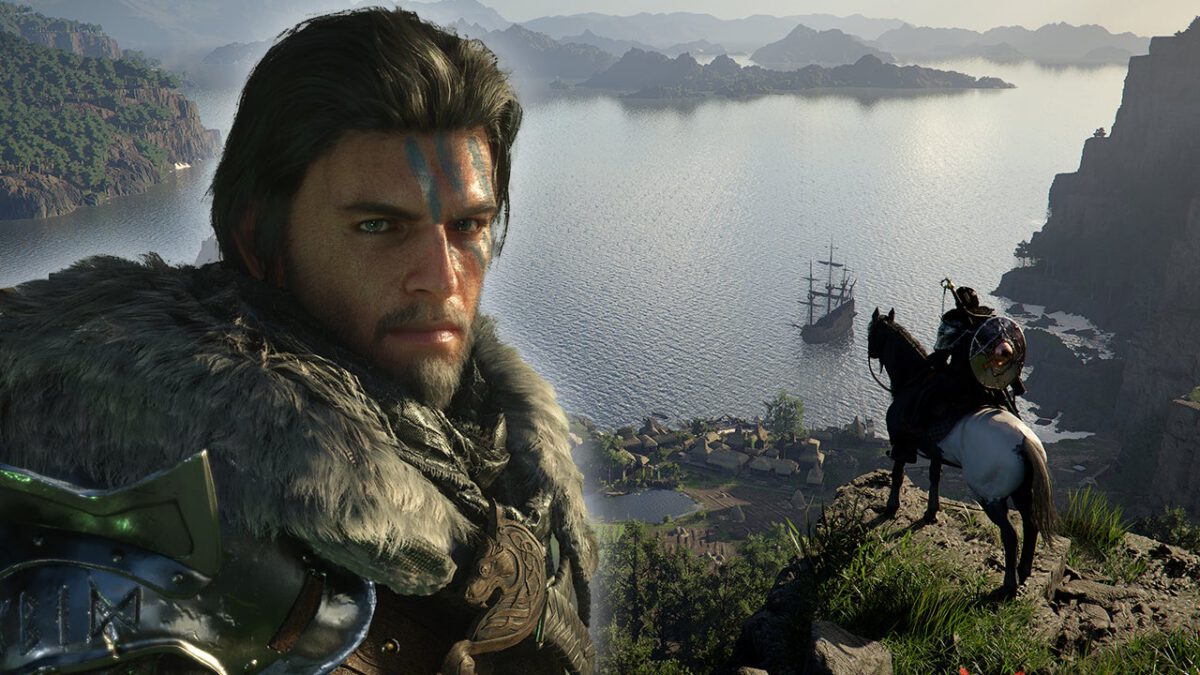
The Legend of Zelda. The Witcher. Dragon’s Dogma. Monster Hunter. Street Fighter. And now, GTA 5? Every time South Korean studio Pearl Abyss shows off a new slice of its upcoming open-world, action-adventure Crimson Desert, I feel like I see a new line of influence. Over the six years since its reveal, we’ve seen a fantasy land akin to one Geralt would explore, puzzle shrines in the sky that could easily hover above Hyrule, and a complex combat system rooted in Capcom classics. But in the developer’s latest lengthy video detailing the world of Pywel, a new surprise awaited us: the addition of two new playable characters to join Scottish Jon Snow-alike main protagonist, Kliff Macduff. With whole skillsets of their own for us to now anticipate getting our heads around, I can’t help but be excited, but also cautiously wary. By trying to do so much, does Crimson Desert risk achieving nothing?

I say this as someone who has had the benefit of seeing and playing Crimson Desert more than pretty much anyone outside of Pearl Abyss’ walls, having visited the studio a few months back for our IGN First. Despite playing a good few hours of it, and having quite a lot of fun with its dynamic systems and satisfyingly flexible action, I still left feeling like I’d only scratched the surface of what Crimson Desert has in store. And I don’t mean that entirely positively – while it’s good to leave a preview knowing there’s plenty more to see, it’s not often you conclude a studio visit still unsure of a game’s big picture. If all those hours of hands-on haven’t successfully communicated what the game is, is something off?

We now know that Crimson Desert’s open world is twice the size of Skyrim’s and larger than Red Dead Redemption 2’s. I’ve put over 200 hours into Rockstar’s Western masterpiece and feel like I still haven’t seen everything, so it’s anyone’s guess how much awaits in this world. Crimson Desert’s Pywel is a gorgeous piece of geography, too, with streets filled with life and rivers running with glistening water. That water is also systemically linked to the gameplay options, conducting lightning magic to electrocute those who stand in it, and is transformed into blocks of ice when struck by freezing spells.

It’s all very impressive on a technical level, but leaves me wondering if this is all part of a “we can put it in the game, so why shouldn’t we?” mentality. From what I played, and from talking to the team, the ability to manipulate the elements won’t necessarily have puzzles or challenges built around them to make it a system you’d legitimately find worthwhile. In Breath of the Wild or Tears of the Kingdom, for example, you know that if you’re taught how to make giant ice cubes, a puzzle shrine will likely follow asking you to put that lesson into action. Nintendo is a developer that has been making games like this for decades now, though, whereas Pearl Abyss is a studio in its relative infancy, having only released MMORPG Black Desert Online so far. By trying to fit everything it can think a player would like to do in a fantasy open world into Crimson Desert, I fear it may be shooting straight for the moon without learning how to get into orbit first.

The power trip is there; I just worry about the rest of the journey.

It all loops back to this latest revelation that not only will we be playing through Kliff’s story, but stepping into the shoes of two new protagonists along the way. The as-yet-unnamed characters with their own (presumably) complex fighting systems look very fun to play as, don’t get me wrong — I’m particularly drawn to the quick dodging, magic-shifting, pistol-wielding woman who appears at first glance to better fit my more rogue-ish tendencies — but it’s yet another layer added on top of an already ambitious cake. I like cake, you can probably tell from a quick look at my face that that would be the case, but when it’s stacked so high that even Bruce Bogtrotter would take a pass on it, I worry it’s a sign that Crimson Desert should not be trying to have and eat it.

The other new playable hero is a hulking, giant axe-wielding brute with a machine gun attached to his wrist. If you’ve been keeping up with Crimson Desert, you’ll know that this isn’t your typical fantasy world, but one where dragons, steam trains, and mechs also roam around. It’s all very exciting in isolation, and genuinely fun to play as your giant metal monsters come face-to-face with helpless medieval soldiers holding only a shield. The power trip is there; I just worry about the rest of the journey.

Story and questing are incredibly important to me when it comes to open-world games. The Witcher’s twisting tales and many memorable side stories are what make The Wild Hunt an all-timer in my eyes. The cast of characters in Red Dead Redemption 2 and the way they weave seamlessly in and out of its world are what make it my favourite game ever. Crimson Desert has a lot going for it — the combat is exciting, the world is diverse and beautiful, and its systems are impressively reactive — but I can’t help but feel wary. Most of the missions I’ve played so far, at several different events, have been castle sieges, often ending in admittedly impressive boss battles. But, they’ve all been relatively thin narrative-wise, aside from an interesting detour to a mad inventor’s lair where he’d built a golden mechanical dragon, as you do. I’ve seen little of what’s going to be the thrust story-wise in Crimson Desert as a whole to get me hyped in that regard, nor met any characters that I feel will get close to my heart. And I can’t help but worry that there’s a reason we’ve seen so little of this world’s story.

Now, with the surprise addition of two extra playable protagonists to get to know on this adventure that is less than two months away, I worry that Kliff and his friends may well be fun to play as stylistically, but contain little substance within them. I’d be very happy to be wrong, though. I’ve been looking forward to Crimson Desert for a long time now, and have had a genuinely fun time whenever I’ve managed to get hands-on with it. I just wonder how all of these well-constructed building blocks will, in turn, create a greater whole. Will its gameplay systems overlap in interesting ways and be built into mission design? Will authorial intent come to the fore, or will I ultimately feel like a kid being dropped into a sandbox of possibilities with direction? I’m excited, just also a little afraid that by trying to be everything, it may end up achieving nothing.

Simon Cardy is a Senior Editor at IGN who can mainly be found skulking around open world games, indulging in Korean cinema, or despairing at the state of Tottenham Hotspur and the New York Jets. Follow him on Bluesky at @cardy.bsky.social.

After Going Gold, Crimson Desert Developer Deep in Optimization Phase ‘To Make the Game Run as Good as It Possibly Can’ Before Launch

If you’ve seen Crimson Desert’s impressive 15-minute gameplay video, you might be wincing at the thought of it running smoothly on your console or PC. Well, right now, the developers at Pearl Abyss are focusing on optimization to help ensure a “smooth” experience when the game comes out in March.

Crimson Desert is set in a huge and seamless open world packed with enemies, NPCs, and all sorts of things to do. It’s dense with detail, and you can zip around quickly on the back of a dragon. Based on the video, below, Crimson Desert will be a demanding beast — it will be interesting in particular to see how it runs on the Xbox Series S.

According to Will Powers, director of public relations at Pearl Abyss America, the developers are doubling down on the “optimization phase” as we speak, telling former IGN video extraordinaire Destin Legarie in a new interview that this is the focus ahead of Crimson Desert’s March 19 release date.

“We have gone gold. Now comes further, further optimization to make the game run as good as it possibly can,” Powers said. “And that’s as important of a part. So that’s the phase we’re currently in between now and launch to make sure that the experience when players eventually get their hands on the game, is as smooth as possible.”

Powers wouldn’t go into specifics on the graphics settings that will be available on consoles, but did confirm Crimson Desert has PS5 Pro enhancement. You can also turn off the particle effects in settings, although Powers said they do convey important information during fights.

Pearl Abyss built a new engine for Crimson Desert, and Powers explained that it’s capable of providing a 4K60 native presentation, complete with ray tracing, without the aid of graphics technology such as DLSS or FSR. But of course you’ll need powerful hardware to enable it.

“Yeah, we’ll show 4K 60 native, sure, with ray tracing on, that’s not done through DLSS or FSR, that’s done natively in-engine,” Powers said. “And then if you want to further optimize then you can tweak all the settings and do all the things, but we want to show that you don’t have to… like the game itself should be able to stand on its own.”

And on that decision to go with a proprietary engine:

“I’m not going to say that the game is absolutely perfectly optimized, but within the engine it’s using every single thing. So it’s as optimized as it can be within that space. That’s not possible otherwise. And so rendering thousands of trees within draw distance, it does those things better than an off-the-shelf engine could because of that.

“Off-the-shelf engines weren’t able to deliver the uncompromised vision that the developers set forth to create with this game. So, they needed to create their own engine in order to deliver on that vision.”

Crimson Desert’s huge open world has been a topic of debate recently. Pywel is divided into five distinct regions: Hernand; Pailune; Demeniss; Delesyia; and the Crimson Desert itself. The main quest revolves around protagonist Kliff’s journey, but you’re free to explore the world in any order, taking faction-driven quests, large-scale battles, fortress sieges and smaller, character-focused missions.

Pearl Abyss confirmed that as the story progresses, two additional playable characters become available, each with unique combat styles, skills and weapons. Exploration is a big part of the game — you travel on horseback, climb terrain, glide across distances, and later access advanced traversal options such as a missile-firing mech and a dragon. Pearl Abyss said the world is filled with hidden treasures, ancient mechanisms, puzzles and points of interest “designed to reward curiosity and discovery.” As for combat, expect to face enemy soldiers, sorcerers, beasts and machines.

Earlier this month, Powers called Crimson Desert’s open world “absolutely massive,” bigger even than that of Bethesda’s Skyrim and Rockstar’s Red Dead Redemption 2.

Speaking on the Gaming Interviews YouTube channel, Powers said that describing the size of Crimson Desert’s world in terms of numbers doesn’t do it justice, because doing so fails to capture the scope and scale of the game. But he did go as far as to compare it to two of the biggest open-world games around.

“I don’t think numbers really do it justice because, how big is that in terms of scope and scale?” he said. “But what we can say is that the world’s at least twice as big as the open world, the playable area, of Skyrim. It’s larger than the map of Red Dead Redemption 2.”

Powers went on to insist that the size of Crimson Desert’s open world wouldn’t determine its quality. Rather, what you actually do in it is the key factor.

“The continent of Pywel is absolutely massive, but size doesn’t really matter if there’s nothing to do,” he said. “Open-world games are about doing things, having activities, having distractions. So we wanted to create a world that’s not only massive, but is also incredibly interactive.”

Image credit: Pearl Abyss.

Wesley is Director, News at IGN. Find him on Twitter at @wyp100. You can reach Wesley at wesley_yinpoole@ign.com or confidentially at wyp100@proton.me.

NCR Power Armor From the Fallout TV Show Makes Its Way Into Fallout 76 — but You’ll Need to Spend $30 to Use It

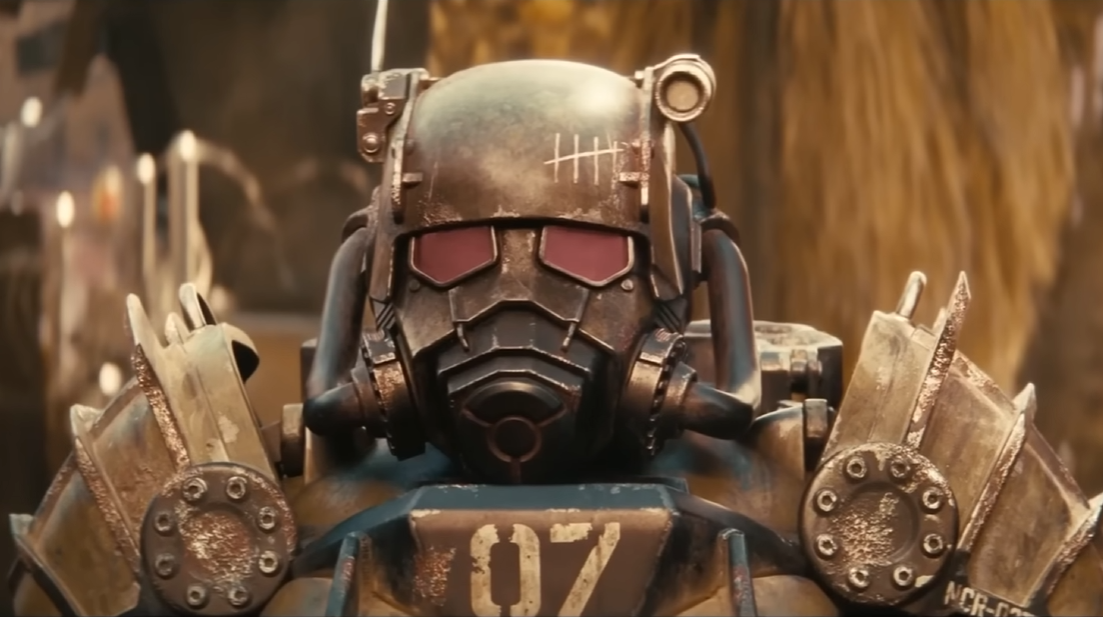
Inevitably, the New California Republic Power Armor that made such a dramatic appearance in the latest episode of the Fallout TV show is now in Fallout 76. But rather than sell it via the in-game shop and thus allow players to buy it with Atoms, Fallout 76’s virtual currency, it is only available as part of a standalone DLC bundle priced $30.

In lieu of a brand new Fallout video game, Bethesda has leaned heavily on Fallout 76 to capitalize on boosted interest in all things Fallout following the breakout success of the Prime Video TV show. Fallout 76 has Walton Goggins’ character The Ghoul dishing out quests, for example. There is a New Vegas-style expansion (Season 2 is set in New Vegas — or what’s left of it). And now Fallout 76 has the NCR Power Armor that Maximus uses to fight a pack of Deathclaws in Episode 7.

That NCR Power Armor is a big talking point among Fallout fans for a number of reasons. It’s brand new — we’ve not seen its type in the video games before — and it sparks all sorts of questions about the Fallout lore and what we thought the NCR was capable of. Setting aside the fact that an NCR Power Armor appearance in Fallout 76, which is set before all the other Fallout video games, makes little sense lore wise because the NCR didn’t exist yet, its price has become the big talking point.

The NCR Power Armor is available in Fallout 76 via the Mojave Bundle, which includes the following:

  • Ranger Power Armor Paint
  • NCR Flag
  • New Vegas Neon Sign
  • Ad Victoriam (Super Sledge)
  • Legion Legate Outfit
  • Player Title Prefix – “Advictoriam”
  • Player Title Prefix & Suffix – “Tribune”

The long and the short of it is that if you want the NCR Power Armor, you need to hand over $30 for this entire bundle — a standard practice these days really, where DLC bundles often cost more than entire video games, and items you might not necessarily want are thrown in to improve “value.”

Some fans have said the bundle is overpriced at $30, and accused Bethesda of “cashing in” on the show by not making it available to buy for Atoms, which most players will have stashed away for DLC like this.

“Yeah, the price of the Mojave bundle is ridiculous,” one fan said. “It’s exhausting to watch a studio that once had credibility reduce everything to cash grabs. I guess a lot of people will pay for it anyway. Good luck.”

It’s a sentiment shared by many across the various Fallout subreddits, Steam’s own forum, and social media. “Yeah this is a hard pass for me. Put it in the Atom shop,” said a disgruntled fan. “£26.99 for eight items, two of which are just words!!!” added another. “Then you’ve got two C.A.M.P items, a Power Armor paint, a weapon, plus an outfit with a helmet…. Not even a cheeky few hundred Atoms thrown in! That’s actually peak lmao, but whilst people keep buying it, Bethesda are going to keep selling it!”

“This DLC includes a set of armor that I’m never going to wear because the Legate armor doesn’t fit in thematically with anything, it also includes a flag and a neon sign, none of which are of particular value to me,” reads one negative Steam review. “And with the Burning Sands starter bundle you at least get a free bullet machine. This bundle gives you nothing of value. For me the only reason to pick this up is the NCR Power Armor, which I can understand cashing in on the show, but they clearly didn’t want to put it on the Atom shop for the people who have saved atoms. I would have paid $10 for this item no problem.”

However, not all players agree. Many are pointing to the $30 price point being standard for bundles of this type in Fallout 76 (and in other games), and others are saying you can simply choose not to but it if you don’t like it.

“Is it overpriced? Yes. Is it undervalued? Yes,” countered one fan. “It’s still not predatory, because you can simply NOT BUY IT. You lose out on zero actual gameplay by not buying it. You also don’t gain any gameplay from buying it. If having this bundle gave me some type of advantage in-game, that might be predatory, but this is just another bundle. I’ve skipped plenty of those over the years. This bundle replaced the Atomic Angler bundle, which I believe was also $30. There’s ALWAYS going to be a cash bundle out there. Just don’t buy it. It’s that simple.”

“You know as weird as it is I just don’t mind,” said another. “There’s no gameplay content or quests / locations locked behind the purchase, so far every expansion has been released for free, there’s plenty to do in the game and loads of other cosmetics and camp stuff to get for free or buy with atoms from challenges, the game (imo) doles out tons of Atoms anyway, and from my understanding these bundles typically go on more than 50% off sale pretty regularly.

“So I mean like, whatever, you don’t need to day one buy every single piece of content, if Bethesda releasing these lil whale drops occasionally means the vast majority of the game can stay free for the vast majority of players that’s a good thing. Just be glad we’re not a gacha or a lootbox game or something with actual predatory pricing.”

Bethesda will of course be hoping that as many fans as possible decide that $30 is a reasonable price to pay to patrol the desert of Burning Springs like you’re straight out of the Fallout TV show. Data shows that the show has fueled an increase in player numbers for all Fallout games, with some newcomers dipping into the likes of Fallout 76 for the first time. I imagine in that context, this NCR Power Armor will prove quite popular.

Fallout 76 itself, meanwhile, is free-to-play until February 5, with the Season 2 finale set to broadcast on February 3. If you need to catch up, Amazon has released Season 1 for free on YouTube. If you’re up to date, it’s worth checking out the Fallout co-showrunner’s tease about Season 2, Episode 8, which sounds like it will have a significant impact on The Ghoul, Lucy, and Maximus. After that, be sure to check out IGN’s Fallout Season 2, Episode 7 review.

Wesley is Director, News at IGN. Find him on Twitter at @wyp100. You can reach Wesley at wesley_yinpoole@ign.com or confidentially at wyp100@proton.me.

The Biggest Magic: The Gathering Crashers and Climbers This Week – January 29

Magic: The Gathering feels like it’s more popular than ever, and with no fewer than seven sets on the roadmap, here’s hoping there’s something for everyone.

The first set of the year is Lorwyn Eclipsed, and it’s pretty darn great, actually. It’s also causing some big changes to card value as players rush to upgrade its precons, particularly the Blight Curse one. Thanks to our friends at TCGplayer, we’ve got a rundown of the movers and shakers kicking off the latest set.

Climbers

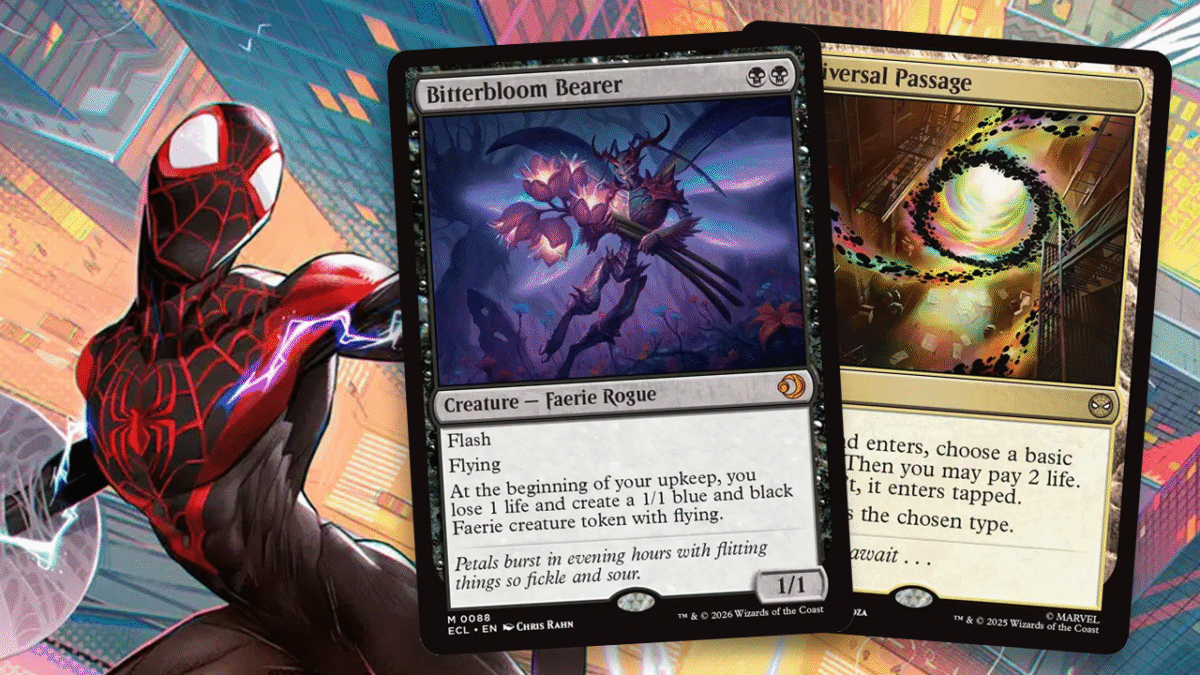
We’ll get to the Blight Curse deck in a moment, but this Spider-Man Land is seeing some play since it works with the Dance of the Elements precon.

As Multiversal Passage enters, it can become any basic land you need it to be, entering tapped or being ready to go at the cost of two life. It’s wobbling at around $10 right now, but was half that just weeks ago.

OK, it’s Auntie Ool’s time to shine. The Commander behind Blight Curse deck is all about putting -1/-1 counters on cards, and that makes Nest of Scarabs a great pick since it turns those counters into 1/1 insect creature tokens, too.

It’s reached almost $10 seemingly overnight, and is a nice, obvious inclusion for the precon upgrade package.

Generous Patron is anything but obvious, though. It puts +1/+1 counters on creatures, which at first glance feels like the opposite of what Auntie Ool’s deck will have you doing. Still, the text below reads “Whenever you put one or more counters on a creature you don’t control, draw a card.”

Since that part doesn’t specify which counters trigger card draw, enjoy drawing more cards! It’s reached $12, again almost overnight.

Faeries were popular in Lorwyn’s first go-round, and Bitterbloom Bearer is one that’s particularly sought-after. One variant has appeared in our list of the priciest cards already, and the basic one is going for around $26 right now.

Finally, Pandemonium has spiked to around $14. It’s from the Exodus set, and lets a creature deal damage as it enters play. Almost tempted to put it in my Lord of Pain deck…

Crashers

Gah, so close. I’ve been waiting for Icetill Explorer from Edge of Eternities to drop a little further, and while it’s cheaper than it was a fortnight ago, it’s still around $20.

A perfect inclusion for Landfall decks, it lets you play an additional land each turn and play lands from your graveyard, too.

Lorwyn Eclipsed only has one vampire card, but it got me thinking: How much is Edgar Markov going for these days?

The answer is around $25, but given his power for Vampire decks, he still feels like a must-buy for anyone looking to play a fanged deck.

Remember when everyone went wild for Ragost, Deft Gastronaut? This Lobster makes your Artifacts into Foods, and despite seeing a spike in recent weeks, it is still under $1.

I’ve been tooling up an Eldrazi deck recently, and picked up Sire of Seven Deaths. Its value jumps around a fair bit, but for $19 you can get a 7/7 with (deep breath) First Strike, Vigilance, Menace, Trample, Reach, Lifelink, and Ward – 7 Life. Savage.

Finally, talking of keyword soup, I picked up Atraxa, Grand Unifier. No idea where I’ll play it, admittedly, but it’s sitting around $11 right now, which is much lower than in recent months.

Lloyd Coombes is an experienced freelancer in tech, gaming and fitness seen at Polygon, Eurogamer, Macworld, TechRadar and many more. He’s a big fan of Magic: The Gathering and other collectible card games, much to his wife’s dismay.

‘Noobini Pizzanini 6-7’ – Story Kitchen’s Next Video Game Adaptation Is a Movie Based on Roblox’s Steal a Brainrot

Video game adaptation company Story Kitchen is cooking up a movie based on the popular Roblox experience, Steal a Brainrot.

As reported by Deadline, the movie studio has announced that it is officially in early development on a feature-length film based on the meme-collecting experience that launched just last May. It’s not exactly Sonic the Hedgehog, Tomb Raider, or any of the other games the studio is known for getting involved in, but it’s still something it’s (mostly) serious about.

“We’re thrilled to bring STEAL A BRAINROT to the big screen,” Story Kitchen co-founders Dmitri M. Johnson and Michael Lawrence Goldberg said in a statement. “Noobini Pizzanini 6-7.”

Deadline says the Steal a Brainrot movie will blend all of the “chaos, comedy, and competitive mischief” that has attracted the 56.6 billion visits the Roblox experience has achieved. Fans have turned up every day since May to buy “Brainrots,” which are essentially meme versions of collectible monsters not unlike Pokémon. Some Brainrots are rarer than others, with players able to generate money, sell Brainrots, and, of course, steal them from other players.

Around 400,000 users are active in Steal a Brainrot as of this piece’s publication, with the all-time peak it reached in October being a whopping 25.8 million concurrent players. Even if you’ve never played Roblox, there’s a decent chance you’ve heard about this particular experience, as multi-instrumentalist and Uptown Funk mastermind Bruno Mars helped put together an exclusive concert for Steal a Brainrot earlier this month.

Story Kitchen is bringing Steal a Brainrot to moviegoers at an unspecified point in the future. The project is in development alongside Do Big Studios and Spyder Games, and it’s led by Johnson, Goldberg, Timothy I. Stevenson, and Elena Sandoval. Think Influence, which represents the creators of the experience, is also involved in the production.

The company has shown interest in the Roblox community before, announcing in November 2025 that it had started putting the pieces together for a movie based on Grow a Garden. Other projects in the works at Story Kitchen include the live-action Tomb Raider show, a Clair Obscur: Expedition 33 movie, a Life is Strange show, an It Takes Two movie, and more.

While we wait for updates on how Steal a Brainrot will bring memes to the movies, you can read about why experiences like Grow a Garden are bringing in millions of players. You can also see where Roblox ranked on the list of the most-played console games of 2025 (and 2024).

Michael Cripe is a freelance writer with IGN. He’s best known for his work at sites like The Pitch, The Escapist, and OnlySP. Be sure to give him a follow on Bluesky (@mikecripe.bsky.social) and Twitter (@MikeCripe).