Greetings, racers. We’re 34BigThings, the team behind Redout and now the revival of Carmageddon. Our armageddon involves WW3, cellular degeneration, and, of course, evil corporations. Let’s dive into the world you’ll be racing in when our Carmageddon spinoff, Carmageddon: Rogue Shift, launches February 6.
Welcome to Earth, 2050
When you take the wheel for the first time, the old world has long since ended. Devastating wars, natural disasters, and swarms of zombies have left humanity on the brink. Zombies, called the Wasted in this universe, outnumber humans 10,000 to 1. Each night, streets swarm with the undead, forcing survivors to barricade themselves in high-rise buildings. Chaos chokes the ground level, where graffiti, trash, and crumbling buildings stretch endlessly.
There is just one chance to escape this nightmare: the Carmageddon. Because, while you’re driving, you’re surviving.
Survival requires skill and a solid ride
Your story begins as a faceless racer with little more than a rust bucket, scavenged fuel, and a makeshift weapon to work with. Every victory in these deadly races promises power, prestige, and valuable prizes to the participants. The champion wins the right to attempt the perilous journey that leads to the spaceport beyond the mountains. To traverse this treacherous terrain, you’ll need the experiences and gear that can only be gained from the Carmageddon races. With just one jet left, the only chance to flee this dying world is worth more than any reward.
The apocalypse is your playground
We wanted to create a robust game loop with a fast, accessible, but never trivial handling model at the core of it. Your car is your fortress, your safe haven and your main offensive weapon – pretty much the protagonist. With 15 unlockable vehicles each with their own drivetrain, weight, center of mass, suspensions, tire friction and pressure, response to steering, you’ll have quite some variety to explore.
But this is just the beginning: on top of this you can unlock and mount 13 weapon classes and 80+ perks. Build outrageous synergies that transform a single Boost canister into an unstoppable deathroll, or multiply the amount of missiles you fire with a single shot, or convert explosion damage around you into repairs for your car. Exploring in videogames isn’t limited to virtual spaces: we want you to experiment and come up with absurd combinations and spectacular strategies. You’ll need to.
Opponents will not roam around trying their best to hit you occasionally, but will actually behave like there’s a one way ticket to salvation waiting for them at the finish line: they’ll be fast and ruthless, and you’ll need to balance speed, offense and defense if you want to succeed. Some of these opponents will drive colossal war-rigs – yes, bossfights.
A different spin on the zombie story
We mentioned evil corporations earlier. Well, in this timeline, the combination of wars and natural disasters led to supply shortages and famine. To combat this, a food supplement called MiVis was created and effectively ended the worldwide hunger crisis. Like some sort of cruel cosmic joke, long-term consumption of MiVis caused the cellular mutation responsible for the outbreak. The more MiVis consumed, the more you waste away, leading to the coining of the term “Wasted.” Did this development stop production of MiVis? You guessed it, absolutely not.
Corporations suppressed the dangerous effects of MiVis until it was too late, prioritizing profits over people. The people who consumed the most became special wasted, horrible supermutations that morphed into something even less human. Last and certainly not least, there’s the ultimate abomination. A creature whispered about but rarely seen: the monster that guards the only path to the spaceport and your final challenge.
Every crash makes you stronger
In Rogue Shift, no two runs are exactly alike. As you progress through randomly generated paths, you’ll have the opportunity to win events and defeat opponents to gain upgrade credits. The Carmageddon ain’t over when you wreck your ride, though. Each time you begin anew, you retain certain permanent bonuses unlocked with beatcoins. You’ll need to carefully plot out your route through the wasteland, making stops for repairs and new gear. Difficulty increases dynamically, so keep your head on a swivel. As you make it further with each subsequent run, synergies and archetypes will become apparent, giving you countless ways to craft the ultimate killing machine.
Can you survive Carmageddon?
We made Carmageddon: Rogue Shift to challenge you in a way that keeps you coming back. Our goal is to get you into that flow, firing-on-all-cylinders flow state we fondly remember from the original Carmageddon games and, more in general, the combat racing games that defined the genre.
We can’t wait for you to jump in the driver’s seat and put your skills to the test. Wishlist today and we’ll see you on the wasteland.
Code Vein II maintains the core elements of its predecessor, but it feels more like a standalone action-RPG than a sequel. That’s because it greatly expands on the series’ combat systems and ideas to offer a huge amount of customization, while telling an all-new story about vampiric characters called Revenants that’s not linked to the original Code Vein.
I recently got a chance to go hands-on with Code Vein II to check out its new systems, its time-traveling story, and its tough-as-nails bosses. Here’s everything I saw along the way.
A host of combat options
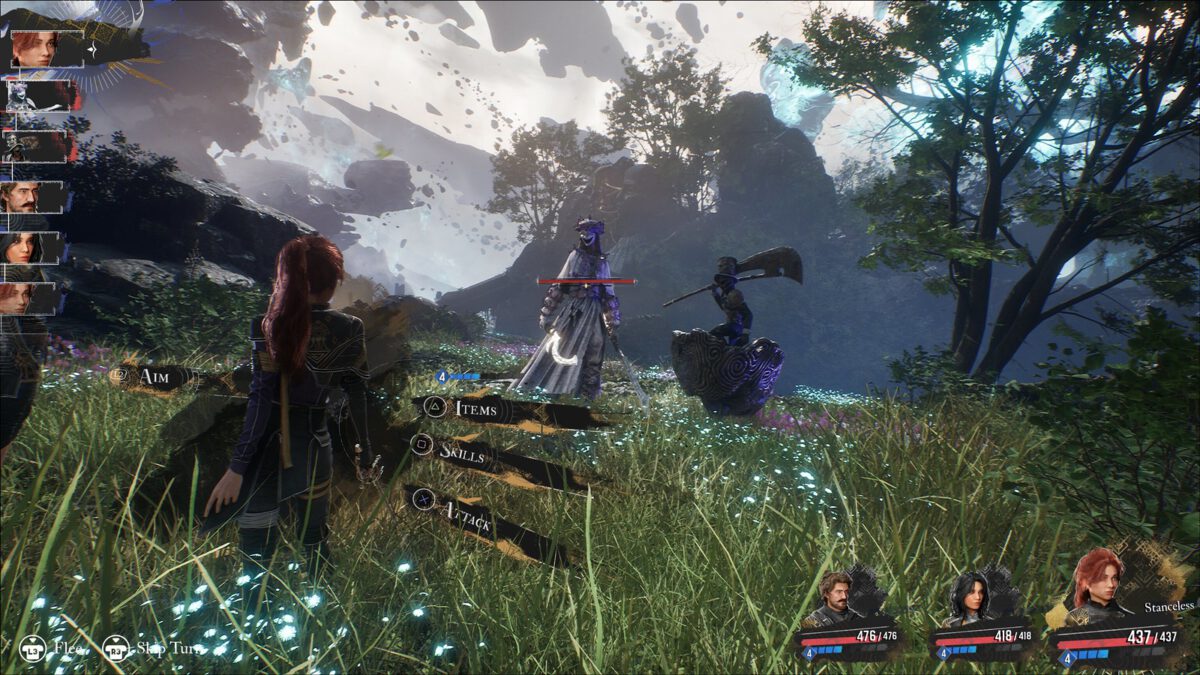
At first blush, Code Vein II feels similar to other Souls-like games, as well as to its predecessor. You can fight with a host of weapons ranging from huge greatswords to fast, gun-mounted bayonets and, new to the sequel, dual blades. Hitting Square gives you a fast, weak attack, while Triangle fires off a stronger, slower one. You can also dodge with Circle and block attacks with L1 to lessen the damage you take, or parry blows completely if you hit L1 just as an attack lands.
Where Code Vein II sets itself apart is in all its combat options. For starters, for each weapon, you can equip four special abilities called Formae; one for each of the face buttons. Holding R1 and hitting one of those buttons activates the Forma equipped to it.
Formae come in three different categories — Combat, Magic, and Support — and they all have different uses in battle. One might give you a powerful attack, while another can help you dodge out of the way of an enemy before striking back when there’s an opening, and another might cover a patch of ground with flames.
Draining your foes
Powering your Formae attacks takes Ichor, and like in the first Code Vein, you only have so much. You steal Ichor from enemies by activating slow but powerful Drain Attacks when you hit or hold R2. These strikes use special weapons, Jails, and, like the Formae, each is useful in its own specific way.
Jails can be equipped like other weapons in Code Vein II, and I tried several to see how they mix with different builds and abilities. The Ogre Jail is a huge claw that slashes away at enemies, while the Hound is a pair of dog-headed gauntlets that latch onto and bite enemies.
Another Jail fires off like a scorpion tail, giving you lots of range, while another lets you send a horde of tiny bats to tear at enemies. Each Jail has particular attributes that fit different Blood Codes, the central aspects of a build that determine your character’s fighting style.
Between weapons, Formae, Jails, and Blood Codes, there’s a huge amount of customization in Code Vein II’s combat.
An adventure through time
The world of Code Vein II lies on the brink of destruction. The only way to save it is for you, the protagonist, to team up with a Revenant named Lou with the ability to travel through time. The plan is to head 100 years into the past to just before an event called the Upheaval, where you can hopefully alter history to stop a world-ending force called the Resurgence.
My preview started on MagMell Island in the present, where humans and Revenants were holed up, fighting to survive. But in the past, the place was under attack from bandits, forcing me to fight my way through its corridors and join other characters as they worked to defend it.
The second level, a dungeon called the Sunken Pylon, was ruined, flooded mall into the ground — a place now overrun by Horrors, the corrupted former humans and Revenants created by the Resurgence. In both levels, there are often side paths with tough, optional fights and hidden rewards to find. Often, you’ll loop back to an earlier checkpoint by unlocking shortcuts and elevators in classic Souls-like style.
Gaining Partners
Time travel also lets you meet characters from the past and team up with them. Partners are a major part of the series, but Code Vein II adds new aspects to the system. Your computer-controlled ally will fight by your side, making them great for taking on multiple enemies or distracting a boss so you can heal. But you can also “assimilate” your partner, fusing the two of you together to give yourself a stat boost while your partner is off the field.
You can activate assimilation whenever you want, making it a handy part of your strategy, assimilating to pull off a few high-power moves before releasing your partner back into the fight.
Partners are also something of an extra life. When your health runs out, your partner will revive you and briefly disappear. If you can stay alive long enough, a timer will run down, bringing your partner back into the fight.
Code Vein II’s story hinges on your partners, with the Sunken Pylon focusing on Josée, a Revenant hero wracked with guilt over the death of her twin sister. After channeling Josée’s memories to unlock her past, the dungeon culminated in a battle with the vicious Horror responsible for her sister’s death.
Battling the Metagen Remnant
At the bottom of the Pylon was the Metagen Remnant, a colossal creature that showed how brutally tough Code Vein II’s massive bosses can be. The trick to the fight was to get in close, dodging the Remnant’s enormous, burly arms, and then hitting it in the face whenever there was an opening — while also being careful not to over-commit and get pummeled.
Even once I had the hang of what the Metagen Remnant could throw at me, it was an arduous battle. Bosses have huge health pools and lots of deadly tricks up their sleeves. But if you can hammer them hard enough, you can stagger bosses just like other enemies, allowing you to perform Special Drain Attacks to do massive damage.
Taking on Josée
The last part of the preview, and the final boss fight, saw Lou and me returning to the present to complete our true goal. During the Upheaval, several heroic Revenants used their life force to seal the Resurgence, but the calamity facing the world is a result of those seals weakening. In order to stop it, we need to release the heroes — now corrupted into horrible monsters — and defeat them.
Joséewasn’t exactly as we remembered her; she was now a towering, katana-wielding, armored warrior. Her fighting style is all about fast, sweeping attacks, and using a status effect that can root you to the ground and leave you open to strikes. I had the most success battling Josée with speed, pummeling her with fast attacks and staying light on our feet to dodge her strikes. But like the Metagen Remnant, Josée puts up a serious fight, making it clear that Souls-like fans are going to need to hone their skills to defeat Code Vein II’s toughest challenges.
Altering history
The boss fight is a tragic addendum to Josée’s tale. But as Director Hiroshi Yoshimura mentioned during the event, after beating Josée, you’ll potentially have the option to return to the past and change her fate. That might give you the chance to save her, but it could put your overall mission at risk, too. While I didn’t get to see how the timeline might change in Code Vein II, it’s clear time travel is a big part of how its deep story will unfold.
Code Vein II has added a lot to its predecessor’s foundations, offering versatility in playstyles and plenty of options with your partner, your weapons, and your Formae. But the most interesting part might be its time-hopping story, with the chance to get close to Code Vein II’s characters and, ultimately, change history.
You can see how it all comes together when Code Vein II launches for PS5 on January 29.
A Code Vein II Character Creator Demo will be available January 23 on PlayStation Store, letting you explore the game’s central hub, MagMell Institute, experiment with Photo Mode and try the game’s character customization options. Your custom character can be transferred to the full game.
With all the great titles 2025 has graced us with, there’s barely been time to put down the DualSense wireless controller these past 12 months. No matter what genre you favor chances are you’ve been eating well, whether it’s been big budget blockbusters like Death Stranding 2: On the Beach and Ghost of Yōtei, or instant classics like Hollow Knight: Silksong and Clair Obscur: Expedition 33.
Sure, 2026 has a lot to live up to, but even its first few months have plenty coming to PS5 and PS4. Better get your wishlists ready, things are about to get busy in the best way…
Arknights: Endfield | Jan 22 | PS5
If the tower defense role-playing game original didn’t quite scratch an itch, never fear. This space opera spinoff from the original Arknights keeps its strategic RPG stylings but ramps up the action and exploration in its lavish, yet hostile high-tech world. Gather resources to build and expand factories and bases and unleash flashy combos with a party of up to four in tactical real-time combat. And did I mention that one of the characters is a sunglasses wearing panda called Da Pan? Well, now you know.
The Seven Deadly Sins: Origin | Jan 28 | PS5
Despite its ever-ominous title, the Seven Deadly Sins series has always been a colorful RPG romp, with this latest entry reimagining its bold beginnings to tell an original story. Remaining within the fanatical world of Britannia from its manga/anime source material, you and up to five players via drop-in/out co-op can explore a massive open-world of monsters, dungeons, and a multiversal quest. Yes, that means rifts in space-time, different dimensions, and alternate timelines, to keep you on your toes.
Code Vein II | Jan 30 | PS5
Speaking of traversing timelines, fans of dystopian fantasy will feel right at home with this action RPG which tasks you to save a collapsing world across eras. With your actions as a Revenant Hunter 100 years in the past rewriting the landscape of the present, Code Vein II is a rich adventure with a customizable build system to reflect how you engage in its flashy battles and uniquely equipped partners to fight alongside you. Oh, and Code Vein veterans will be happy to know you can still drain blood from enemies to help activate special abilities.
Dragon Quest VII Reimagined | Feb 5 | PS5
If you’re anything like me, the mere mention of Dragon Quest immediately triggers its signature theme tune in your head – but that’s the perfect preface to a remake which aims to do its early 2000s PlayStation original proud. The classic tale of a fisherman’s son turned time-traveling hero has been updated, along with the addition of a well-crafted diorama visual style which makes Akira Toriyama’s iconic character designs pop off the screen. And the combat system has been improved to give you access to even more abilities and pre-emptive strikes.
Nioh 3 | Feb 6 | PS5
Team Ninja’s dark fantasy action-RPG series lets you blend samurai and ninja skills to take the fight to the powerful calamity only known as the Crucible. As samurai Tokugawa Takechiyo, the fate of Japan rests on your blade, as his jealous brother’s yokai hordes look to bring hell to humanity. You won’t just remain in the Edo period, either, as you’ll have a chance to discover the secrets of the Sengoku, Heian, and Bakumatsu eras, along with their relevant historical figures.
BlazBlue Entropy Effect X | Feb 12 | PS5
Fancy adding a bit more fight to your 2026? 91Act’s flashy roguelite platform adventure packs all the chunky, combo driven combat you expect from a BlazBlue game and slides it into the slick side-scrolling affair. Full of colorful pyrotechnics, potent power-ups, and a detailed progression system, there’s lots here to get stuck into.
Tides of Tomorrow | Feb 24 | PS5
The developers of narratively powerful procedurally-generated adventure Road 96 switches streets for seas. As part of a community of nomads called Tidewalkers, your actions shape the story in the quest to find a cure for the deadly plastification of ocean planet Elynd. But choose your actions carefully – the asynchronous multiplayer gameplay means yours and other players’ choices can affect how the world reacts to you as a Tidewalker.
No Sleep for Kaname Date – From AI: The Somnium Files | Feb 26 | PS4, PS5
Wake up, detective, it’s time to take on a new case. Internet idol Iris Sagan has apparently been abducted by aliens, and as sleuth Kaname Date only you can help her. Set between the two previous titles in the AI: The Somnium Files series, this spin-off blends a visual novel narrative with escape room puzzles and third-person exploration sequences where you enter the dreams of potential suspects for clues.
Resident Evil Requiem | Feb 27 | PS5
We’ve all been eagerly waiting to return to Racoon City. So when Resident Evil Requiem was announced you could almost taste the collective mixture of excitement and dread. The iconic survival horror series is back for another bite, this time putting curious but wholly unprepared intelligence agent Grace Ashcroft in the middle of its blood-soaked investigation. You’ll also be slipping back into the shoes of returning RE icon Leon S. Kennedy. With the freedom to choose between first and third-person viewpoints as you play, Capcom is promising classic chills that will get right up in your face, and more than likely inside some zombie guts, too.
Marathon | March | PS5
Marathon runs will get brutal fast. Bungie’s new PvPvE extraction shooter takes place in the dark sci-fi world of Tau Ceti, where rival Runners and hostile UESC security will get between you and your high-stakes heist attempts. Tense survival FPS gameplay awaits as you scavenge abandoned colony outposts stuffed with loot, stalking solo or forging fragile, on-the-fly alliances with rival crews through proximity chat in the race to extract alive.
Never Grave: The Witch and the Curse | March 5 | PS4, PS5
Let’s get straight into it – the ‘Curse’ part of the title is actually a cursed hat that you control which has the power to possess enemies and use their abilities in this colorful 2D Metroidvania roguelike. And after you’ve used their skills for combat, puzzles, and traversal, you can wind down by rebuilding your ruined village to prepare for your next run. Why not bring three other friends along for the journey via the multiplayer mode, as well?
Coffee Talk Tokyo | March 5 | PS5
If you’ve never experienced the cozy visual novel joys of Coffee Talk, then this is the ideal opportunity to grab a cup of joe and take a seat at the strangest café on the block. Spinning off from the main series, Coffee Talk Tokyo lets you hear the stories of not only people seeking meaning, but also supernatural creatures including vampires, mermaids, and ghosts looking for a little (and mostly not literal) heart-to-heart. You can also craft beautiful latte art that will really make you feel you’re in the middle of summertime Tokyo.
Overhauling this creepy PlayStation 2 cult classic with enhancements across its visuals and audio was just the start for Koei Tecmo. This memorable survival horror’s use of the Camera Obscura to photograph objects and battle evil spirits has also been given new features, including filter switching to perform feats such as increasing your ‘shooting’ distance in combat.
Crimson Desert | March 19 | PS5
This open-world adventure has been on the lips of many since its reveal back in 2019, so those craving to test their skill and strength in the fantasy continent of Pywel haven’t long left to wait. Combat, crafting and cooking, join a variety of other activities such as fishing and mining, which means there’s plenty to give you a break from the fight against savage rival tribes, brutish monsters, and even a mechanical dragon.
The Musoi majesty of Koei Tecmo’s tactical action series gets a glow-up in 2026, as the PlayStation 2 original returns with a modernized look, refined gameplay and UI, and content from its Dynasty Warriors 3: Xtreme Legends expansion. So you’re not just getting the finely honed and ever entertaining 1 vs 1,000 gameplay, there’s also new weapons, storylines and challenge modes to clash swords with.
007 First Light | May 27 | PS5
Hitman developer IO Interactive making a James Bond game? It’s a match made in 00-heaven. Set before the MI6 super spy gained his 007 status, this reimagined origin story aims to deliver fast cars, smooth (and at the perfect times, slow-motion) gunplay, innovative gadgets, and the ability to complete Bond’s missions in a variety of ways. Steal and sneak your way into compounds, bluff and bluster past guards, eavesdrop for intelligence, take down enemies with stealth, or maybe just let your fists fly.
Pragmata | April 24 | PS5
If you’ve had that image of an astronaut and a mysterious young girl lodged in your brain since Pragmata’s first reveal trailer, 2026 is finally your payoff. Capcom’s new sci-fi IP strands spacefarer Hugh and his android companion Diana on a cold lunar research station ruled by rogue AI, pairing Hugh’s weighty third-person shooting with Diana’s reality-bending hacks to hijack enemies and crack environmental puzzles.
Saros | April 30 | PS5
Housemarque’s been hard at work after delivering the excellent Returnal, and Saros is bringing all the qualities that have made the developer one to watch. Mysterious, otherworldly setting? Check. Fast-paced sci-fi shooting? No doubt. Although unlike Returnal, each death in Saros lets you choose and permanently upgrade your weapon and suit loadout. And there’s even more secrets about the game to be revealed…
This is just a small selection of what’s coming down the line – which early 2026 titles are you looking forward to playing?
Last month, we wrapped up another year of gaming with some 2D goodness and new takes on sports. Some big new releases included Marvel Cosmic Invasion, Skate Story, and Thief VR: Legacy of Shadow. Which game was your favorite?
How does it work? At the end of every month, PlayStation Blog will open a poll where you can vote for the best new game released that month. After the polls close we will tally your votes, and announce the winner on our social channels and PlayStation.Blog.
What is the voting criteria? That’s up to you! If you were only able to recommend one new release to a friend that month, which would it be? Note: re-released games don’t qualify, but remakes do. We define remakes as ambitious, larger-scale rebuilds such as Resident Evil 4 (2023) and Final Fantasy VII Remake.
How are nominees decided? The PlayStation Blog editorial team will gather a list of that month’s most noteworthy releases and use it to seed the poll.
Enjoy hours of electric, adrenaline-pumping racing action, embark on an epic journey through a realm of forgotten Disney characters and explore a long-forgotten cavern teeming with untold secrets with the PlayStation Plus Monthly Games for January 2026. Need For Speed Unbound, Disney Epic Mickey: Rebrushed and Core Keeper will be available to PlayStation Plus members from Tuesday January 6 until Monday February 2*.
Let’s take a closer look at each of the games.
Download the image
Need For Speed Unbound | PS5
Start at the bottom, race to the top in the latest entry in the iconic Need for Speed franchise. With separate single and multiplayer campaigns, this latest edition in the Need for Speed franchise from Criterion Games delivers hours of electric, adrenaline-pumping racing action. Race against time, outsmart the cops, and take on weekly qualifiers to reach The Grand, Lakeshore’s ultimate street racing challenge. Pack your garage with precision-tuned, custom rides and light up the streets with your style, exclusive fits, and a vibrant global soundtrack that bumps in every corner of the world.
Download the image
Disney Epic Mickey: Rebrushed | PS4, PS5
Play as Mickey Mouse and embark on an epic journey through Wasteland, a realm of forgotten Disney characters. Disney Epic Mickey: Rebrushed brings the magic of Disney to life in a vibrant 3D platformer. This beautiful remake sends Mickey into a fantastical world where you use paint and thinner to shape your adventure and the fate of this alternate world. Every stroke of your magic brush matters! Use paint to restore beauty and harmony or thinner to alter your environment and uncover hidden secrets. Encounter iconic characters like Oswald the Lucky Rabbit, Walt Disney’s first creation. Collect virtual Disney pins and tackle creative challenges while exploring classic platforming levels inspired by animated films and shorts.
Download the image
Core Keeper | PS4, PS5
Awaken as an explorer in a long-forgotten cavern teeming with untold secrets. In this award-winning, 1-8 player mining sandbox adventure, your choices shape an epic journey. Harvest relics and resources, craft advanced tools, build your base, and explore a dynamically evolving world waiting to be unearthed. Level up your skills, defeat legendary Titans, and unveil the power of the Core. Grow your garden, fish in mysterious waters, master a vast array of recipes, raise and care for animals, encounter the Cavelings, and carve out your own unique world in an enchanting underground adventure.
Download the image
Last chance to add December’s PlayStation Plus Monthly Games to your library
PlayStation Plus members have until Monday January 5 to add Lego Horizon Adventures, Killing Floor 3, The Outlast Trials, Synduality Echo of Ada and Neon White to their game library.
*PlayStation Plus Game Catalog lineup may differ in certain regions. Please check the PlayStation Store on launch day for your region’s lineup.
Ninjas and samurai have always been a staple of video games, but even with their perennial popularity, 2025 has been an exceptionally good year for titles about deadly Japanese warriors. A bunch of ninja- and samurai-themed games hit PlayStation 5 this year, offering a huge variety of takes on the idea of becoming a sneaky, sword-wielding fighter in dark clothes.
From fast-paced combo-ridden action games, to slower and stealthier assassin-themed takes, no matter how you like your ninjas, 2025 has had something for you.
Assassin’s Creed Shadows
Sure, the Assassin’s Creed series is about two ancient orders of ridiculously influential warriors battling one another throughout history, and also there are godlike aliens. But what the games sometimes lack in narrative realism, they make up for in nailing historical settings. Assassin’s Creed Shadows’ depiction of feudal Japan is unmatched, and the series’ focus on stealthy takedowns is right in line with the ninja sensibilities of its protagonist, Naoe — after all, “assassin” is right there in the name. But if you’re looking for some variety, good news: Assassin’s Creed Shadows has two protagonists, so you can get the ninja experience and a taste of the samurai life throughout the course of its lengthy story.
Like Ghost of Tsushima before it, Ghost of Yōtei sports a “Kurosawa mode,” named after the famed Japanese filmmaker, and that’s a pretty good indication of the cinematic experiences that await you. Yōtei is a lot like playing through a samurai film, but with a whole lot of shinobi elements thrown in along the way. Its protagonist, Atsu, isn’t a ninja or a samurai, per se — she’s a mercenary, and she uses every advantage she can to win battles on her quest for revenge. What Ghost of Yōtei channels from the ninja experience is the idea of stealth and silent takedowns. For example, Atsu’s upgraded kusarigama can snare enemies from a distance. She can also unleash kunai for chained assassinations and disappear with smoke bombs. Each enemy encounter demands clever improvisation to match the threat, and that’s Atsu all over.
Publisher: Sony Interactive Entertainment | Developer: Sucker Punch Productions | PS5
Ninja Gaiden 4
Team Ninja’s and PlatinumGames’ titles are often all about speed — overwhelming your foes through ridiculously fast reactions and unrelenting combos. With Ninja Gaiden 4, it’s all slashing, dodging, and obliterating enemies. While there are a lot of classically ninja-esque elements at play, as you might expect from all the uses of the word “ninja” in this paragraph already, what Ninja Gaiden 4 really grabs onto is an over-the-top mobility and agility in its ninja experience. You’re incredibly fast as you run along walls, grapple over gaps, and dodge past enemies, and once you start laying into opponents, you’re able to combo them so fast they can’t even react. If you’ve got a need for ninja speed, this is the game for you.
Publisher: Microsoft Corporation | Developer: Team Ninja, PlatinumGames | PS5
Ninja Gaiden: Ragebound
Side-scroller Ninja Gaiden: Ragebound channels the early entries in the Ninja Gaiden series, mixing modern game design ideas with an old-school charm. You fight through hordes of enemies, including a whole lot of demons, with weapons that kill most enemies in a single hit. The ninja fantasy isn’t so much in the blades, speed, or abilities — although those elements are all there — as it is in mastering the battlefield. You’ll need to size up your foes, and the order in which you need to defeat them, so you can make the most of power-ups to take down tougher foes, or avoid potentially devastating attacks.
Publisher: Dotemu | Developer: The Game Kitchen| PS5, PS4
Onimusha 2: Samurai’s Destiny Remastered
Onimusha 2: Samurai’s Destiny, as the name suggests, falls on the samurai side of the spectrum, but it shares a lot with 2025’s crop of ninja games, like powerful fighting abilities and a focus on battling demonic enemies. Capcom’s remaster of this 2002 classic sends you on a quest of revenge against an army of fiends, encouraging you to engage in smart swordplay as you balance slashing, blocking, and nailing powerful Issen counters. Onimusha 2 also gives the samurai experience a slightly different spin, drawing on elements of Capcom’s contemporary games of the time, like the Resident Evil series, to channel a bit of a survival-horror vibe.
Publisher: Capcom | Developer: Capcom Production Studio 2 | PS5, PS4
Shinobi: Art of Vengeance
Similar to Ragebound, Shinobi: Art of Vengeance also reinvigorates a famed ninja series by reaching back into its 2D side-scrolling past. Shinobi plays up the ludicrous power and skill of its ninja, Joe Musashi, with an emphasis on weakening enemies so that you can perform a blazing fast assassination on several of them at once. Strategically whittling down the life of every enemy on the screen without outright defeating them, just so you can watch Musashi zip around at lightning speed to finish them off, is always satisfying. With a katana, kunai, and powerful, magical Ninpo and Ninjutsu abilities, you have all sorts of ninja-themed options at your disposal to take on anything the game throws at you.
Publisher: Sega | Developer: LizardCube | PS5, PS4
Honorable Mention: Ninja Five-O
Another side-scrolling ninja title returning from the past, Ninja Five-0 was previously a super hard-to-find game that was only available for portable systems way back in the early 2000s. But with Ninja Five-0 making its way to the PS5 this year, you’re finally free to answer the age-old question: What would happen if a cop was also a ninja? You’ve asked that question, right? Ninja Five-O gives you a pretty in-depth answer as you use ninja skills and abilities to save hostages and take down bank robbers and other criminals. Firearms are no match for your speed, skills, or the arsenal of classic weapons at your disposal, including a katana, a grappling hook, and shuriken.
While 2025 might be drawing to a close, don’t worry — it seems we won’t be short on ninjas and samurai on PS5 in the New Year, either. Sucker Punch is gearing up to deliver cooperative multiplayer action with the release of Ghost of Yōtei Legends next year.* Ghost of Yōtei Legends will be free DLC for all Ghost of Yōtei owners.* Nioh 3 is already preparing to strike on February 6, and brings a whole set of ninja skills and abilities to complement its deep samurai gameplay. Ninja Gaiden 4 is arming itself with a major expansion in early 2026 that adds new story content and weapons for its ninja protagonists. And Onimusha: Way of the Sword, the first new mainline entry in Capcom’s series in two decades, will launch a sneak attack sometime next year.
*Available via patch update. Internet connection and account for PlayStation Network required. PlayStation Plus subscription (sold separately) required for online play or multiplayer. PS Plus is subject to recurring subscription fee taken automatically until cancellation. Age restrictions apply. Terms apply: play.st/psplus-usageterms.
The joy of working with indies is never knowing what you’ll stumble upon next. Every year brings something unexpected and delightful, no matter what your genre of preference is. The indie-focused teams here at Sony Interactive Entertainment have bundled up some of their personal favorite indie games from the past year. Here are some of the games that surprised, enchanted, and tickled us in 2025.
Baby Steps
Developer: Gabe Cuzzillo, Maxi Boch, Bennett Foddy Publisher: Devolver Digital
Why we love it: We had a hard time really explaining the elevator pitch to our colleagues after we played it — this is one of those games you simply have to feel to understand. When we handed a controller to SIE’s Sid Shuman and his character immediately slid helplessly down a mountain in the most dramatic way possible, he broke into that tears-in-your-eyes kind of laugh. And it went on for a while. That’s when it clicked for us: the chaos, the tenderness, the humor — it all makes sense the second you take that first clumsy step.
Why we love it: A few of us got an early look at this one from Devolver, and we knew it was sticky when several folks on our team found themselves compelled to keep playing it long after they’d already finished writing up the review. It’s pure, joyful chaos — the kind of game that grabs you immediately and refuses to let go. And for me personally, seeing Kenny Sun behind this made it even better. I’ve followed his work since my early editorial days and loved his 2016 platformer Circa Infinity. Watching his evolution from those minimalist, mind-bending roots to something this loud, playful, and polished — all as a single developer — is incredibly cool.
Blue Prince
Developer: Banana Bird Studios Publisher: Raw Fury
Why we love it: There’s nothing better than a hypnotic, mysterious puzzle game that refuses to play by the rules, and Blue Prince nails that feeling. Several of us ended up having the same unexpected experience with it — even though it’s a single-player game, it became something we played alongside our partners or friends at home. We’d compare notes, swap theories, and brainstorm puzzle solutions together like we were part of some shared secret. That sense of quiet discovery, of unraveling something strange and elegant piece by piece, is exactly what makes this one so special. It’s stylish, clever, and lingers with you long after you stop playing.
A striking, painterly RPG about breaking a prophecy and claiming a future that was never supposed to be yours.
Why we love it: The art direction grabbed us immediately, and the combat hits that sweet spot between thoughtful and cinematic. Such a beautiful game with tremendous acting, tight gameplay, and possibly the greatest gaming soundtrack ever. Montpellier-based team Sandfall Interactive wears their inspirations on their sleeve — from European illustration traditions to the emotional arc and iconic gameplay of your favorite RPGs. You can feel those influences in every character, creature, and brushstroke. It’s bold, beautiful, and exactly the kind of creative vision we love.
Despelote
Developer: Julián Cordero and Sebastian Valbuena Publisher: Panic
Why we love it: Despelote captures a cultural moment that meant so much to so many Ecuadorians, and it does it through small, everyday details that feel incredibly personal. We were struck by how intimate it felt. The narrative is a step back in time drawn from the creators’ childhood memories in Quito. The art style adds to that effect with a gentle, dreamlike quality that makes the world feel both real and surreal. It’s warm, human, and a heartfelt celebration of their people.
Why we love it: From the get-go, Dispatch had us hooked: it draws you in with its vibrant art style, razor-sharp writing, and versatile mechanics that fluidly shift from thoughtful narrative choices to challenging puzzles and the chaos of superhero dispatch management. What sets it apart, though, is how quickly these larger-than-life characters develop as you play. Beneath the capes and theatrics, they’re full of surprising warmth, messy emotions, and a delightful streak of pettiness that fuels hilarious office drama. It’s a refreshing twist on the narrative-driven adventure games and super hero content we’ve all grown accustomed to. Dispatch finds its own unique voice in that space, which is a superhuman feat in itself, and focuses on unmasking the larger-than-life personalities to study the flawed people behind the costumes. AdHoc reminds us why this genre continues to be so compelling.
Why we love it: Few modern indies have had the cultural impact of Hollow Knight — it became a touchstone for precision platforming, atmosphere, and handcrafted design. Silksong builds on that legacy with the same meticulous attention to detail that made the original so beloved. Team Cherry’s craftsmanship is extraordinary for a studio of their size, and once again, we found ourselves completely lost in their world. It’s elegant, ambitious, and a reminder of just how far great artistry can go.
Why we love it: Enhance has been behind some of the most transcendent puzzle experiences ever made — from Rez Infinite to Tetris Effect — and Lumines Arise carries that same lineage of arcadey, synesthetic brilliance. They’re simply the best at what they do. When the visuals, music, and patterns lock together, it drops you into that unmistakable flow state where your brain finally exhales. It’s stylish, soothing, and one of those games we keep “accidentally” playing for an hour.
Why we love it: This is one of those games that feels instantly good the second you touch it. The movement is expressive, the combat has real snap, and the whole thing radiates personality. We were impressed by how they took such a simple mechanic and stretched it into something with real depth and momentum.
Why we love it: Watching Nava’s artistic evolution over the years has been such a joy, and Sword of the Sea feels like a culmination of everything he does best — movement, atmosphere, emotional quiet. It’s already gorgeous and calming on its own, but what really elevated the experience for us were the subtle, innovative touches he layered in. The DualSense haptics in particular add this gentle, tactile dimension to surfing across the dunes — you feel the world in a way that’s impossible to describe until the controller is in your hands. It’s thoughtful, immersive, and one of those experiences that stays with you long after you sign off.
Honorable Mentions
Citizen Sleeper 2
Demonschool
Ender Magnolia: Bloom in the Mist
Hotel Infinity
Lonely Mountains: Snow Riders
Lost Records Bloom & Rage
Ninja Gaiden Ragebound
Promise Mascot Agency
Rematch
The Alters
The Midnight Walk
To a T
Wanderstop
Wheel World
These games represent just a fraction of the incredible creativity happening across the indie landscape. We’re thrilled to support such creative, genre-defying work and we can’t wait to see what’s next.
Hello everyone! I’m Takashi Ishihara, the Game Director and Art Director for Lumines Arise at Enhance. It’s been a little over a month since we released Lumines Arise, a reimagining of the Lumines puzzle game series originally introduced in 2004, on PlayStation 5 with optional PS VR2 support. Hopefully, you’ve been enjoying playing through the Journey mode, exploring the Mission mode and its Training missions and Challenges, battling other players around the world in Burst Battle, or taking part in Weekend Loomii Live events.
I’d like to give you more insight into the development of Lumines Arise and how the team at Enhance brought this project to life.
Defining next-generation Lumines
We already knew that after Tetris Effect: Connected, we wanted to revisit Lumines. The big question in our heads at that time was, “What defines the next Lumines?” An image began brewing in my head, and I spent time thinking about key words and colors that would represent the new game. It was all very abstract at first, but slowly the main idea took shape. This is when I sat down with Executive Producer Tetsuya Mizuguchi to align on the core concept and where we’d like this iteration to go. Once that was agreed upon, I went full tilt in designing individual stages, picking out moments or feelings I wanted to see visualized, including the UI/UX, getting an idea of the musical styles that might pair with each.
As it came together, I made a pre-visualization video. That’s when a real team was starting to take shape so I shared it with them. We started talking about how to make the concept even better and improve on the foundation. After this initial shaping and polishing process, that’s when we really started building out the game.
Developing Stages over time
A common question that we get is how long does it take you to create a full stage from start to finish. Well, that’s a bit of a difficult one to answer, since during development we continually polish, improve, and tweak little things throughout. It’s become a bit of our house style at Enhance! At no point do we say, “OK, we’re done with that stage time to move to the next!”
The initial design for a single stage is quite broad—its visuals, music, and sound, and the feeling that we want it to evoke. Then, as we work, each person on the team, be it a visual designer or a member of the sound team, contributes tweaks and changes. This back-and-forth process doesn’t stop, but if you laid it all out on a timeline, it might show that it took three or four months per stage from start to finish! At times we would shift focus to certain stages and leave others to “breathe” and come back to them later. Every component of a stage—visuals, sound effects, music—needs to work together in harmony. The design informs the music, the music informs the design, and we change things throughout the process until the very end. When we reach the point where it’s in harmony and feeling good to play, that’s when we know the stage is working and everything is in its most polished, perfected state.
Speaking a little more about matching the music to a stage’s visuals, at the beginning it’s very broad. From what I just described, you could say our development style is very flowy. But at the start, we do a lot of music-related planning, analyzing sound waves, looking at the MIDI, timing and BPM data. However, it’s very similar to making something out of a mountain of clay. You have a plan, but as you’re creating it you take things away, add textures, or maybe you have to add elements back to it. Maybe a shape or curve you added doesn’t work anymore. You’re always perfecting and correcting, and our development style gives some room for that flexibility.
On the cutting room floor
Now, were there any stages we cut from the game? There were a few that we’d started working on very early in development that just didn’t fit thematically. One had an ocean theme, and another was a forest theme—in the end, these didn’t feel cohesive to the Lumines experience we were building. I’d set a high bar for what I wanted out of this new Lumines game. After working on these types of games over the last 20 years, focused on the core synesthesia experience, I had to dig deeper and it turned out that the more darker, cooler feeling tones worked better than the brighter and sometimes softer epic-scale vibes that fit more naturally in a game like Tetris Effect: Connected.
That VR feeling
This is the first time a Lumines game has been playable in VR, too—have you tried it in PS VR2? We wanted playing Lumines in VR to feel like being in the front row at a concert. The lights, the energy, the stage in front of you. It took quite a bit of tuning to get the camera positioning perfect to elicit these feelings, too. If you’ve played on PS VR2 you may have noticed there are lights and particles and things happening that are not visible when playing on a TV. Those little details, along with the headset vibration, help immerse you in the experience even further.
An Immense Task
The games in the Lumines series up to now were all built in 2D. With Lumines Arise, we’re bringing all this into 3D, which means we’re working with a ton of assets, lots of sound components, and music. Every stage’s visuals, music, sound effects are different across all 36 stages. It was so ambitious in scope that we increased our production schedule by six months to get it all done. The finished project hopefully appears effortless, but the scale and volume of making this happen were immense. It was an absolutely huge effort by our team over three and a half years. In that time, our team grew, we learned a lot of new technology that we hadn’t used before, tuned each stage to painstaking detail, and we shipped a game that plays on your TV, PlayStation Portal, and in VR via PS VR2.
Hey, everybody! Sid, Kristen, and Brett are back this week to discuss their top games of 2025, both in terms of hours played and the ones they can’t stop thinking about. This episode also includes a spoiler-filled Ghost of Yōtei interview with Sucker Punch Creative Directors Jason Connell and Nate Fox.
Stuff We Talked About
Holiday Cards 2025 — Celebrate the holidays with festive cards from our studio friends and developers. See if you can find your favorite characters getting into some yuletide shenanigans.
Marathon new features and updates — Get detailed information on all the changes and updates made to Marathon ahead of its March 2026 release. Extract all the data and be prepared to run as a squad or solo.
Saros developers reflect on Story Trailer — The Housemarque team breaks down the new story trailer, going over the emotional throughlines of the title, working with seasoned actors to bring the vision to life, and more.
Helldivers 2 update —.Blast into some mandatory holiday cheer with the Festival of Reckoning on December 18. Enjoy limited-time access to a host of stratagems and other themed goodies.
Sid Shuman – Senior Director of Content Communications, SIE
Download the image
Brett Elston – Manager, Content Communications, SIE
Download the image
Kristen Zitani – Globlal Content Content Communications Manager, SIE
Thanks to Dormilón for our rad theme song and show music.
[Editor’s note: PSN game release dates are subject to change without notice. Game details are gathered from press releases from their individual publishers and/or ESRB rating descriptions.]
Where to start? It’s a familiar mantra to those of us who have ridden into the lavish landscapes of Ghost of Yōtei’s Ezo. With a rediscovered home behind, and a world filled with revenge, myths and secrets ahead, it’s proven a wonderful dilemma to have. And every corner explored, each tale told, and duel won leading to further questions, one of which kept recurring throughout: how did this all come together? To answer, we reached out to ask two people who can speak to Ezo’s secrets best: the game’s creative directors Jason Connell and Nate Fox.
Sitting down with them, and a whole game to unpack, came the now-familiar refrain: where to start? The answer to that: begin at the end.
A word of warning then: this interview strays deep into spoiler territory. First, mark every member of the Yotei Six off your list, and discover every hidden corner of Ezo. The following chat charts game design choices, key side missions, the game’s conclusion and more.
Spoilers below
Note: This version of the interview is condensed for clarity and brevity. The full conversation will be available on PlayStation Podcast later today.
PlayStation Blog: The game’s final duel is a battle with Lord Saito. It really feels like it’s all been leading up to this moment, not just for Atsu, but also the player and that Saito throws practically every challenge you’ve learned to face at you in one single duel. Can you tell us a bit about how you approach the mechanics of this fight?
Jason Connell: We wanted the ending to be an emotional moment, one that brought together all of her journey of overcoming trauma. And it’s both about kind of figuring out that there’s something better to live for, but also to kind of celebrate the ways that the player has, through their efforts, kind of improved Atsu, made her more capable. And in Ghost of Yotei, that’s about mastering weapons, becoming more confident, more capable. And so, Saito himself will attack you with every weapon that you will need to counter with weapons that you’ve learned throughout your journey. This is a chance to celebrate your mastery and understand how to counter and deal with that. Ultimately, in the final battle, where it’s Katana versus Katana, it’s bringing it back down to that simple sword that your father forged in celebration of his two children, and that’s the weapon that you finished the battle with.
The Storm Blade story. It’s a fascinating one in so much that it reveals the fate of Jin Sakai. Can you tell us about how you approach the creation of this mission? Is there any concern about talking about the protagonist of the previous title in Ghost of Yotei, or confirming a relatively sad end to such a beloved character?
Nate Fox: I would say about a year or two into production, we had some ideas of where that might be and how we might be able to honor that character. We always knew it was going to happen. But then when we started placing it in the world, we just found this wonderful spot that really felt like it could be his spot, you know, and we could celebrate all aspects, whether it’s the tree or the Pampas grass or the or the Suzuki grass or the blade. Things you identify with his story and his legacy, and make it like a shrine / mission for him.
We wanted it to be in the right spot in the game. Like if you come out right out the gate, and it’s right there on your right, that doesn’t seem right. That doesn’t seem like it’s fitting. But putting it in the appropriate time space where you’ve sat with this game well enough, and you understand what this game is, and when you find it, it’s a gem, especially if you were a fan of the previous game. And getting the timing right was it was a big part of that too.
Was the intent always to make Takezo The Unrivaled the hardest encounter in the game. Or would you designate that as the hardest encounter in the game? I’m curious to know if the studio defeated him on Lethal difficulty, and how quickly you defeated him on that setting.
Jason Connell: Takezo was not in anyone’s plans at the beginning of the game. It was a great idea, put forward by one of the folks who makes missions, that we would keep to Takezo as a sort of ultimate battle after you’d finished the Atsu’s journey. And I couldn’t be happier that it represents this, you know, the hardest challenge in the entire game. In the most epic location. Our combat team set it to what many of us thought was impossible, until I saw one of the gameplay coders effortlessly beat it without all the upgrades. He said that he got it on his fourth try. Now, these people have been playing the game, programming the combat, for years! So that’s what you’re up against, if you’re having a hard time and you think this is impossible. The way to get better is just to simply make the game for many years and work in the combat team, and then suddenly it will all be easier.
So past the intro encounter with The Snake, the game’s designed to let you choose which of the Yōtei Six to hunt and in what order. This can shape your play style, such as The Kitsune path expanding your stealth options, or bring a deeper connection with the world, like the Oni’s, leading you to encounter Jubei. How do you design the game to accommodate those different play styles that result?
Jason Connell: Well, when we set out to make this game, when it was just Nate and I, you know, dreaming up what it would be, something we talked about was just really leaning into what we saw fans really love about playing in the open world, having the freedom to kind of sort of do what they want to do.
So from the very beginning, we were like, okay, let’s go real hard at this. Let’s invest in design and tech that allows us to give a little bit more freedom, even from the beginning. And so that has wrinkles, you know, it can get challenging to tell a really solid story that needs a beginning, middle and end. So some of our first stabs at this were way too open, right? Like, you can just go after any of the Six. And in that process, Nate pointed out, like, how hard that might be to have that beginning, middle and end, and we need that, because that’s Atsu’s story: that’s the structure.
Really early on, you definitely get this kind of choice. It’s not just a narrative choice. We added weight to that, by giving it a mechanical sort of choice. If you like role playing, if you like being a stealth- like character, or you like playing games that have ninja-like abilities, then you know, this area up here might be more for you. Or maybe you’re intrigued by this over here, which has got more of a traditional big castle and some cool fire weapons and a spear, and we kind of hint you with a little bit of it. So if it’s not just the story that motivates you, or that you’re intrigued by that narrative seed that we’re giving you, maybe it’ll be sort of the mechanics, and we’re giving you a number of ways you might be able to be influenced to make an informed decision.
Briefly talking about weapons, the Sensei quests clearly indicate which weapons they’ll unlock from the start, but the conditions to unlock the rifle and gun in comparison isn’t as obvious. Why was that?
Jason Connell: Well, we knew that the hand to hand weapons were a great source of pleasure for players. They loved getting them. They loved mastering them, and it adds a lot of diversity to your experience of fighting enemies. And that combat, the lethal precision inside of the game, is something that is sort of dead center of the experience.
So we wanted to make sure players knew that they were out there and make it pretty easy to find them, because they’re such a driver of joy in the game. Range weapons are not as core. So the firearms, we didn’t want to make them totally apparent where to go, so that you would have some of the pleasure of discovering them for yourself, whereas the melee weapons we knew were just too important to let anyone miss out on. They are optional, so you could miss out on them, but we didn’t want just sort of missing their presence to be the issue. We wanted to be a choice on the player’s part to say, I don’t want to bother with that.
There are some wonderful smaller encounters in the game, such as the guy who disappears – poorly, I will say – in a haze of smoke bombs… or the fight with a ronin that, I think he’s labeled as “Irritating Ronin”, that elicits an angry response from Atsu once she’s defeated him. Can you touch upon how these came about?
Nate Fox: Just really early on we had people that would work on the main story, then we have people fleshing out the world. Some of those smaller bits just come from, “hey, how would people operate in this place?” How can we give this place a little bit of personality that you might be intrigued and interested to hear about these people. They’re just flavors in the world. Which, you know, honestly, we didn’t have a ton of time to do in the last game. So it was nice to be able to sort of try some of those unique flavors early on. That smoke bomb guy might have been one of the very first ones that we created in the game. We went through a bunch of iteration to make him who he is, but that might have been the first six months of the project. And I’m happy to see some of those make it through to the end, because there’s plenty that do not [laughs].
Download the image
Download the image
It is a beautiful world. There are numerous moments in which, say, a cliff climb or turning the road leads to a picturesque scene that is worth photographing. How intensive was it to get those moments to hit the sweet spot? Did it mean the immediate environment, how to be continually reshaped, to have the camera angles hit just right?
Nate Fox: One of the challenges of making an open world that’s as big as this and also trying to make a game that is artistically powerful and potent, that people step in the world and they feel the weight of the art… That is super hard to do.
The fact that we cannot control what you’re looking at makes it tremendously harder, right? Like, we have no idea where you’re looking. We have no idea what you’re doing. We have a clock that kind of moves when you’re in the open world. So we don’t know if you’re in day or night. Certainly, in some cases, we’ve specifically put you in areas where special times of day exist, like the Spider Lily mission.
But it is such a testament to the environment art team to be able to construct an environment with such beauty that no matter if I look that way, or that way, whether it’s daytime or it’s night time, shockingly, looks pretty good. That is very hard to do. Open World visual design: incredibly hard. Now they definitely know that you’re going to be coming up over this ledge during a Shrine climb. You’re going to be coming up over this ledge, and they might position those rocks to be, and that shrine, to look to the point where you know you’re going to be looking generally in this direction. They’ll definitely do that. And they do a wonderful job constructing what they think that you’ll do. But because we don’t know, we have to get a couple things right. We have to get the atmosphere right. We have to get lighting right. We have to get color. The pacing of the visual noise, and how much noise you have on the screen. All these things are just constructed in the open world DNA of the visual design. And we hope that we can guide you to areas where it just kind of puts a magnifying glass on that and makes it, you know, really pop in those moments. A very few amount of people on the team really get to contribute exactly to this, and I think they do a wonderful job bringing it to life.