I hate Discord with the intensity of a supernova falling into a black hole. I hate its ungainly profusion of tabs and voice channels. I regret its cybersecurity breaches. I resent that the PRs use it for every virtual press event. I’m furious that I have to download 12 updates whenever I remember to turn it on. I despise the feisty and cloying loading screen trivia and service messages. Show me the “empathy banana” again, you weird little gopher beetle. I’ll put you in the microwave.
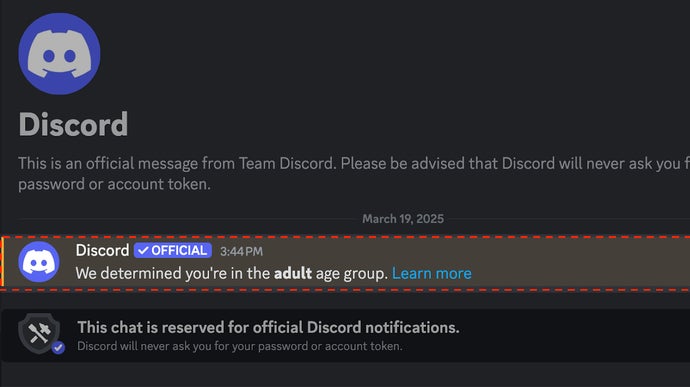
I also dislike that Discord now assumes I’m “teen-by-default” and restricts my access appropriately unless I go through some kind of age verification process, though I can understand the rationale, given some of the awful things that have happened via Discord. Already in play across the UK and Australia, this new “age-assured” approach is now being rolled out worldwide to create “a safer and more inclusive experience for users over the age of 13”. Rather unnervingly, Discord’s new age verification system includes an “inference model, a new system that runs in the background to help determine whether an account belongs to an adult, without always requiring users to verify their age.”
After a slate of HD-2D remakes, Dragon Quest has brought another of its past entries into the modern era, this time with a doll-like, diorama-style 3D look in Dragon Quest VII: Reimagined.
This complete overhaul of the 2000 PlayStation RPG, which also came out on the 3DS in 2013 and 2016 (Japan and the West respectively) delivers a streamlined version of one of the longest games in the series, smoothing out the pacing, improving combat, making battles faster, and even cutting a few “optional” scenarios.
“Zero Parades is an exploration of failure,” explains Jim Ashilevi, writer and VO director at ZA/UM. “What it means to lose everything and then keep going regardless. And then, since it’s such a painful question, it inevitably becomes an exploration of what it means to be human. How uncomfortable and strange it is to exist in a body that has thoughts and feelings and responsibilities, and a past that they can’t go back and fix.”
“This is why I love working here,” says ZA/UM’s head of studio, Allen Murray, with a smile. “I never had these conversations making Halo games.”
The studio behind Disco Elysium was, of course, never going to follow up its 2019 “disaster cop” RPG with a game about heroes saving the world. That’s not to say that it hasn’t moved into slightly more traditional video game territory, though. Its new game, Zero Parades: For Dead Spies, is an espionage spy thriller set in a dark, almost psychedelic reflection of the Cold War’s closing years. Global powers conspire, enemy agents lurk in the dark, and the entire world sits on the doorstep of the end of history. But while that could theoretically be the elevator pitch for any number of mainstream, combat-forward RPGs, ZA/UM is doing spycraft the only way it knows: Disco style.
“I think the one North Star that we have is that we have to be genuinely interested in the stories that we are choosing to tell,” says Ashilevi. “If we were to start mimicking someone else, or go bigger and more expensive and add production value and fighting mechanics and multiplayer, I think we would just destroy ourselves in the process.”
This “North Star” means that, on the surface, Zero Parades looks almost identical to Disco Elysium. It’s another dialogue-centric, introspective, isometric RPG with striking art direction. But that’s not to say it’s the exact same game dressed up in a John le Carré skin.
“I think you can see the team has really wanted to exceed their production chops with Zero Parades,” explains Murray, “in terms of having the world seem more reactive, more lived in. There’s more action, more people walking around doing things.”
While ZA/UM had no intention of creating a “traditional” video game RPG, it did want to dig deeper into the genre’s more crunchy elements. This time around there are more skill checks, alongside a mental and physical health system that can be exerted to increase the chances of passing those checks. There’s further emphasis on multiple solutions to individual problems, the very foundation of BioWare’s celebrated Infinity Engine games. By pushing the depth of choice available and enhancing the world’s reactivity to those choices, the team saw the opportunity to create something that stood distinct from Disco Elysium.
“Sophomore efforts are really challenging,” Murray admits. “You don’t want to repeat your first hit, nor can you really.”
It took a lot of time for the team to come to terms with that. During the years following Disco Elysium’s release and subsequent “Final Cut” version, ZA/UM experimented with a number of concepts – some were effectively direct sequels, while others explored “a completely different direction,” according to Ashilevi. The path to Zero Parades arrived with the decision to “not fully reinvent the wheel.” The goal, Murray says, was to “expand on what we know how to do, and make a bigger game, both mechanically and in terms of production scope, and do it well.”
Mission Control
Murray acknowledges that there were “years of drama” before the studio got to that point. For many fans of Disco Elysium, that will mean only one thing: the firing of several key creatives in 2022 and their subsequent accusation that ZA/UM’s executive management had seized control of the company through fraud. It’s a complicated chapter in the studio’s story, in which those exorcised from the company – including game director Robert Kurvitz, writer Helen Hindpere, and art director Aleksander Rostov – are characterised as either toxic disruptors or the victims of corporate conspiracy, depending on your source.
But there’s more to ZA/UM’s troubled recent history than those controversial dismissals: this is a studio that has repeatedly cancelled projects and, in early 2024, made 20 of its staff redundant. It all paints a picture of an inexperienced studio struggling to adapt to life after releasing an unexpected mega hit on the first attempt, with the workers caught in the crossfire. Perhaps unsurprisingly, ZA/UM’s UK-based workforce unionised last year.
The artistry comes first, the storytelling comes first. It still feels like the whole video game development side of things is just like a happy accident.
But while collective bargaining is undoubtedly important, those workers also need strong leadership to avoid the woes of the past. Maybe they’ve found that in Murray, a 20-year veteran of the video games industry with previous tenures at Microsoft, Bungie, PopCap, and Private Division. He was appointed as ZA/UM’s new head of studio shortly after news broke about those painful redundancies, and over the past two years his goal has been “coaching the people in the studio, maturing our processes, helping people to really focus on what we’re making, how we’re making it, and why we’re making it.”
“It was easy to have a lot of things sort of floating around,” he admits. “But how are we actually going to animate this, or how are we going to light this? What does this story really mean? What are you really trying to get across to the player?”
Today, ZA/UM is made up of around 90 members of staff. Several of them have, like Murray, been recruited from established developers such as Rocksteady in order to arm the studio with specialist video game experience. But the remaining members of the Disco Elysium team, which makes up approximately 35% of the studio’s total roster, plus many of the new recruits, “come from a background that has nothing to do with game dev,” says Ashilevi.
“As a studio, we still view ourselves pretty much as a collective of artists,” he explains. “The artistry comes first, the storytelling comes first. To me personally, it still feels like the whole video game development side of things is just like a happy accident.”
The Price of Power
That brings us back to Zero Parades, which tells the story of Hershel Wilk, codename “Cascade”, who’s pulled out of retirement for the all-time classic spy trope, One Last Job. By moving into the espionage genre, ZA/UM has been able to work at a notably different scale than it did with Disco Elysium. While Zero Parades takes place in a physical space not too dissimilar to that of the studio’s previous game, by stepping into the shoes of a spy rather than a local detective, the story naturally explores a much grander stage.
“You do have to contend with world powers,” Ashilevi reveals. “It’s not just wallpaper, or stuff that you read from notes that people leave in drawers, or newspapers left on tables. You do have to come into close contact with some of the big players as well.”
This global stage is explored through Hershel’s very personal lens, so while the stakes are certainly heightened this time around, your actions are still conducted at street level. You may be able to turn the cogs of a mega corporation and shift the balance of worldwide politics, for instance, but to do so may require betraying your closest friend. Hershel’s own pain will be tangible, whereas those rotating cogs will feel distant, perhaps even unimportant, to her own life. Such is the toll of espionage.
To create something that reflects Disco Elysium’s triumphs, though, you can’t just tackle issues of the human condition. You’ve got to get at least a little eccentric. And that’s where Hershel’s hobbies come into play.
“She’s deeply fascinated with comic books, music, you name it,” Ashilevi reveals. “So the story is also an exploration of pop culture and what soft power means. Why is it important for us to be obsessed with pop artists and cartoons, and films and pulp novels, and things like that? Why are people so deeply obsessed with retro tech and bootlegged media, like underground forbidden films? What does it do to your soul, and how does it define your identity?”
While music, fashion, TV shows, and retrofuturistic music formats all contribute to the city of Portofiro’s vibrant texture, there is a dark side to it all. What is a consumer as a political entity? How do tiny decisions, like tuning into a particular show or buying a certain magazine, tie into the movements of the big powers? These are potential avenues for Hershel – for you – to investigate.
The battle for soft and hard power, waged between international banks, imperialist states, and communist unions, is something that goes beyond just Hershel’s current mission. “We need to come up with an inspiring enough sandbox so that whatever we choose to do with those characters or this universe next, we can just jump right into it and keep telling stories because the groundwork has been laid,” says Ashilevi. Zero Parades is the starting point for something bigger, then.
At least that’s the hope. The world of Elysium was also envisioned as a space for multiple stories, but it seems that book is now eternally closed. And while Zero Parades may not necessarily need to be as significant a breakout hit as Disco Elysium was to unlock the potential for sequels, it does need to stand tall in a world where the “Disco-like” is a rising genre, made up of games developed both by fans inspired by that RPG masterpiece and new studios set up by the scattered former members of ZA/UM’s original creative team. But by following their own creative North Star, the team behind Zero Parades hopes to captivate players once more.
“We have no clue what kinds of games or stories people are hoping to get out of ZA/UM,” Ashilevi says. “The only thing we can control is whether we’re staying true to our own vision and voice. And that’s what we have done with Zero Parades.”
Matt Purslow is IGN’s Executive Editor of Features.
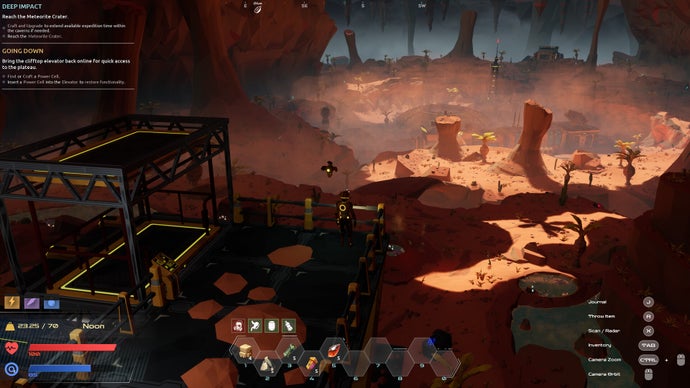
Aethus is a crafty new sci-fi survival game in which one woman and her flying drone pal excavate a layered underground world on behalf of a galactic megacorp. You’ll create a surface base from holographic modules, gather evidence about a doomed science expedition, research a wacky new element, and unearth the dirty secrets of your employer.
It sounds a lot like Coffee Stain’s Satisfactory, with opportunities for automation later on, but it’s viewed from an elevated third-person perspective, and appears more narrative-driven. Satisfactory through the eyes of Diablo? I can – as we space miners like to say – ‘dig it’, though I’m quite weary of games about being the lonely stooge of some breezily villainous extraction racket. This particular seam of satire has long since been gutted. I am ready for games in which we go to other planets for Nice reasons. I feel like that ought to be possible. Anyway, here’s a trailer.
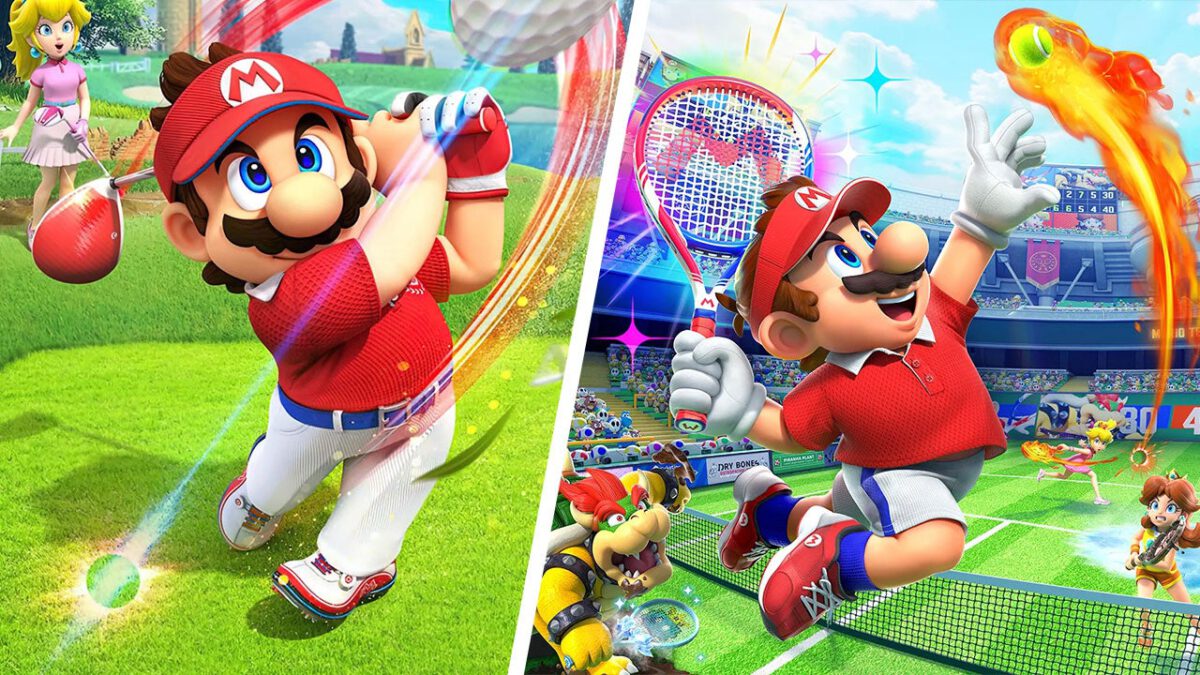
Sports are foundational to gaming as a medium. From Pong to NES Baseball, the infancy of the medium was littered with just-about-recognisable renditions of real-life sports in an attempt to conjure a degree of familiarity to this fledgling form of entertainment. But in the mid ‘90s, the developers at Nintendo collectively had a light bulb appear above their head housing an idea that would change gaming forever – what if Mario and his friends played tennis?
The greatest Mario sports games are a perfect blend of those two words: Mario and sports. It has to be a simulation worth its salt, giving you a reasonable adaptation of what it’s truly like to play the sport in question. However, just as vital is the Mario part, splicing the sport with the Mushroom Kingdom’s trademark personality. In the decades following 1995’s Mario’s Tennis, Nintendo’s sports games evolved from simple sims to wacky adventures, before retreating back to a steady, if uninspiring, run of titles. The early days of Camelot Software’s handheld RPGs and chaos-inducing console sims are seemingly long gone, and today many of Mario’s sporting outings are greeted with more of a shrug than with anticipation.
But with Mario Tennis Fever releasing this month on Nintendo Switch 2, we could be about to enter a new era. So in celebration of a joyful future (or just a magical past) here’s the top 10 Mario sports games, ranked.
10. Mario Hoops 3-on-3
If many modern Mario sports games are poisoned by a lack of personality, games like Mario Hoops are the antidote. 3-on-3’s unique presentation blends 3D models with excellent sprite work, a striking approach that bridges the graphical styles of the GameBoy Advance and Nintendo’s then-new DS handheld. Nothing represents this mix better than the character select screen, the single greatest in all of Mario history, which lays the groundwork for a charming basketball romp.
Hoops could easily claim to be the best use of the DS’ touch screen. Tapping in different areas sees Mario and his friends dribble around the court, keeping the ball away from opponents and collecting coins and items. It’s an intuitive motion, and that use of the stylus extends to all the basics of basketball, like shooting and passing. Regrettably, Nintendo has rarely returned to the idea of basketball in the Mushroom Kingdom, but even if it did try again, few consoles would execute the idea better than the DS… well, as long as you’re not left-handed, that is.
9. Mario Tennis (Game Boy Color)
The early days of handheld Mario sports games produced some of the most unusual oddities in Nintendo’s history, and their lack of Mushroom Kingdom whimsey and focus on regular human characters is often looked back upon with a raised eyebrow. However, actually dive into the Game Boy Color’s Mario Tennis and you’ll find that eyebrow is put firmly back in place.
Mario Tennis features a wonderful RPG “Tour” mode that nails the genre’s basics. Being locked into three-set matches with a far more powerful opponent is akin to boss battles in a more traditional RPG. They become challenges that you relish, always pushing you to move more quickly after a serve or time your smashes to perfection. Working through the tour sees you levelling up your original character via a very satisfying process, with the grind required to improve specific skills never feeling like a chore. The graphics and controls are inherently limited by the console, but that simplicity lends Mario Tennis a lovely rhythmic quality that encourages repeat replays even a quarter of a century later.
8. Mario Golf: World Tour
For as slow and ponderous as the sport of golf can be, it’s a miracle that it consistently dovetails so beautifully with the chaotic and colorful world of Mario. World Tour nails the balance between both sides of the Nintendo sports coin, offering a quick and snappy way to execute precise and considered rounds of golf. With no need for complicated button schemes or deep systems, World Tour gives you a great sense of control that allows you to cut through the fiddly stuff and get to work on the eternal quest of improving your swing, just like a real casual golfer.
The 3DS and Wii U era was a difficult one for Mario sports titles, but World Tour stands out from a lacklustre crowd thanks to its personality-packed game modes like Point Tourney, Star Coin challenges and Speed Golf. Castle Club also adds a story mode centred on your Mii, complete with a fun upgrade system with stat-boosting cosmetics like clothes and clubs, which is reminiscent of Camelot’s handheld glory days.
7. Mario Superstar Baseball
Much like basketball, Nintendo has barely paid any attention to baseball across the past couple decades, despite knocking it out of the park on the first try back in 2005. Mario Superstar Baseball is a wonderful marriage of addictive baseball mechanics and Mushroom Kingdom chaos, played out in iconic Mario locations that have been contorted into baseball fields. Only in Wario Palace could a barrage of environmental hazards turn a home run into a devastating out.
Superstar Baseball boasts one of the Mario sports series’ most engaging story modes thanks to its “chemistry engine”. The relationships between your teammates dictates the speed and accuracy of their passes, meaning you won’t want to pair Mario with Wario and Bowser, but he’ll combine beautifully with Luigi and Peach. It’s a simple and effective way to bring depth to an already smooth experience that belongs in the Nintendo big leagues.
6. Super Mario Strikers
It’s amazing what a little pop of 2D animation and a few guitar riffs can do to make a subset of Mario sports games feel completely unique. Super Mario Strikers, the jumping plumber’s first foray into the world of soccer, has always had a rebellious edge. Anyone who was glued to their GameCube in the mid-2000s will look back on it with a special kind of fondness, especially in the light of its disappointing revival on Switch.
The nostalgia for Strikers isn’t just due to its bold presentation, though: its gameplay is perfectly calibrated. Each character controls just loosely enough to invite exactly the right amount of chaos into each and every match. If the dial was turned too far towards clean passing and shooting, Mario Strikers would be nowhere near as fun. Instead, developer Next Level Games created something aggressively competitive, wholly chaotic, and vibrantly unique – everything a Mario sports game should be.
5. Mario Golf: Advance Tour
Mario Golf: Advance Tour is one of the Game Boy Advance’s true gems, launched during a time when developer Camelot was proving itself as a Nintendo sports powerhouse. Compared to its predecessors it is genuinely beautiful; the GBA was an absolute haven for bright and colorful adventures and Advance Tour benefits greatly from the system’s then-advanced capabilities.
Those vibrant visuals are just the face of a game that takes the proven and perfected RPG structure from Camelot’s previous sports games and introduces even more Mario characters and locations to the mix. On the gameplay front, despite only having two face buttons available, Camelot designed a great-feeling, tight control scheme that ensured each shot you took felt measured and clean. That sharpness became a design philosophy that continues to stick around throughout every installment in the Mario Golf series. Advance Tour remains special to this day, though, thanks to its unique pixel art rendering of otherworldly courses, and the GBA’s form factor making it the perfect game to pack for on-the-go strolls through the Mushroom Kingdom’s premier golf courses.
4. Mario Tennis (Nintendo 64)
The moment you play your first shot in the Nintendo 64 version of Mario Tennis, something just clicks. The responsive gameplay, smooth animations, and freeing analog control creates an indescribable sense of elegance. Long rallies become like trances in which you find yourself less determined to win the point and instead simply addicted to the sensation of knocking the ball back and forth. Well, until you completely mistime a shot, Toad falls flat on his face, and you’re suddenly a couple sets down, that is.
Released in the year 2000, Mario Tennis is another example of deep gameplay that requires just two face buttons and directional controls, representing Nintendo at its most simple and effective. Subsequent tennis games went on to add ideas, gimmicks and modes that undeniably helped them surpass the offerings of this N64 title. But the bones of modern Mario Tennis are all here, a timeless gameplay loop perfected 26 years ago that endures throughout Nintendo’s history.
3. Mario Golf: Toadstool Tour
So much of what we expect from modern Mario sports games originated back on the GameCube, and the brilliant Mario Golf formula established by Toadstool Tour is one that Nintendo has defaulted to over the last couple decades. Its use of normal and power shots, manual or automatic swinging, and approach to camera control are all now staples of 3D Mario Golf titles for good reason: the simplicity just works.
That simplicity gives Toadstool Tour plenty of space to carry out an overwhelming charm offensive. There are so many different ways to play, especially in multiplayer, from the conventional Doubles and Tournament modes to the more eccentric Coin and Ring attacks, giving Toadstool Tour a shot at being the best party game on this list. It’s also the Mario Golf game that does the sport itself the most justice while still feeling quintessentially Mario. It’s simply a great bit of goofy, golfy goodness.
2. Mario Power Tennis
Everything that made Mario Tennis on the N64 so brilliant is preserved and built upon with the GameCube’s Mario Power Tennis. The console’s extra horsepower is used to add wild flourishes to the courts and characters, allowing the established, excellent 3D tennis formula to thrive alongside a deep collection of crazy Mario-isms. Smartly, developer Camelot decided against making full use of the GameCube’s iconic multi-button controller, understanding the enduring appeal of a simple control scheme, while still finding a way to add deeper mechanics, such as offensive and defensive skill shots.
Along with fun challenge courts that test specific tennis skills and Item Battles which create chaos over the net, Mario Power Tennis boasts feats of creative genius like Artist on the Court, a mode in which you use your tennis skills to paint a mural.These may not be flagship modes, but they add the kind of personality and flavour that you can’t get from anyone else but Nintendo in today’s gaming landscape.
1. Super Mario Strikers Charged
Much like how Power Tennis and Toadstool Tour benefited from the excellent foundations of their predecessors, Super Mario Strikers Charged takes every beloved detail from the original Strikers and advances them several steps further. Its refined design places increased emphasis on tactics; each character now has stats and special abilities, which makes playstyles and team composition as vital to victory as actually kicking the ball.
What makes Strikers Charged the very best game in this list, though, is how that tactical play is enhanced through Super Abilities and Mega Strikes, AKA the greatest gimmicks ever introduced to a Mario sports game. Abilities like Yoshi turning into a giant egg and flattening people across the pitch, or Bowser setting players on fire, or Petey Piranha spraying mud in every direction provides a variety of incredibly silly, yet highly tactical opportunities. The Mega Strikes, meanwhile, increase the level of hype around the proceedings, triggering a cut scene and allowing you to score up to six goals in one go. This is a great arcade soccer game, but Super Mario Strikers Charged is also completely out of its mind, and it’s that wonderful blend that makes a Mario sports game truly great.
And those are our picks for the very best Mario sports games. Did we get a hole in one, or have we suffered a triple bagel? Let us know your thoughts and favourites in the comments.
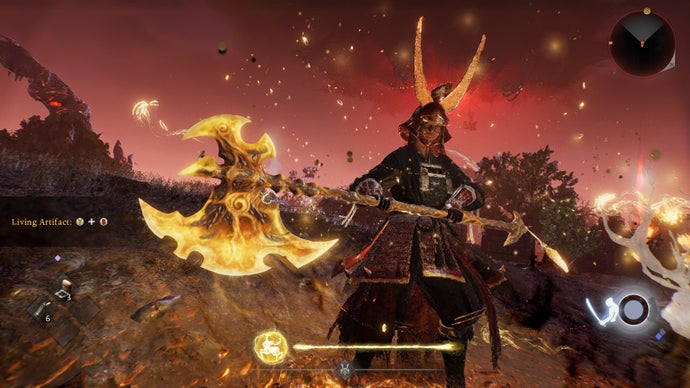
Nioh 3 “is less punishing” than Nioh 1 and Nioh 2, according to our reviewer Jeremy Blum. In a fine example of the Duality of Man, this observation forms part of a sentence in which Jeremy also confesses to smashing a hole in his desk with his controller. I can only imagine the destruction if he’d run into one particular “very rare” Nioh 3 bug, recently patched out, which causes the game to corrupt your save data if you end the game while praying at shrines.
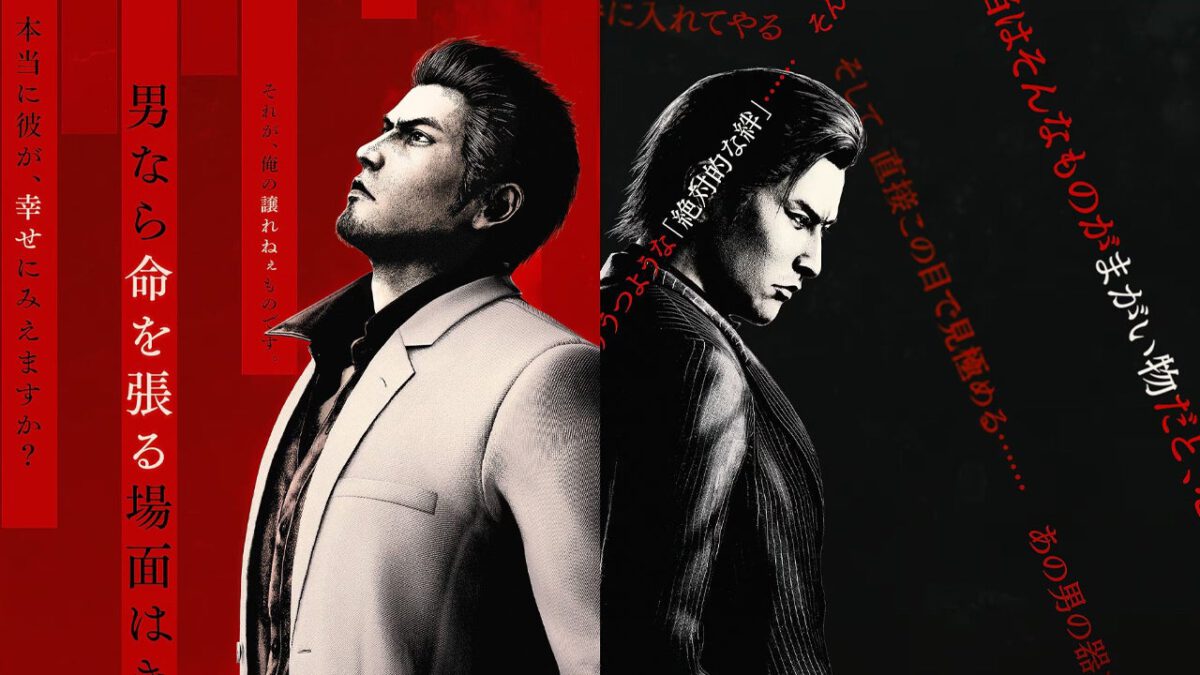
After last year’s swashbuckling Like a Dragon: Pirate Yakuza in Hawaii triumphantly hoisted the black flag, this year developer Ryu Ga Gotoku has set its sights on elevating the Yakuza series’ black sheep. While well-received critically upon its original 2009 release, Yakuza 3’s sluggish combat and uneven story pacing has seen it age about as well as leftover sashimi, leaving it to linger at the back of the pack while the Like a Dragon series has pushed forward into exciting turn-based twists and experimental spin-offs. Yakuza Kiwami 3 & Dark Ties, then, is a much-needed retooling that ratchets up the fun factor of its fighting and smooths out most of its unwanted story creases, resulting in an enjoyable return to the largely underused island setting of Okinawa – even if not all of its changes and additions were powerful enough to uppercut me off my feet.
Although it received an HD remaster in 2019, I must admit I haven’t revisited Yakuza 3 since it first debuted on PlayStation 3 because I couldn’t bear the thought of once again battling my way through its annoyingly block-happy hordes. The bulk of Yakuza 3’s enemies were so stubbornly resilient to Kazuma Kiryu’s attacks that getting further than a few hits into a combo was a struggle; instead of gleefully breaking jaws, Yakuza 3’s fighting felt more like painfully pulling teeth.
Thankfully, that has all changed with Kiwami 3, which dramatically speeds up enemy encounters and endows Kiryu with two flexible fighting styles to cover all his thug-bashing bases. His default stance is classic Dragon of Dojima, a mix of satisfyingly weighty combo attacks and wrestling-style grapples that hit harder than a shotgunned can of Suntory Highball. As entertaining as that is, however, I found myself largely relying on his secondary stance, which arms him with eight different weapons. Those range from the baton-like tonfa to inflict stun, a pair of scythes to inflict bleed, brass knuckles to break guards, a shield to deflect blades and bullets, and a pair of nunchucks to regularly look like a total badarse with.
It’s a versatile and violent fighting style that transforms Kiryu into a lightning-fast, leisure suit-wearing shinobi, and it’s supremely intuitive to pick up. There’s no manual weapon switching or inventory management to fiddle with, since everything in his sharp-edged arsenal is triggered by a seamless combination of tapping and holding the three main attack buttons, allowing you to go from slapping a group of gangsters with a wooden boat oar to flinging a pointy pair of sai at their throat without even the slightest pause in the action. The original Yakuza 3 may have ultimately had more weapons to choose from, but given how quickly they would break I rarely bothered to actually use them, and thus I found Kiwami 3’s Swiss Army Knife-style fighting stance a vastly improved method for dealing out wanton destruction using the contents of a Ninja Turtle’s toy chest.
Kiwami 3’s Swiss Army Knife-style fighting stance [is] a vastly improved method for dealing out wanton destruction using the contents of a Ninja Turtle’s toy chest.
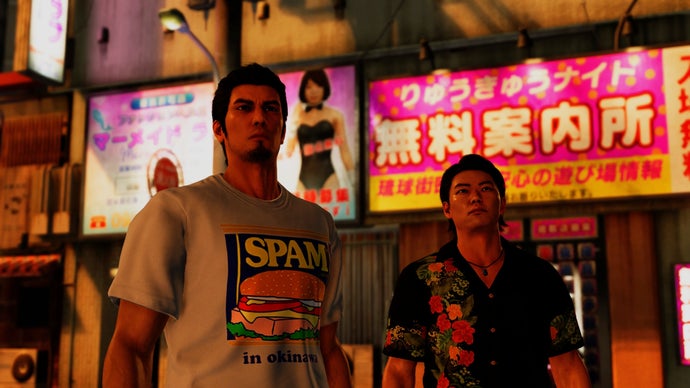
Kiwami 3’s combat doesn’t just feel smoother and more satisfying, it looks a lot flashier too. As was the case with the previous Kiwami remakes, Kiwami 3’s visual design has been boosted to bring it inline with the more modern entries, from the vastly improved character models to the firework-like particle effects that spark off Kiryu’s furious fists. This aesthetic overhaul extends to the environments too, and I was particularly pleased to explore the remodelled slice of Okinawa that features heavily in Kiwami 3’s opening half, since it’s a region that’s rarely been revisited in subsequent Yakuza and Like a Dragon adventures. Its sun-kissed coastal town vibes contrast nicely with Kamurocho’s hustle and bustle, making it akin to Like a Dragon: Infinite Wealth’s Hawaii – albeit on a significantly smaller scale.
What’s the Story, Morning Glory?
While Kiwami 3 broadly retains the same outline of the original game’s story, which centres on a spiteful turf war in Okinawa, the developers have treated the plot like a street thug and given it a good punch up. In the original Yakuza 3, certain chapters confined Kiryu to the Morning Glory orphanage he runs for lengthy periods of time, presenting precious little beyond slowly paging through text-based conversations with its pint-sized residents. Thankfully, Kiwami 3’s structure has been reshuffled to make these sleepy seaside sections entirely optional beyond an initial set of mandatory tutorials, meaning you now have the choice of either taking the time to forge bonds with these little Okinawan Oliver Twists, or just hurrying back to black-belting the Pocari Sweat out of every mobster yakuzin’ for a bruisin’ in the world outside the orphanage’s walls.
If you’d have given me the option of skipping these slice of life segments in the original Yakuza 3 I’d likely have taken it, yet surprisingly in Kiwami 3 I found myself growing more invested in the plight of Morning Glory’s munchkins than I ever did before. That’s thanks to a smart use of snackable mini-games that transform humdrum domestic chores into stimulating diversions. You can complete the kids’ algebra homework against the clock, go spearfishing for flounder and then transform those ingredients into a meal in an energetic burst of Cooking Mama-inspired culinary chaos, or, my personal favourite, steer a sewing machine needle around a Super Hang-On style circuit made of fabric in a delirious bout of high-speed hemming that regularly left both me and the handcrafted tote bag onscreen in stitches. As I ticked off each enjoyable household task, I found myself bonding with these little wide-eyed waifs in a more organic manner. That meant the stakes felt appropriately heightened later on when Kiryu’s criminal past inevitably catches up with him.
That’s not to say that Kiwami 3 completely sharpens the original’s storytelling, and there are still some of the series’ signature attention span-stretching conversation cutscenes present here – including one marathon meeting room exposition dump in its ninth chapter that’s so comically drawn out it actually gives you the option of taking regular breaks for Kiryu to stretch his legs by walking around a tiny office he can’t leave. There’s also a surprising twist in Kiwami 3’s post-credits epilogue that will likely raise a few eyebrows among series purists (though was really neither here nor there for me), but by and large Kiwami 3’s main story has been reworked for the better and it kept me hooked for the 17 hours it took me to reach its cathartic, combat-heavy climax.
Japanesey Rider
Elsewhere Kiryu goes from playing daddy to slaying baddies in Kiwami 3’s other major addition to its main story, Bad Boy Dragon. This biker gang-based riff on the Devil Flags subquest from Pirate Yakuza tasks Kiryu with rescuing new recruits from bullies on the streets, splitting them into squads, and accompanying them into large scale clashes against other rival leather-clad clubs, from the easybeats of Okinawa’s streets to the more fierce fighters from Tokyo’s Night Terrors outfit. In between battles you can hold gang rallies to boost the XP of your members, customise your gang colours, and invest in special attacks to unleash in a scrap, from humble hand grenades to spectacularly silly stampeding bulls.
However, Bad Boy Dragon’s novelty wore off far sooner for me than Pirate Yakuza’s equivalent seafaring mode did, because Kiwami 3’s gang-based brawler is considerably more repetitive by comparison. Whereas Pirate Yakuza featured a healthy mixture of cannon-based naval warfare and on-land scraps, Bad Boy Dragon is mostly just a series of samey skirmishes held in copy-and-pasted warehouses that quickly blur into each other. Despite the fact you’re in a biker gang, there’s very little actual biking to be done – you can’t get stuck into Road Rash-style battles on Tokyo’s expressway like in Lost Judgment, for example. Kiryu’s chopper is strictly used to rapidly ferry him between the four squads under his command before resuming the button-mashed biker beatdowns. Bad Boy Dragon ultimately feels a little half-baked – if you’re going to build a mode around biker gangs, you really need to go the whole chrome-covered hog.
Still, even though I parked Kiwami 3’s biker mode fairly early on, I found plenty of other things to do outside of the main story. In one moment I’d be struggling to deliver towering ice cream cones through streets lined with waddling sumo wrestlers, while in another I’d be customising my 2007-era flip phone with dangling tchotchkes to boost Kiryu’s health and damage. Later I found myself posing as a host at a cabaret club and disappointing the customers with terrible jokes, as well as indulging in optional mainstays like karaoke and the baseball batting cage. Sure, at this point a lot of these amusements have been repurposed more than the fabric of Marge Simpson’s pink Chanel suit, but I was pleased to find that collectible Game Gear games have been included for the first time in the series – even if it is a bit odd that handheld Sega classics like Columns and Sonic Chaos can only be played back at Kiryu’s hideout rather than pulled out of his pocket on the fly. (Perhaps that’s a tacit admission that the Game Gear’s godawful battery life made portable play too impractical?)
Admittedly I was surprised to find the substory count in Kiwami 3 had been whittled down to 31 from the original game’s 100 or so, but then I remembered how many of Yakuza 3’s optional quests were just clones of the same small handful of ideas. Kiwami 3’s substories focus on quality over quantity, and I have no objections to that approach.
The Ties that Grind
Outside of its remodelled main campaign, Kiwami 3 features an entirely new story mode called Dark Ties, which puts the player into the shoes of the sharply dressed and amusingly sardonic antagonist, Yoshitaka Mine. Dark Ties explores Mine’s first steps into the Tokyo underworld, his reluctant alliance with the lecherous Tojo clan heavy Tsuyoshi Kanda, and the complex motivations behind his devastating actions in Kiwami 3’s main campaign. It also allows us to let loose with his ferocious ‘shoot-boxing’ fighting style, which blends fast flurries of punches with acrobatic flip-kicks and the ability to pinball off one enemy and completely redirect your attack towards another to seamlessly continue your combo. He can also unleash devastating ‘Dark Awakening’ special attacks, such as spiking an enemy’s skull into the ground and dragging their faces along the pavement like a bloodied bowling ball.
Mine is limited to the one fighting stance, however, and his skill tree is stumpier than a yakuza’s left pinkie. That’s because his quest simply doesn’t last long enough to allow room for any real evolution of his abilities. Dark Ties has been marketed as a fully-fledged game in its own right, but that seems slightly disingenuous given it only features three chapters versus Kiwami 3’s 12, restricts the action to the same Kamarucho setting that Yakuza fans know better than the calluses on the back of their face-mashing fists, and pits you against just two bosses in two fights a piece.
To be fair, it still took me just over five hours to roll credits in Dark Ties, but that runtime didn’t feel as substantial as it sounds since Mine’s mode regularly gates its story missions behind the arbitrary completion of agonisingly menial tasks. During Dark Ties’ prolonged middle chapter in particular, the advancement of Mine’s story is dependent on performing good deeds for Kamarucho locals in order to slowly boost the reputation of his unlikeable cohort Kanda. A few of these are genuinely entertaining, like being asked to pose as a bouncer outside an adults-only club and evaluating the clientele, but the bulk of them are boring chores like legging it to the nearest convenience store and back so that you can bring a hungry man a bento box.
Dark Ties has been marketed as a fully-fledged game in its own right, but that seems slightly disingenuous.
Tasks like these are made all the more arduous given that Mine isn’t equipped with the same segway-like Street Surfer that Kiryu can whip out on a whim to speed things along in Kiwami 3. I wanted to enjoy Mine’s calculated ascension towards the top of the Tojo clan, but for extended periods, Dark Ties made me feel less like a dragon and more like a dogsbody.
Mine does have one ace up his pinstriped-suit sleeve, however, and that’s the dungeon-brawling roguelike minigame unique to his adventure. Dubbed ‘Survival Hell’ – despite the fact that ‘Roguelike a Dragon’ was sitting right there – this strictly-timed dash for cash and collectibles takes place across five underground arenas, each consisting of four floors of increasingly challenging goons and culminating in an imposing boss fight. Die during a run and you lose it all, but each floor has an optional exit point should you wish to bank your winnings early and invest them into buffs like special weapons and CPU-controlled bodyguards to better your chances of survival on subsequent runs. It’s compelling, chaotic, and stuffed with countless surprises. Having rolled credits on both Kiwami 3 and Dark Ties, Survival Hell is the one feature of either story that is still calling me back for more.
Excuse me, coming through. I’m Kazuma Kiryu, and I’m on my way to speak to some gruff yakuza lads about what their local gang war means for my orphanage. You can tell I’m serious because I’m riding a prototype segway dressed in nothing but a swimming cap, goggles and shorts. Now move, I’ve goons to beat up at two, photos to take at three, a biker gang war to resolve at four, and I also need to somehow fit in time to run around town waving my flip phone at strangers.
Once that’s done, I’m all good to head home to the kids I’ve left unattended. There’s no time to kick back, though. Vegetables must be planted, fish caught, bags sewed, and homework helped with.
I’m of the opinion that there are no bad Yakuza games. Although the series has definitely fluctuated in quality over the years, they always offer up something to keep me engaged and satisfied. Yakuza Kiwami 3 & Dark Ties is still a decent entry, but it’s also bloated, poorly paced, and marred in controversy surrounding the recasting of a key character. Frankly, I’d argue that RGG’s prolificacy is starting to have an impact on the quality of its games, and it might be time to take a break.
Much like the previous Kiwami titles, this is a remake of the 2009 PS3 original, continuing the story of protagonist Kazuma Kiryu as the story shifts over to the new location of Downtown Ryukyu in Okinawa. The new setting offers a nice change of pace, leaning more towards a kind of tropical, resort-style environment. At a glance, it’s lovely to look at with the series’ signature attention to detail all intact, though you might be wondering whether the lighting issues from the demo have been addressed.
Don’t get me wrong, we already have Payday, we already have The Swindle, and of course we already have Grand Theft Auto V. But these games are all more “Heat” than “Ocean’s 11.” We need more suave, non-violent games where it feels like you’re manipulating and hacking a building to your will – and executing a plan to perfection.
When we started building Relooted years ago, this was our goal. We made many prototypes. We tried many things. But we didn’t make much headway.
Laying the Groundwork
The problem lay in hidden information. The best heist movies are similar to detective stories – you don’t know who killed the victim until the end. In heist movies, you never really know the plan and how they pull it off until you’re in the heist montage at the end. But how can you keep the plan of a heist from a player when they are the one making the plan AND executing it?
We were stuck on this problem until the impeccable Teardown came out. As it should, Teardown gets a lot of praise for its destructible terrain mechanics, but its core gameplay loop is brilliant as well. Pick up your target, and the alarm goes off – you only have 30 seconds to get out after that, so better make sure you’ve planned your route out of there.
Inspired by this loop, we decided to try this out with Relooted, and it instantly clicked and made sense. Explore the space, set up your team members, manipulate the guards to where you need them and flow through your escape. Relooted takes this incredible loop and builds upon it, adding crew members, a different perspective, and even more heist tropes! In Relooted, each heist is made up of three phases: casing the joint, setting up the plan, and executing it.
Executing the Plan
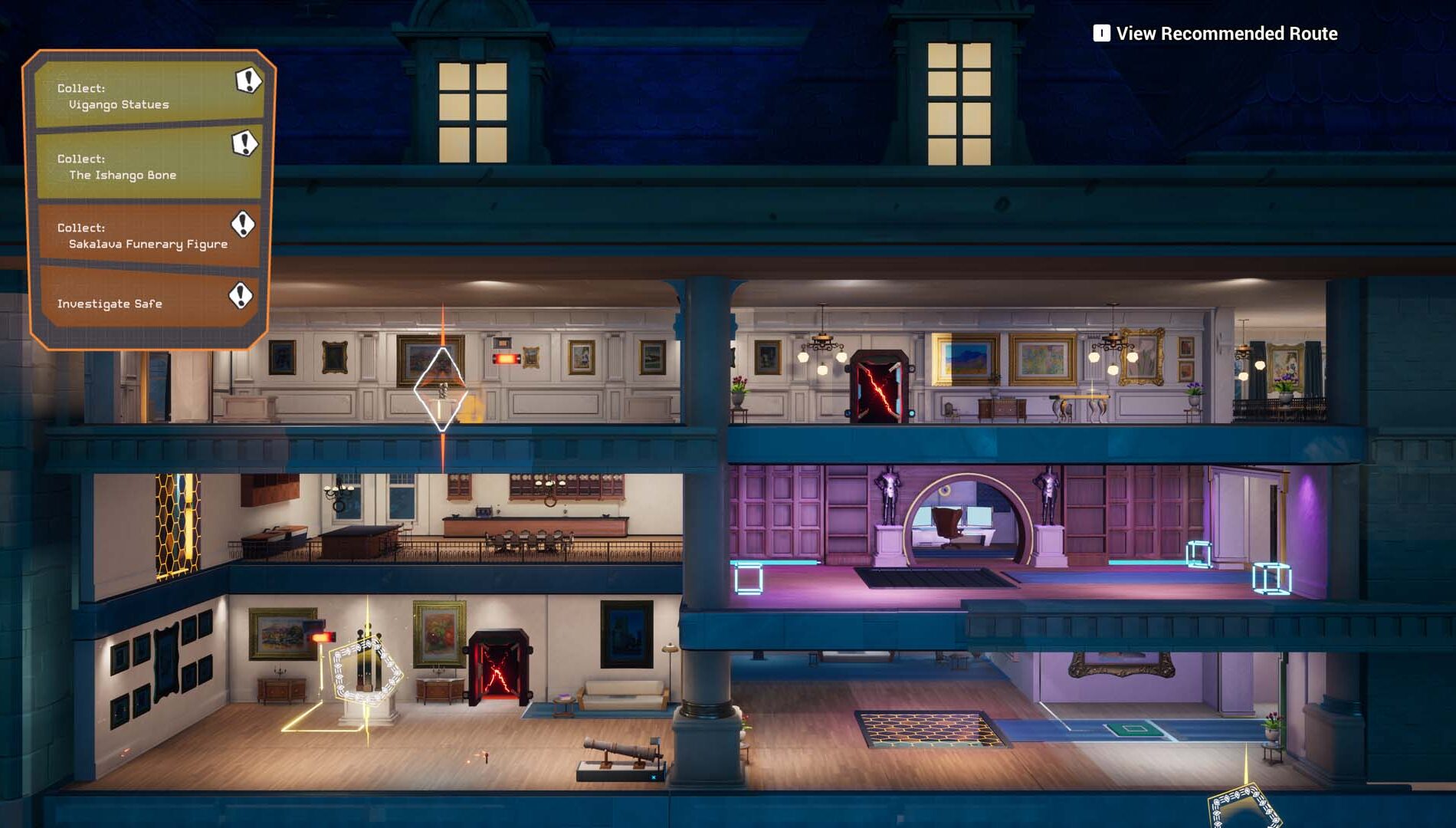
When casing the joint, you get an understanding of the space – where the obstacles you might need to address are, and placing your crew members where you’ll need their help. Your brain develops a sense of the building and the space and gets an idea of the possible routes to escape when the sirens begin to blare.
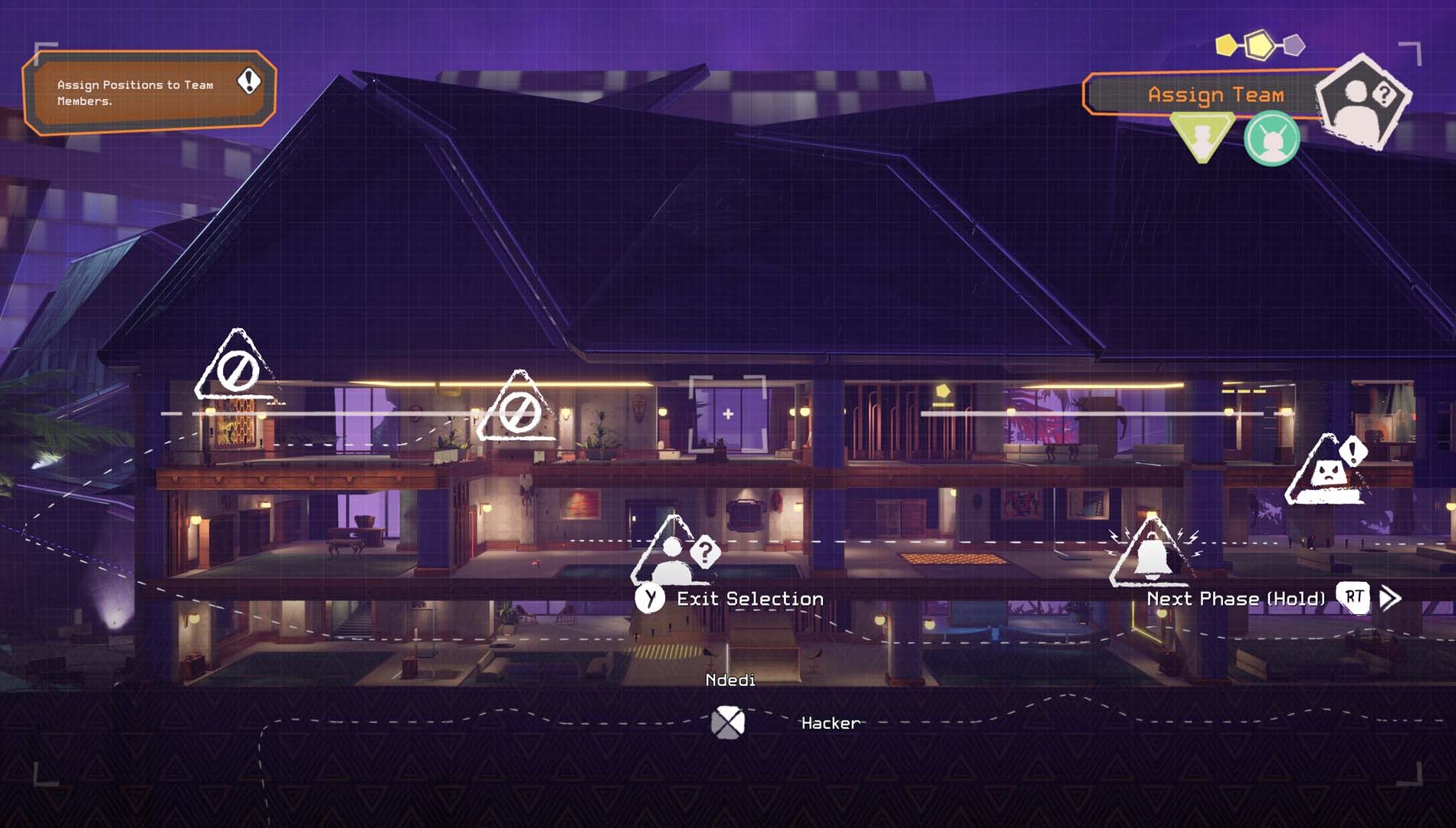
In the setup phase, you specify the details. Your crew member might be assigned, but do you want them to grapple you up somewhere? Or throw you through a window? There is a security shutter that will close – do you block it from closing, or go around it?
In the escape phase, whatever the choices you’ve made, you can flow through your plan. Your crew appearing where they should be at just the right moment, your character, Nomali, effortlessly maneuvering over and under obstacles in her path.
The goal of Relooted was always to make you feel like you were in a heist montage from a movie of your own planning.
Complications Arise
Figuring out how to enable players to pull off these heist montages was an interesting problem! All plans (in life and in Relooted) are made up of a series of steps. Move from here to there, jump here, grapple up here, etc. Because the human mind can only hold onto roughly 7 things at a time, each step has to be quite simple. Each puzzle has to be quite simple.
Each individual puzzle in Relooted is only a few steps to solve if you can figure it out. But each heist, each level, is made up of 5-15 puzzles that you have to solve and execute in one go in the escape! Once you’ve figured out these puzzles, you’ve created your plan. Executing them as the alarms go off with your pre-prepared solutions becomes your heist montage.
Relooted comes out tomorrow on Xbox Series X|S and Xbox on PC, included in Game Pass Ultimate and PC plans! We hope you enjoy planning your heists, and feel the thrill of being in your own montage.
Unlike in “Ocean’s 11,” you’re going to know the plan ahead of time, because you are the mastermind who planned it, and not just a viewer appreciating it.
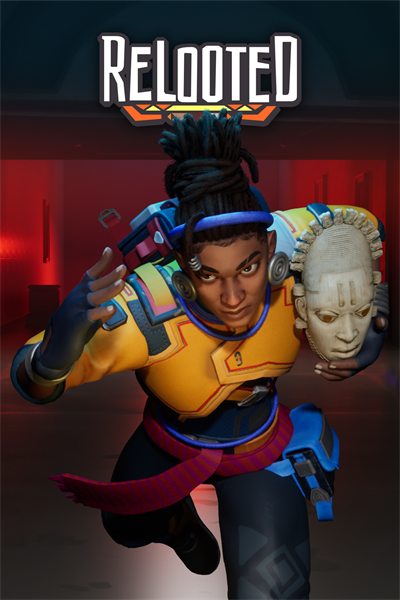
A crew. A job. A plan. Toss those ingredients together, and you’ve got yourself a classic heist — but with a few twists. Your crew members are everyday citizens (from different countries in Africa) with pretty normal careers. The job is to liberate African artifacts from Western museums. And the plan? Well, that’s up to you to create.
Africanfutur-heist
Near the end of the 21st century, the political powers that be brokered a Transatlantic Returns Treaty, promising the repatriation of African artifacts from museums. Good old fashioned diplomacy was working — until it wasn’t. An amendment switched up the terms and conditions of which objects were to be returned. Museums, now knowing that only publicly displayed artifacts would be given back, were slowly removing artifacts from public display.
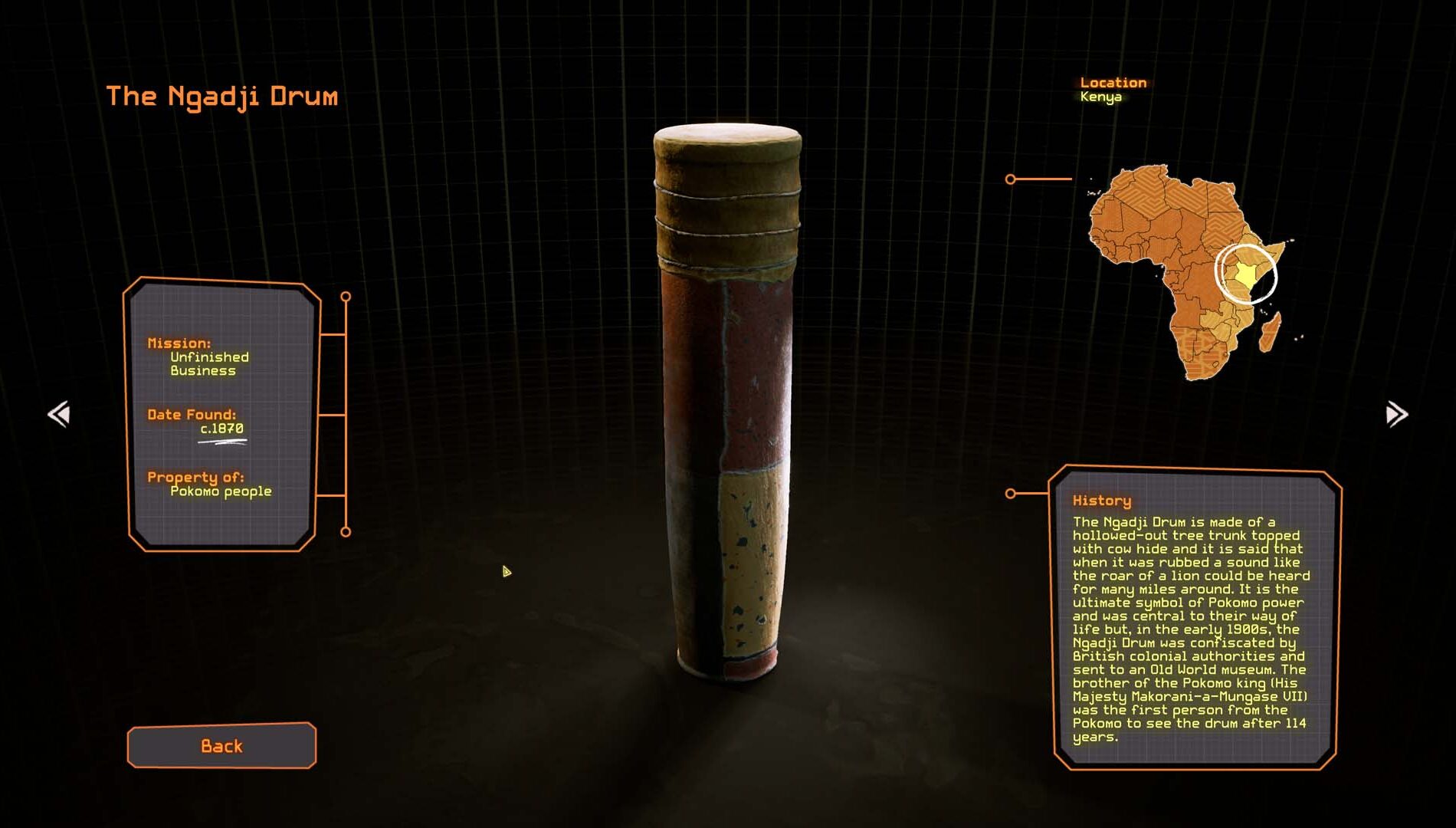
When life gives you lemons and museums pulling shady moves, it’s time to chuck the lemons back at life and try a new, stealthier form of diplomacy. You’ve got 70 of these artifacts to (re)loot, all of which exist in real-life and are of huge cultural, historical, and spiritual significance to the people they were taken from.
Teamwork Makes The Heist Work
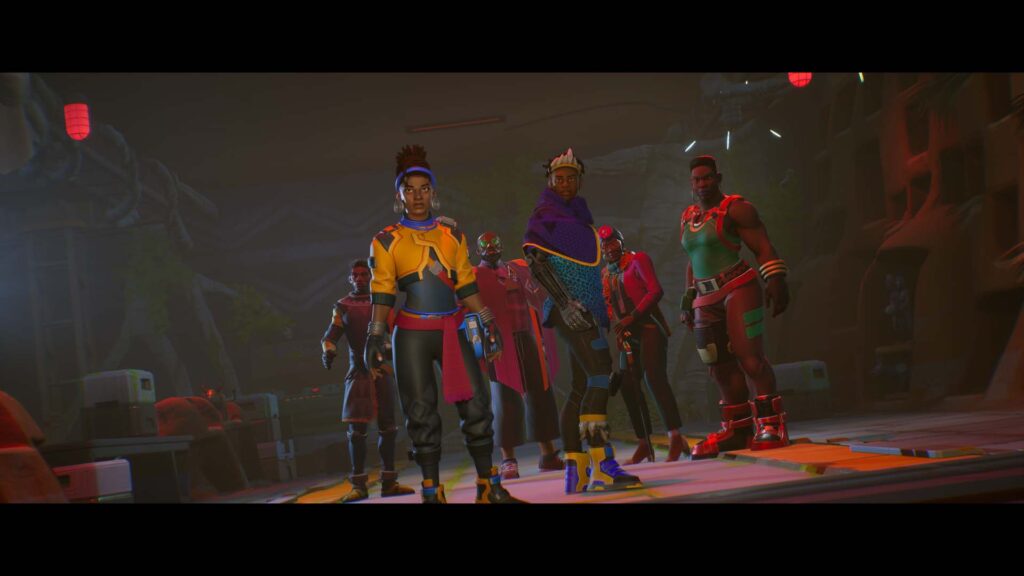
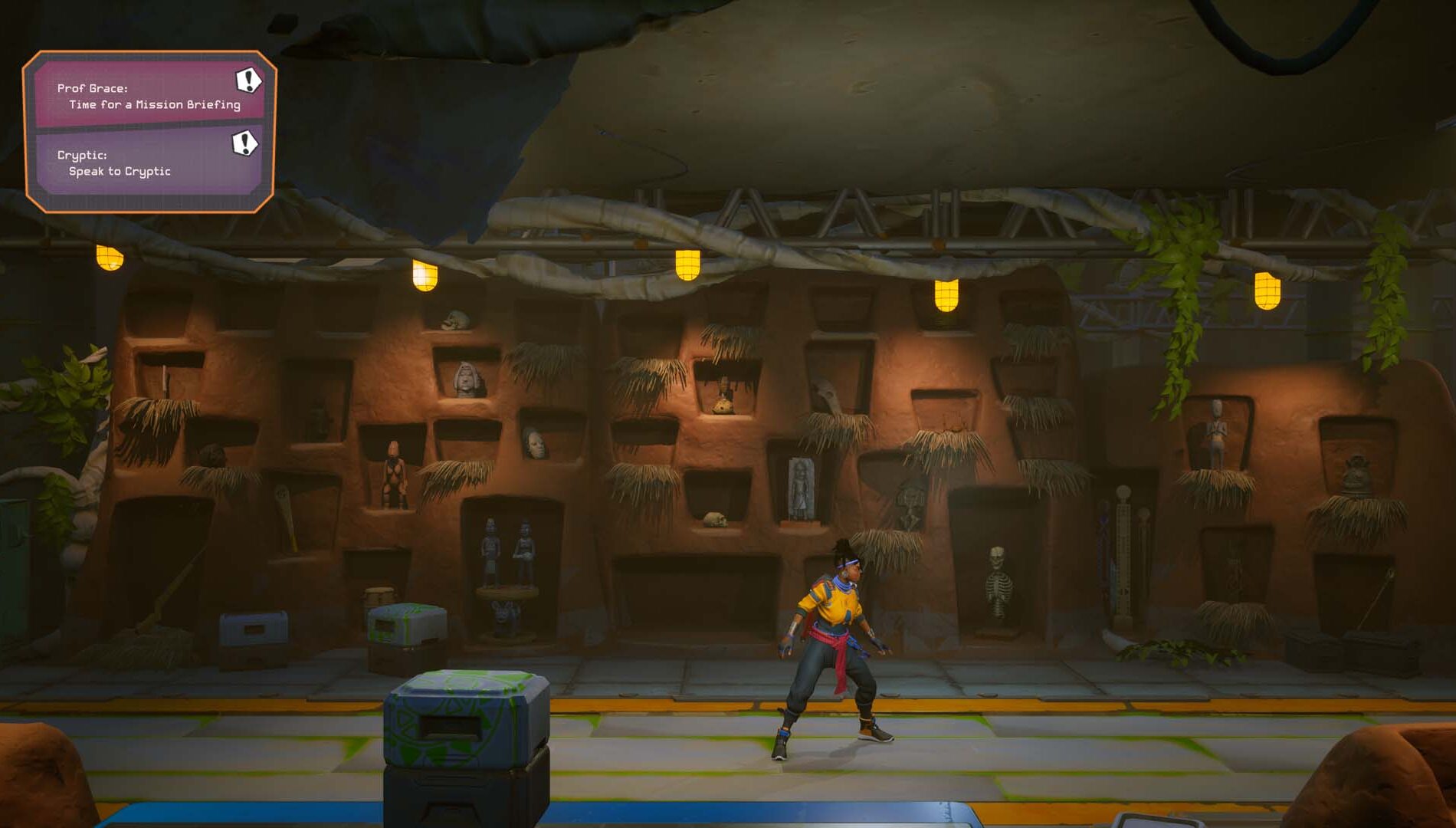
It all starts with a troublesome little brother, who, yeah, gets you into all sorts of messes. But thankfully, as Nomali, you’ll meet more reliable crew members from different African countries. Recruit people from the classic hacker to… your prim and proper grandma? Don’t worry, grandma pulls her weight.
Case the Joint
Plan ahead to lay the groundwork for a beautiful masterpiece of an escape. Check the getaway route, fiddle with puzzles and obstacles, and find spots to recruit the help of the right teammates.
Get In. Get Out.
Once you’ve set the stage carefully and the artifact is sitting all pretty — looking quite not-stolen, but no worries, you’re gonna fix that ASAP — this is the moment to perform. Plucking an artifact from its resting spot starts the countdown timer, and with Nomali’s flow-based parkour abilities, escape should feel like you’re in the fun, montage part of a heist movie. But if you slacked on the planning phase, you’re gonna pay for it!
Key Features:
• Pull off heists: Plan and prepare your escape route by solving puzzles and placing teammates in the right place. When you’re ready, take the artifact and escape with Nomali’s flow-based parkour abilities.
• Recruit a crew: Meet and gradually recruit different team members with their unique abilities.
• Explore an Africanfuturist setting: With a Hideout based in South Africa, you’ll see parts of Johannesburg imagined in the future.
• Reclaim Real Artifacts: Recover 70 artifacts that exist in real-life, all of which are of huge cultural, historical, and spiritual significance to the people they were taken from.