Including “Handheld Mode Boost” and a Switch update.
Nintendo has released a new update for the Switch 2 and Switch this week, bumping the system firmware up to Version 22.0.0.
On the Switch 2, this update comes loaded with new GameChat features, language and accessibility updates, and more. Most notably, it adds the new “Handheld Mode Boost”, which allows compatible Switch software to run “as if in TV Mode”.
For all of you Honkai Star Rail superfans, there’s a custom PC built just for you. iBuypower released a powerful GeForce RTX 5080 prebuilt gaming PC that’s housed in Hyte’s limited edition Honkai Star Rail Firefly Y70 computer case. The configuration is priced at $3,599, but you can save $200 off with coupon code “DUNK“. It’s admittedly more expensive than other similarly equipped gaming PCs on the market, but nowhere else you can source an officially licensed Honkai-themed gaming PC outside of getting it from iBuypower or building your own using Hyte’s chassis.
Now Available: Hyte Y70 Honkai Star Rail Themed Case
What’s really special about this case is the custom themed artwork. The system is housed in a gorgeous Hyte Y70 computer chassis adorned with artwork inspired by Honkai Star Rail’s 5-star character Firefly. The artwork is professionally UV printed onto all three glass panels; they don’t peel off like vinyl stickers and they’re applied on the interior side of the panels so they’re less prone to scratching. The case’s blue and sliver color scheme tastefully matches Firefly’s aesthetic.
You’d expect a gaming PC named after one of the more meta characters in HSR to be quite powerful, and iBuypower certainly doesn’t disappoint. The Y70 gaming PC is equipped with a liquid cooled AMD Ryzen 7 9800X3D CPU, GeForce RTX 5080 16GB GPU, 32GB of DDR5-6000MHz RAM, and 2TB SSD.
AMD Ryzen 7 9800X3D is the best gaming CPU for most people
The AMD Ryzen 7 9800X3D is considered to be one of the best gaming processors on the market and outperforms any Intel or AMD non-X3D chip in games thanks to AMD’s 3D-V-Cache technology. It only has eight cores, but that makes no difference in gaming since most games can’t utilize more than eight cores (if that) anyways. That’s why its gaming performance is nearly identical to the pricier 9900X3d and 9950X3D.
The GeForce RTX 5080 GPU will run any game in 4K
Performance-wise, the RTX 5080 is no slouch. It’s one of the fastest cards on the market, bested only by the $2,000 RTX 5090 and the discontinued $1,600 RTX 4090. This is a phenomenal card for playing the latest, most demanding games in 4K resolution at high settings and ray tracing enabled. The recent DLSS 4.5 update has further optimized multi-frame gen and upscaling so you can push really high framerates even in 4K. More games are supporting this feature, including Doom: The Dark Ages, Clair Obscur: Expedition 33, Borderlands 4, Stellar Blade, and, of course, Honkai: Star Rail. Check out our Nvidia GeForce RTX 5080 FE review for our hands-on impressions.
You can also get the case by itself
You can also build out your own system using this case. Hyte, iBuypower’s sister site, is currently selling the standalone HSR Firefly Y70 case for $329.99 with free shipping. If you’re looking for additional matching accessories, Hyte also sells a matching keycap set, fan grill set, and and extra large mousepad.
Eric Song is the IGN commerce manager in charge of finding the best gaming and tech deals every day. When Eric isn’t hunting for deals for other people at work, he’s hunting for deals for himself during his free time.
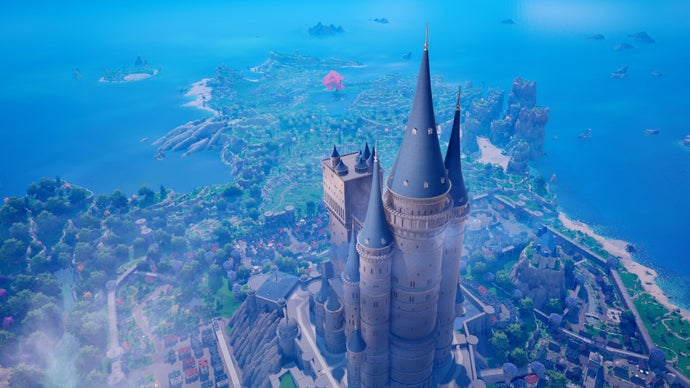
The Seven Deadly Sins: Origin is three things. Firstly, it is available now on Steam. Secondly, it is a splashy fantasy open world anime confection, all Disney towers and fluttering windmills and jaunty sailboats and some kind of porcine Space Hopper that transforms into a buzzard. Thirdly, it is a free-to-play game with gacha elements.
Back in 2022, Tunic blew us away with its brutal battling, Zelda-inspired adventures, and deep secrets. Today, we’ve learnt that we’ll soon have the opportunity to do it all over again thanks to an upcoming Switch 2 update.
The game celebrated its fourth anniversary today, and to mark the occasion, publisher Finji announced that an update for the new Nintendo hardware is “on the way”. While there was no precise release date attached to the reveal, the team promised it was “working hard on it” and teased that we should all stay tuned for more info.
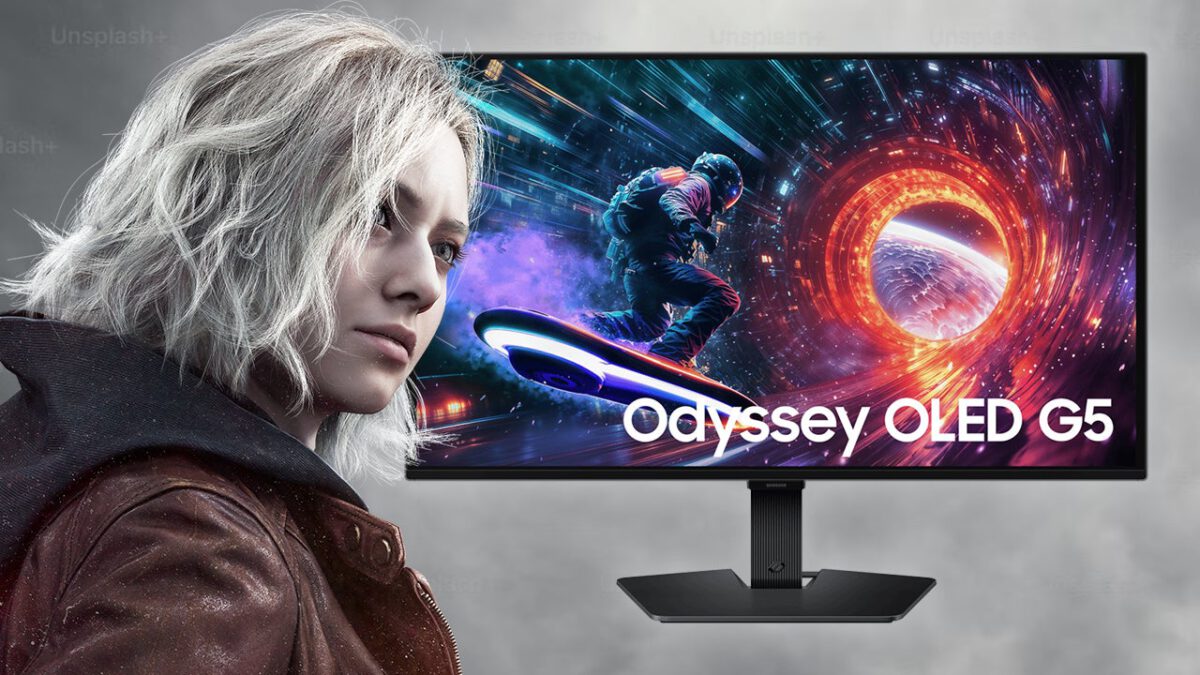
The best gaming monitor deal of 2026 is back. Amazon has discounted the 2025 27″ Samsung G5 OLED to $349.99, making it the lowest price I’ve ever seen for an OLED monitor. It also includes a free digital copy of the recently released Resident Evil: Requiem with purchase. The offer will automatically be applied during checkout. This monitor also comes standard with an industry-best 3 year warranty that includes OLED burn-in coverage.
27″ Samsung Odyssey OLED G5 Gaming Monitor for $349.99
Free Resident Evil: Requiem game code with purchase
The Samsung Odyssey OLED G5 (G50SF) is a 2025 model 27″ display with a 2560×1440 or QHD resolution, measuring out to a respectable pixel density of 108ppi. It’s equipped with a quantum dot OLED panel that boasts a near-instantaneous 0.03ms response time, near infinite contrast ratio, and true black levels. QD OLED panels are considered better than traditional W-OLED panels because they are brighter and offer a wider color gamut.
This monitor also features a fast 180Hz refresh rate and Nvidia G-Sync compatibility. If you pair it with an Nvidia GeForce RTX 5070 graphics card or higher, you should be able to hit that 180fps ceiling on older games like Fortnite, Apex Legends, and Valorant. For newer games like Battlefield 6 or Black Ops 7, you might need to step up to an RTX 5070 Ti or Radeon 9070 XT to achieve that 180fps ceiling. The display comes equipped with both DisplayPort and HDMI ports.
As mentioned earlier, this monitor has a 3 year warranty that includes OLED burn-in coverage. That’s still pretty uncommon across most OLED brands, especially when you’re looking at the less expensive models. Most come with just a 1 year warranty with no burn-in protection.
Eric Song is the IGN commerce manager in charge of finding the best gaming and tech deals every day. When Eric isn’t hunting for deals for other people at work, he’s hunting for deals for himself during his free time.
Feeling lucky? Hi everyone, I’m Tommy Westerman, Senior Character Designer on Borderlands 4. Today, I’m thrilled to share insights into the making of C4sh the Rogue, the new playable Vault Hunter coming to Borderlands 4 as part of Story Pack 1: Mad Ellie and the Vault of the Damned* on March 26!
I’ve been a character designer at Gearbox since Borderlands: The Pre-Sequel, where together with the team I designed Claptrap as the playable Fragtrap class, as well as Jack the Doppelganger (aka Timothy) and Aurelia the Baroness. In Borderlands 3, the team and I designed Amara the Siren and Zane the Operative, followed by the Clawbringer and Spellshot classes for Tiny Tina’s Wonderlands. That finally brings us to Borderlands 4, where the team and I designed Rafa the Exo-Soldier, Harlowe the Gravitar, and now C4sh the Rogue.
When designing C4sh’s unique Action Skills, Augments, and Passives, the team and I really got to lean into the power fantasy of going for broke as a devil-may-care gambler, bending luck in your favor to overcome any odds. Ever since we designed Claptrap the Fragtrap over a decade ago, I’ve had ideas in my head of things I wanted to fix, change, or tweak. With C4sh the Rogue, I was excited for the opportunity to work with the team on another character class that has some purposely unpredictable playstyles.
C4sh’s skills range from not-very-random to absolutely random, but what’s key is that you’re always able to influence that randomness, preserving the thrill of relying on luck while ensuring it’s on the player’s side.
Beating the odds
When it comes to C4sh’s backstory, he’s a former CasinoBot with a new lease on life. After a long streak of gaming the solar system’s casinos and battlefields with statistical insights, he developed a taste for the unpredictable after winning the magical Deck of Kanansi in a high-stakes game. Now that he’s seeking out more lucrative, dangerous risks, a career in Vault hunting is the perfect way to bet on himself in the biggest way possible.
Download the image
We know that fans love robot Vault Hunters like Pre-Sequel’s Claptrap and BL3’s FL4K the Beastmaster, so we were eager to bring C4sh to Borderlands 4. When thinking up a Vault Hunter’s origins, our first pillar is to simply make an interesting character, whether they’re flesh and blood or circuits and bolts. We started with the idea of a CasinoBot who’s obsessed with numbers and probability, but the exciting hook for us was C4sh’s desire to seek out eldritch trinkets that completely upend mathematical chances.
As for what C4sh adds thematically to Borderlands 4’s ensemble, most people picture classic rogues as sneak-attacking thieves, but there’s also the gambler who relies on luck and wit. We want C4sh to feel like that latter, rarer archetype: someone who doesn’t pick pockets, but steals your money anyway because he knows how to manipulate the odds.
Heart of the cards (and dice and guns)
C4sh’s penchant for unpredictability is epitomized by his Action Skills and skill trees. Giving C4sh dice (Cleromancy Action Skill / Roll the Bones skill tree) and a deck of cards (Sleight of Hand Action Skill / Luck of the Draw skill tree) seemed perfect for players who love randomness, while his dual revolvers (Cross-Fire / Chaos Walking skill tree) felt right for the promise of a Wild West-style gambler.
No matter the outcome, C4sh’s Action Skills are always powerful, but with luck you can trigger some super powerful effects. His skill trees are unique in that they don’t feature any Capstones, but all three of his trees offer a skill that grants an additional Augment slot. By building across all three skill trees, you can give C4sh’s up to four Augments total. Managing how many Augments you equip gives you more control over the degree of randomness for his Action Skills.
One fun thing we always try to do with Borderlands’ DLC characters is break some rules. BL2’s Gaige introduced stacks and Krieg turned the entire idea of FPS combat on its head; Pre-Sequel’s Aurelia begged to be played in co-op. After Claptrap, even though some of us really liked him, we all kind of looked at each other and said, “Well, let’s never do that again.” C4sh broke that rule, and I love him for it.
You’ll be able to play as C4sh the Rogue across all of Borderlands 4’s story and zones by owning Story Pack 1, which is included in Borderlands 4 Super Deluxe Edition. We can’t wait to see how you come up with builds that make the most of his chance-based abilities, and remember: there’s no telling what the next card draw or dice roll will bring.
*Mad Ellie and the Vault of the Damned is the first of two post-launch DLC Story Packs coming to Borderlands 4. This content is included with Borderlands 4 Super Deluxe Edition and the Borderlands 4 Vault Hunter Pack, and is also available for separate purchase. Base game required.
Krafton has been ordered to reinstate the former boss of Subnautica 2 studio Unknown Worlds and extend its employees’ proposed $250 million bonus, in a stunning legal judgment that strongly favors the game’s development staff.
Subnautica 2’s development has been mired in controversy since Krafton dramatically fired Unknown Worlds CEO Ted Gill and other senior team members in the summer of last year. At the time, Krafton also said the game’s launch had also been delayed — something it blamed on Gill — even though its team had been working towards an early access release that would have seen them eligible for that $250 million bonus.
Ultimately, however, the legal action has resulted in a win for Unknown Worlds. Krafton itself is yet to comment.
“Frustrated by the Key Employees’ refusal to forfeit operation control and facing a nine-figure liability, Krafton went searching for a pretext,” the judge wrote, slamming Krafton’s previous claims that Gill and others had “abandoned their responsibilities.”
“Krafton’s true focus in June 2025 was avoiding its financial exposure,” the judge wrote. “It knew Subnautica 2 was poised to achieve a $250 million earnout, which Kim viewed as a catastrophic failure. Krafton undertook ‘Project X’ to either force a deal on the earnout or execute a ‘takeover’ of the studio. Terminating the Founders was one tactic explored and ultimately chosen by Krafton to accomplish its goal.”
As for Subnautica 2 itself? Developer Unknown Worlds recently shared a behind-the-scenes look at an all-new deep-sea predator, and “how the team has used Unreal Engine 5 AI for lifelike behavior, real-time reactions and tense encounters for player.” The 10-minute vlog is one of the first development updates we’ve had since the legal wrangling began last year.
Tom Phillips is IGN’s News Editor. You can reach Tom at tom_phillips@ign.com or find him on Bluesky @tomphillipseg.bsky.social
A three-episode live-action adaptation of the first two Yakuza video games will debut Tuesday, March 17 exclusively IGN. Each episode is about an hour long and will stream on IGN.com and IGN’s YouTube channel.
Yakuza Powered by Nihon Toitsu is a drama telling a story that leads directly into the recently released Yakuza Kiwami 3 & Dark Ties and previously streamed in Japan on Amazon Prime Video. IGN will be debuting the episodes with English-language subtitles. You can watch the exclusive trailer for the series in the player above.
The team behind the highly popular video series Nihon Tōitsu, which depicts Japan’s yakuza society, produced the series which stars Yasufumi Motomiya (Kazuma Kiryu), Yoshiyuki Yamaguchi (Goro Majima), Kazuhiro Nakaya (Akira Nishikiyama), and Kenji Matsuda (Makoto Date). Motomiya also serves as producer on the series.
How to watch the live-action series Yakuza Powered by Nihon Toitsu
All three episodes of Yakuza Powered by Nihon Toitsu with English subtitles will be available on IGN.
Episode Schedule
Episode 1: Tuesday March 17 at 10am PT / 1pm ET.
Episode 2: Wednesday March 18 at 10am PT / 1pm ET.
Episode 3: Thursday March 19 at 10am PT / 1pm ET.
Yakuza Powered by Nihon Toitsu with English subtitles will be available on the following platforms:
Warner Bros. Games has announced a change to the launch date of LEGO Batman: Legacy of the Dark Knight — but it’s not a delay. Instead, the game will now arrive a week sooner than previously confirmed, on PC, PlayStation 5 and Xbox Series X/S.
That means LEGO Batman: Legacy of the Dark Knight will now debut on May 22, rather than its earlier May 29 date. A Nintendo Switch 2 version is also still set to follow down the line.
Warner Bros. Games made the announcement today via a fresh trailer for the game, below, which it captioned: “You signaled. He answered.”
Developer TT Games made its previous Legacy of the Dark Knight release date announcement at the end of last year at The Game Awards, where it revealed that its caped crusade was set to gracefully glide into the launch window previously taken up by Grand Theft Auto 6.
“We knew we wanted to come out in spring of this year,” TT Games Head of Production and Strategic Director Jonathan Smith told IGN in a recent interview, discussing the “space” now opened up by GTA 6’s delay to this holiday. “Look, I want to play that game [GTA 6], but we’re also really glad to have some space for people to play Lego Batman: Legacy of the Dark Knight. We’re giving you an open city and a fantastic experience for all players. Which I thoroughly recommend.”
LEGO Batman: Legacy of the Dark Knight features a large open-world Gotham City to explore as either Batman or a core cast of other familiar characters, including Robin, Nightwing, Batgirl, Jim Gordon, Talia Al Ghul, and Catwoman. This will be the first blockbuster licensed LEGO game in some years, following TT Games’ 2022 title Lego Star Wars: The Skywalker Saga.