In case you missed it, Nintendo Switch 2 received a rather large system update last night. The big talking point out of the ver. 22.0.0 patch is the new “Handheld Mode Boost“, naturally, but the update also added a handful of other fresh features besides, including the ability to add notes to your Friends List.
To make these newbies even easier to add, the note function has now been added to the Nintendo Switch App in the ver. 3.3.0 update — so you can add a line or two to your Friends List even when you’re away from your Switch.
The first Turtle creature on our list, Donatello, Gadget Master, is a 3/2 with the Sneak keyword. When he deals damage, create a token that’s a copy of a target artifact you control.
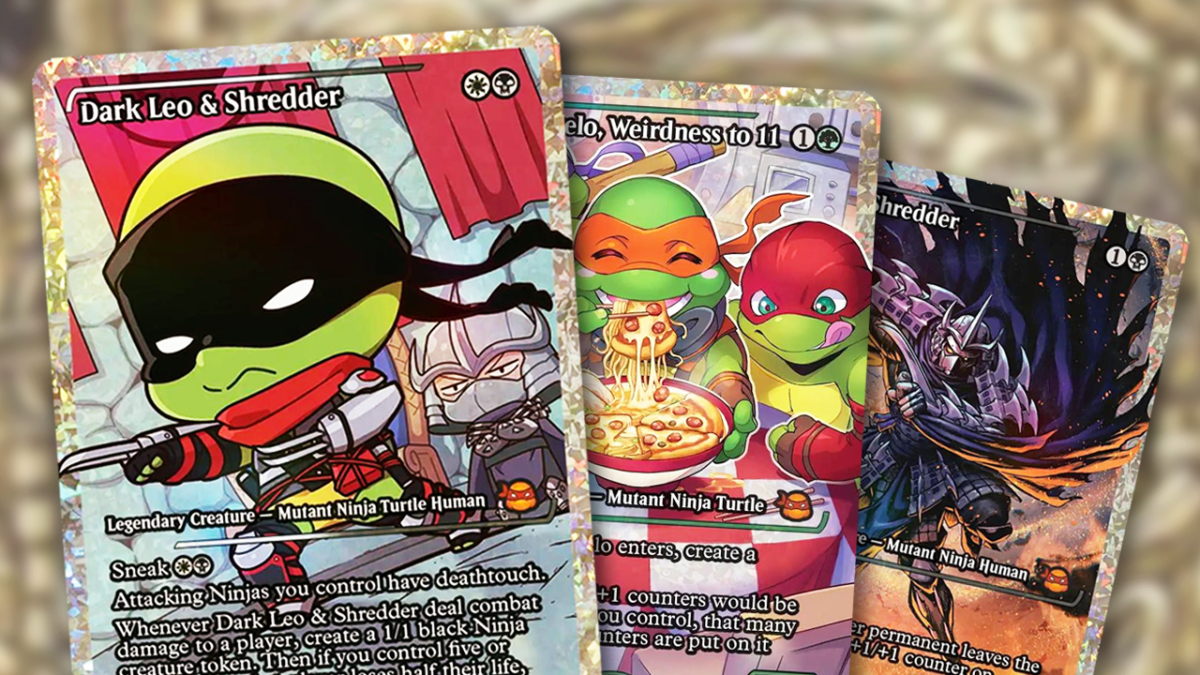
Michelangelo, Weirdness to 11 (Showcase Fracture Foil)
Surely the cutest card on this list, Michelangelo, Weirdness to 11, shows adorable versions of our heroes gathered around Mikey’s bizarre choice of meal.
This two-cost, 1/1 gives you a Mutagen token when it enters, then doubles +1/+1 counters. It’s sitting around $240 right now.
Dark Leo & Shredder (Showcase Fracture Foil)
Talk about an odd couple: Dark Leo and Shredder is a two-cost 1/3 that creates ninja tokens when it deals damage, gives those ninjas deathtouch when you attack, and then slices a player’s life total in half when you have five or more ninjas.
The first of just two Gold-Stamped, Kevin Eastman-signed cards on this list, Michelangelo, Improviser, is going for around $2,000 at the time of writing.
It has the Sneak keyword and lets you bring land and/or creatures into play when it deals damage.
Donatello, Mutant Mechanic is a four-cost 3/5 with the tap ability to put counters on an artifact to make it a creature. When it dies, those counters keep moving. That’s tough to read with Kevin Eastman’s signature on it, though.
Where To Find The Most Valuable TMNT Cards
While you have a slim (and we mean slim) chance of finding them in Play Boosters, you’re infinitely more likely to find these desirable (read: valuable) cards in Collector Boosters.
These packs are $37.99 each, but include all foil and alternate art treatments so you’ve got a much better chance of finding expensive cards in them.
The trouble is that scalpers are aware of this – so Collector Boosters are tough to track down.
TCGplayer: Score 15% Off with International Ordering
Including: UK, EU, Australia, and more.
If you are looking to buy cards from the US, that’s easily remedied with TCGplayer’s huge catalog, but it’s now even easier to buy cards from the site without being in the US yourself.
“International package forwarding services give you a local shipping address in the U.S, receive purchases for you, and then consolidate and forward them to your home address at competitive global shipping rate,” the retailer says, and many locations can receive a 15% discount on their first shipment.
Lloyd Coombes is an experienced freelancer in tech, gaming and fitness seen at Polygon, Eurogamer, Macworld, TechRadar and many more. He’s a big fan of Magic: The Gathering and other collectible card games, much to his wife’s dismay.
Marathon‘s set to see how well it can cater to folks who only have one friend, with Bungie having announced plans to add an experimental duos mode to the extraction shooter. It’ll stick around for two weeks or so, be “a bit jank”, and hopefully give the studio a firm idea of whether they should put resources into developing a fully fleshed-out version of paired play going forwards.
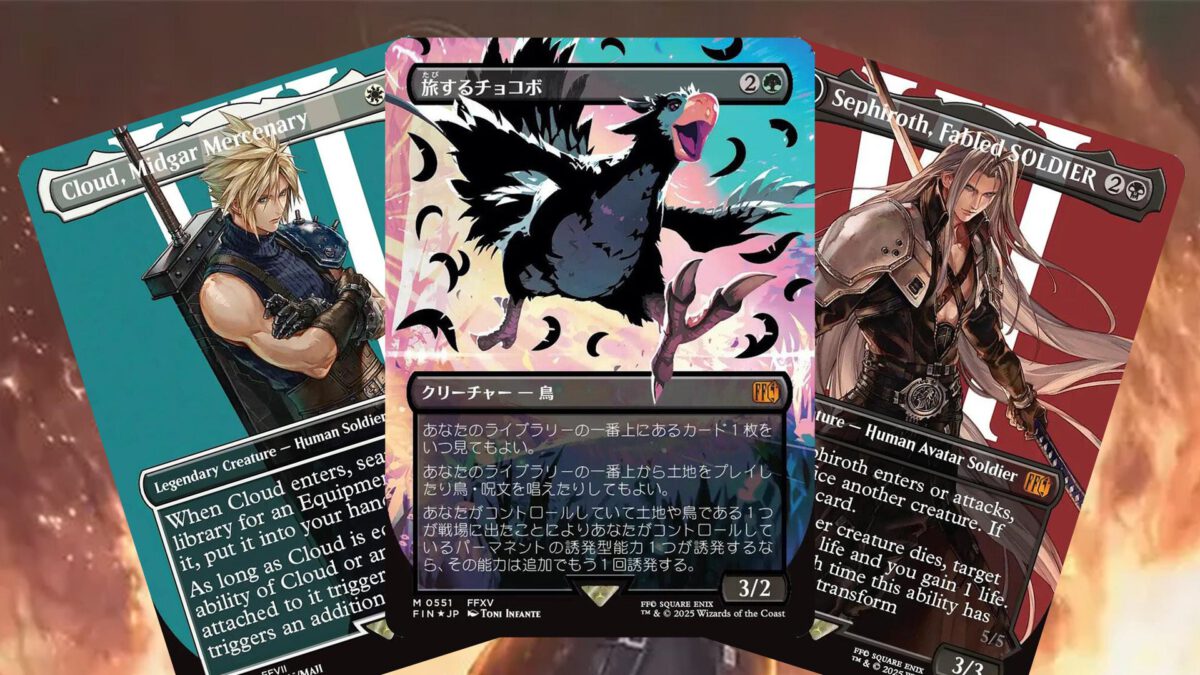
Magic: The Gathering’s Universes Beyond lineup of crossovers is becoming more prevalent in 2026, but Final Fantasy remains arguably the best example of what it looks like when done right.
The set was the most popular in Magic’s long history when it launched last year, and since then, new Chocobo Track Foil cards have shaken up its most valuable chase cards.
These are the priciest Final Fantasy cards you can buy right now, thanks to data from TCGPlayer, including those that have been recently added.
The Most Valuable MTG Final Fantasy Cards Right Now
Fan-favorite Tifa’s Chocobo Track Foil is sitting at around $90. It’s a great card, too, powering up as land enters (at least until the end of the turn).
Kefka, Court Mage (Borderless – Surge Foil) puts the clown front-and-center, while offering a transformation into Kefka, Ruler of Ruin on the other side – yours for just over $110.
Its market value is around $131, but it’s selling for more if you do happen to have one.
Yuna, Hope of Spira (Borderless – Surge Foil) – $148
Yuna, Hope of Spira (Borderless – Surge Foil) is one of the best-looking surge foil treatments in the set, giving the legendary summoner a card befitting of her status in Final Fantasy X.
It’s dropped to around $150, but the card remains sought after.
Travelling Chocobo (Borderless – Neon Ink) – Various
These Borderless, Neon Ink treatments of Final Fantasy’s most iconic bird creature are fetching huge prices, and while they’ve dropped in the months since launch, they’re still worth a small fortune.
Travelling Chocobo (Borderless – Japan Exclusive) – $4,836.47
The Travelling Chocobo (Borderless – Japan Exclusive) is the most expensive card of any 2025 Magic: The Gathering set, racking up a total of around $6,000. It’s still fluctuating regularly, but it’s ahead by a long shot.
Lloyd Coombes is an experienced freelancer in tech, gaming and fitness seen at Polygon, Eurogamer, Macworld, TechRadar and many more. He’s a big fan of Magic: The Gathering and other collectible card games, much to his wife’s dismay.
Including “Handheld Mode Boost” and a Switch update.
Nintendo has released a new update for the Switch 2 and Switch this week, bumping the system firmware up to Version 22.0.0.
On the Switch 2, this update comes loaded with new GameChat features, language and accessibility updates, and more. Most notably, it adds the new “Handheld Mode Boost”, which allows compatible Switch software to run “as if in TV Mode”.
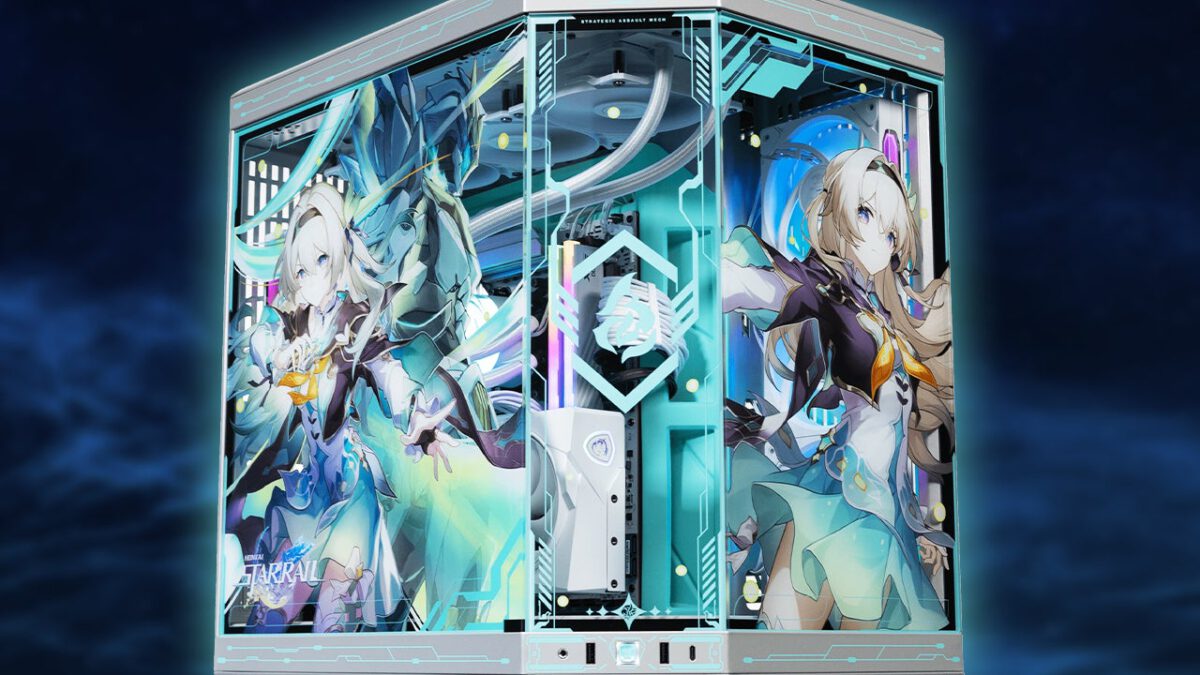
For all of you Honkai Star Rail superfans, there’s a custom PC built just for you. iBuypower released a powerful GeForce RTX 5080 prebuilt gaming PC that’s housed in Hyte’s limited edition Honkai Star Rail Firefly Y70 computer case. The configuration is priced at $3,599, but you can save $200 off with coupon code “DUNK“. It’s admittedly more expensive than other similarly equipped gaming PCs on the market, but nowhere else you can source an officially licensed Honkai-themed gaming PC outside of getting it from iBuypower or building your own using Hyte’s chassis.
Now Available: Hyte Y70 Honkai Star Rail Themed Case
What’s really special about this case is the custom themed artwork. The system is housed in a gorgeous Hyte Y70 computer chassis adorned with artwork inspired by Honkai Star Rail’s 5-star character Firefly. The artwork is professionally UV printed onto all three glass panels; they don’t peel off like vinyl stickers and they’re applied on the interior side of the panels so they’re less prone to scratching. The case’s blue and sliver color scheme tastefully matches Firefly’s aesthetic.
You’d expect a gaming PC named after one of the more meta characters in HSR to be quite powerful, and iBuypower certainly doesn’t disappoint. The Y70 gaming PC is equipped with a liquid cooled AMD Ryzen 7 9800X3D CPU, GeForce RTX 5080 16GB GPU, 32GB of DDR5-6000MHz RAM, and 2TB SSD.
AMD Ryzen 7 9800X3D is the best gaming CPU for most people
The AMD Ryzen 7 9800X3D is considered to be one of the best gaming processors on the market and outperforms any Intel or AMD non-X3D chip in games thanks to AMD’s 3D-V-Cache technology. It only has eight cores, but that makes no difference in gaming since most games can’t utilize more than eight cores (if that) anyways. That’s why its gaming performance is nearly identical to the pricier 9900X3d and 9950X3D.
The GeForce RTX 5080 GPU will run any game in 4K
Performance-wise, the RTX 5080 is no slouch. It’s one of the fastest cards on the market, bested only by the $2,000 RTX 5090 and the discontinued $1,600 RTX 4090. This is a phenomenal card for playing the latest, most demanding games in 4K resolution at high settings and ray tracing enabled. The recent DLSS 4.5 update has further optimized multi-frame gen and upscaling so you can push really high framerates even in 4K. More games are supporting this feature, including Doom: The Dark Ages, Clair Obscur: Expedition 33, Borderlands 4, Stellar Blade, and, of course, Honkai: Star Rail. Check out our Nvidia GeForce RTX 5080 FE review for our hands-on impressions.
You can also get the case by itself
You can also build out your own system using this case. Hyte, iBuypower’s sister site, is currently selling the standalone HSR Firefly Y70 case for $329.99 with free shipping. If you’re looking for additional matching accessories, Hyte also sells a matching keycap set, fan grill set, and and extra large mousepad.
Eric Song is the IGN commerce manager in charge of finding the best gaming and tech deals every day. When Eric isn’t hunting for deals for other people at work, he’s hunting for deals for himself during his free time.
The Seven Deadly Sins: Origin is three things. Firstly, it is available now on Steam. Secondly, it is a splashy fantasy open world anime confection, all Disney towers and fluttering windmills and jaunty sailboats and some kind of porcine Space Hopper that transforms into a buzzard. Thirdly, it is a free-to-play game with gacha elements.
Back in 2022, Tunic blew us away with its brutal battling, Zelda-inspired adventures, and deep secrets. Today, we’ve learnt that we’ll soon have the opportunity to do it all over again thanks to an upcoming Switch 2 update.
The game celebrated its fourth anniversary today, and to mark the occasion, publisher Finji announced that an update for the new Nintendo hardware is “on the way”. While there was no precise release date attached to the reveal, the team promised it was “working hard on it” and teased that we should all stay tuned for more info.