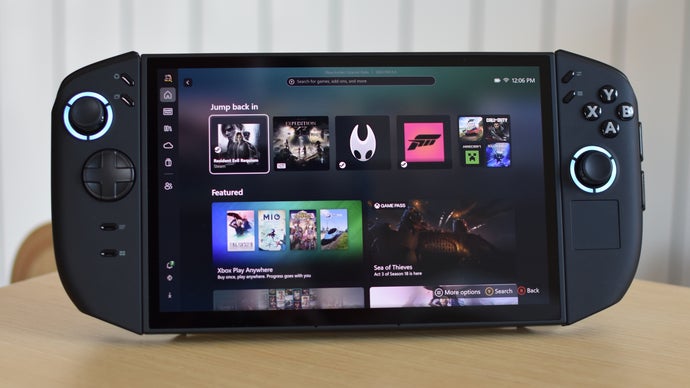
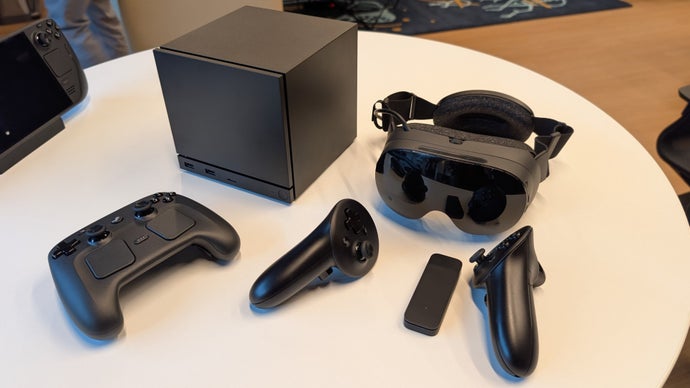
Last year, Microsoft finally put some effort into making Windows 11 less dreadful for handheld PCs, launching Xbox Full Screen Experience – a stripped-back, more gamepad-friendly interface specifically for launching and installing games – on the Asus ROG Xbox Ally family. The same update has been strangely unforthcoming to other Steam Deck rivals, but it sounds like the Lenovo Legion Go series is finally getting access soon. There’s a preview build that Legion Go, Legion Go S, and Legion Go 2 owners can try right now, too.
Fortnite has confirmed that The Foundation, its heroic character voiced by Dwayne “The Rock” Johnson, will return next season – and begun an Avengers: Doomsday-style countdown for his reappearance.
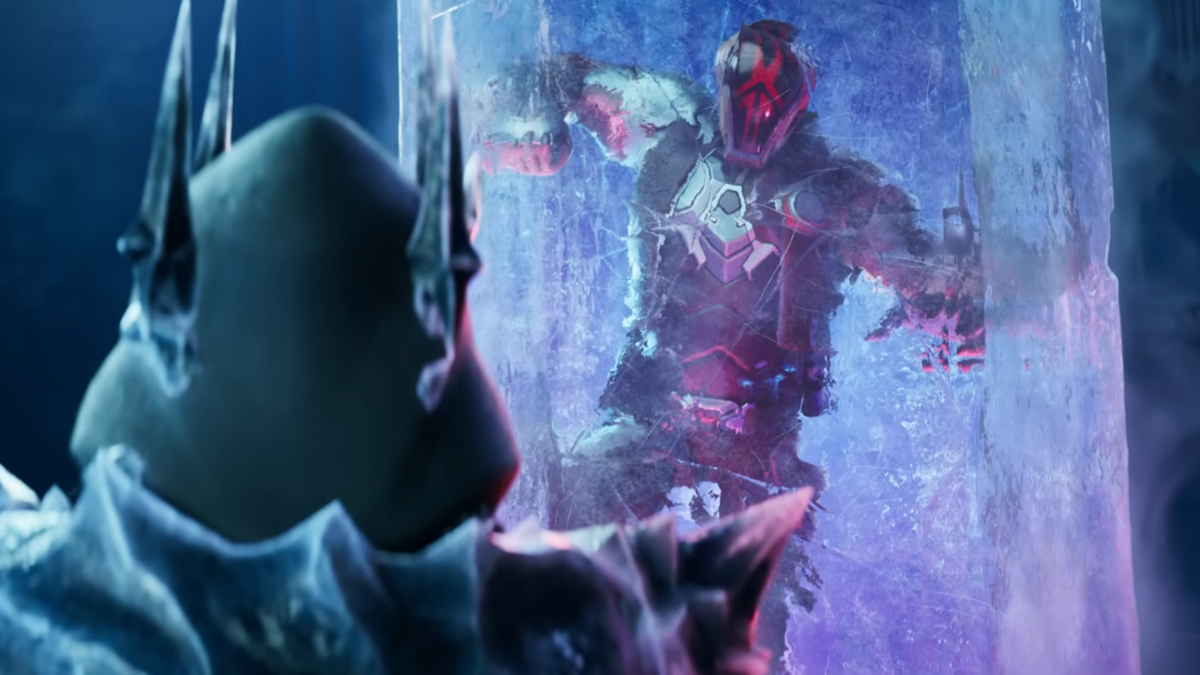
A cinematic teaser trailer released today shows The Foundation currently frozen in ice, captured by The Ice King (another important character in Fortnite lore). Still, players expect they’ll be able to break out The Rock’s character in the battle royale mode’s next season, which begins in shortly over a week’s time.
Indeed, today’s teaser reveals the official name for Epic Games’ next slice of Fortnite, and riffs on the wording seen in recent Avengers: Doomsday teasers (not that they’re actually teasers, apparently) to confirm the return of several key characters.
“The Foundation and The Ice King will return in Fortnite: Showdown,” the teaser states, before the words shift into a date (March 19, 2026) and then a countdown clock revealing the weeks, days, hours, minutes and seconds left to go until the update drops.
The teaser itself reveals a new in-game location, which looks to be a fresh and more detailed version of The Ice King’s classic Polar Peak fortress. Previous in-game imagery had teased this wintry palace, and suggested it was home to one of the game’s current Zero Point shard macguffins.
The suggestion here is that this new Ice King is working with Fortnite’s current baddie, The Dark Voyager, to reunite the Zero Point’s broken shards for nefarious means. But previous Fortnite lore, doled out through graphic novels, painted the original Ice King as something of a more noble figure, who freezes beings he has deemed a threat to reality. Fans have suggested the Dark Voyager is capable of corrupting previous Fortnite characters (such as Lynx) to do his bidding. Or maybe the Ice King really has just broken bad?
The original Ice King was a mysterious character who kept a prisoner in his dungeon back in Fortnite’s first chapter (something recently glimpsed again via the Fortnite OG mode, which retells the game’s original storyline). In today’s teaser, however, the new Ice King is shown to have several other captives, too, including golden skeleton lady Orelia and Marvel’s own Steve Rogers (though his may just be yet another nod to Doomsday).
The teaser concludes with The Ice King sidling up to The Foundation, frozen mid-punch. How he’ll escape remains to be seen, though one things for certain: with newly-tweaked designs for The Foundation and The Ice King on show here, fans will have several must-have new skins to obtain next season.
Recent weeks have seen several surviving members of Fortnite’s heroic Seven faction return in game, including a new version of The Visitor voiced by a very familiar-sounding actor. Fortnite is yet to officially confirm the return of Dwayne Johnson to his own role, though fans seemingly won’t have long to wait until The Foundation speaks once more.
Tom Phillips is IGN’s News Editor. You can reach Tom at tom_phillips@ign.com or find him on Bluesky @tomphillipseg.bsky.social
If you’ve been frequenting the eShop on the Switch 2, then you’ve no doubt noticed that it’s altogether a much more pleasant experience when compared to the original Switch.
Nintendo has made several moves to improve the eShop, including promoting more well-known games to the top of the discounts page and separating the best-selling charts into Switch and Switch 2 categories. Granted, visibility for genuinely great indie titles is still an issue (as it is on all digital storefronts), but Nintendo is certainly taking things in the right direction.
Hi, I’m Ines from Tiny Roar and we’re thrilled to announce that Lou’s Lagoon, our high-flying adventure, will be landing on PS5 later this year!
Today, I’m excited to share more details about the game and take you behind the scenes to show some of the work that has gone into creating the places you’ll visit, the people you’ll meet, and the journey you’ll go on.
A fierce storm and a missing uncle
Lou’s Lagoon begins with you arriving on Limbo, a tropical archipelago that has been hit by a nasty storm; worse still, your beloved Uncle Lou was caught up in the storm and is missing. You’ll take to the skies in your trusty seaplane to trace Lou’s journey across Limbo’s islands and use a clever arsenal of gadgets to rebuild the communities and help residents back on their feet.
We hope that you’ll fall in love with the colorful world we’ve created and that you’ll get swept up in Limbo’s peaceful way of life as you hop from island to island, each with a charming cast of islanders, in search of clues to Lou’s disappearance.
Bringing Limbo to life
When we started working on what would become the Limbo archipelago, we took a lot of inspiration from classic adventure titles from the 90s and 00s, with island settings. We felt a tropical archipelago really fit the vibe we wanted for the game – easy-going and a world you can immerse yourself in without stressing out (there’s enough of that in real life!).
As Limbo is an archipelago, we enjoyed the opportunity to come up with ideas for fun thematics across the islands. When it came to designing the individual islands, we went through a lot of ideas including flying pyramids, an icy octopus island, and a creepy ghost ship but, in the end, we landed on a set of diverse island themes with our own unique stamp on them that should still feel familiar to anyone who had played adventure games before.
Take Gleam Reef, for instance. We quickly landed on the idea of an aquatic vibe, featuring huge pink corals and we wanted its residents to fit in with this theme, which led to the creation of the Vooi. The Vooi are lanky and agile jellyfish-based islanders who we like to think lived underwater for a long time and have recently learned to live on land. They’re very chilled and love to ‘go with the flow’ but this means they sometimes accept their fate too easily, maybe you can help them with that?
We took a similar approach when creating the wildlife that can be found across Limbo, building them as combinations of real animals. The Beever is part bee, part beaver. The Deergoat is… well, that one’s not hard to figure out. Each of these creatures carry different resources that you’ll need to collect and craft with as you help islanders and rebuild their communities, and we’ve worked hard to give players loads to discover whenever they land on an island for the first time.
Ready for takeoff?
As I mentioned earlier, you’ll travel from island to island in your seaplane and we’ve put a lot of effort into making flying feel satisfying and fun, whether you’re an experienced pilot or just discovering the fun of flying for the first time.
You’ll see ring challenges throughout the skies above Limbo. We hope that these challenges offer a fun way to get to grips with piloting your seaplane. Why not try and beat your personal best as you get more confident behind the controls?
Once you touch down, you’ll need to get to work on clearing up debris, gathering resources and crafting items to help restore the islands to their vibrant, pre-storm state (or even better?). Your key tool – and one of my favourite tools in the game – to help you do this is the Swirler 2000, which can grab storm debris and loose resources across the islands. For anyone who has played Slime Rancher, it’ll feel immediately familiar as you’re able to easily collect materials on the move.
The whole Tiny Roar team are incredibly excited to be bringing Lou’s Lagoon to PS5. Stay tuned for more updates as we get closer to release later this year and be sure to follow Lou’s Lagoon on social media. We can’t wait for PS5 players to explore Limbo and track down Uncle Lou!
If the absurd silliness of 2019’s Untitled Goose Game is the type of thing that floats your boat, then the upcoming multiplayer puzzle game Big Walk by the same developer should rank pretty high on your list for 2026. This wacky adventure occupies the growing number of games lovingly dubbed “friendslop,” in the same vein as Lethal Company, R.E.P.O., and most applicable here, Peak, making use of proximity chat and goofy gameplay to create memorable times with friends. And if the opening hour is any indication, then Big Walk stands a strong chance of capturing the attention of those, like myself, who will happily jump online to joke around with their buds during some low-stress shenanigans.
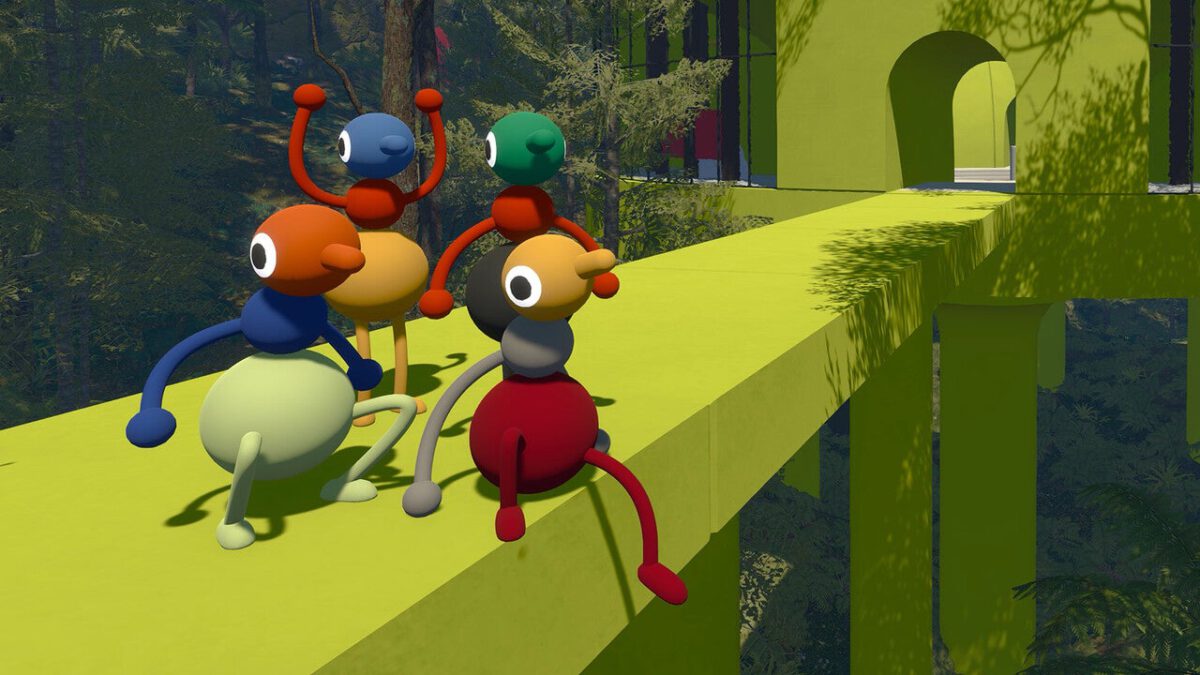
Big Walk is a cooperative puzzle game meant to be played with friends that emphasizes creativity, silly scenarios, and limited communication options as a core game mechanic. Unlike many games in this genre, you’re not stuck in a survival horror scenario, but instead solving a series of increasingly challenging puzzles that require your team to work as a group. Playing as weird, birdlike creatures, you’ll run around searching for oblong key items hidden throughout the island, tackling puzzles that have you doing things like describing hieroglyphs to your friends while they enter them into a codepad, or stacking up on top of one another like a circus troupe in order to get to areas unreachable on one’s own. The goofy and low-stakes nature of these obstacles means that, if you’re anything like my group, you’ll spend most of your time messing around and making very little progress while you crack jokes and come up with lore for the completely unexplained and odd world you find yourself in.
Talk About It
Like other multiplayer-focused indies of its kind, you’ll be limited strictly to proximity chat and won’t be able to hear your co-op partners if they’re standing more than a few feet away, so will have to make use of signs, hand signals, and other non-verbal forms of communication. This creates some unique hurdles, especially when players are required to split up to solve a puzzle. For example, in one scenario where one player had to hold down a button while I ran a long distance away to grab an item that was only accessible while said button was being held, my teammates had to keep an eye on me with binoculars so they could verify that I’d recovered the item.
To help ease the communication limitations, a whole bunch of the controls are dedicated to your character moving their arms about, including raising them in the air, holding them out at your sides, or pointing directly forward, and individual buttons are assigned to your left and right arm as well, allowing you to get quite specific with the different combinations. All of the puzzles placed before us in this demo were simple enough that we weren’t really required to get fancy with hand signals, but I could see the building blocks there that could lead to more complicated scenarios.
Stick Together
It’s also notable that in my time with Big Walk I encountered no puzzles that could be solved without the assistance of my companions, which I learned early on after becoming separated from the rest of the group and stumbled upon a puzzle and tried to solve it myself, only to quickly discover that I needed at least two players to complete it. Not only is solving puzzles with friends just fun to begin with, but I think it’s a good decision to make it so your friends can’t take off in different directions and make progress on their own, since it meant I never had to worry about missing out on any of the puzzle solving if I got lost or stopped to smell the roses while the others forged ahead.
In fact, puzzles actually change dynamically to fit the number of players in your party, from 2-4. For example, one puzzle requires everyone to stack on one another to reach a button located high up, and the height of that button is adjusted relative to the number of teammates you have. In another area, our prize could only be acquired when all four of us hit four buttons at the same time, and the number of buttons that had to be pushed simultaneously was determined by our player count. These examples are obviously quite simple since I effectively only played through the tutorial area, but I really like the idea that the participation of everyone on the team is required to make progress, and could see them coming up with some really devious challenges that require everyone taking on a vital role, overcoming communication obstacles along the way.
Low Stakes
Aside from solving puzzles, you’ll also find things in the world that seem intended purely to waste your time, like one area where we found a paintbrush that allowed us to change the color of various parts of our weird bird characters’ bodies, and another where we found an odd rest stop of sorts, which had no puzzle to speak of, but played some chill jams and provided a nice view to admire. In a game that relies so heavily on creating silly memories with your friends, it’s great to see how apt Big Walk is when it comes to knowing when to slow things down and give players an opportunity to be childish dorks. We definitely took the developer up on every chance they gave us to do just that, and much of the joy from our demo came not from any novel game mechanic, but from us finding our own fun within their bizarre sandbox. At least in this short demo, they did a really great job at making room for this kind of fun, and it was surprising just how quick all four of us fell into a comfortable state of juvenile behavior. It’s the kind of pure, good-time nonsense vibes that we just don’t see enough of these days.
The premise of Big Walk might seem like it won’t have staying power, and that’s because it probably won’t. The whole thing is roughly 10 hours long according to developer House House Games, and none of the puzzles change aside from adjusting to your player count. But a lack of longevity or replayability isn’t such a bad thing with games like these, where a few amusing nights with your friends is well worth the time invested. I think of it a bit like doing an escape room – you likely won’t have a reason to return to the same collection of puzzles more than once, but it’s the kind of unique experience you’re unlikely to find elsewhere. In an era where more and more games are asking for absolutely every minute of our time for years and decades to come, I really relish the opportunity to play these bite-sized adventures that leave a lasting impression and then let me move on with my life (Don’t worry, GTA V. I still love you, baby).
In an era where more and more games are asking for absolutely every minute of our time for years and decades to come, I really relish the opportunity to play these bite-sized adventures that leave a lasting impression and then let me move on with my life.
I should also mention that the build of Big Walk I played was running on a (wait for it) Mac Mini. That’s right – A. Mac. Mini. Look, it’s not like this goofy co-op game could be even remotely demanding on hardware, since you’re mostly just hopping around and stacking on top of one another, but it’s still pretty impressive just how approachable this game seems to be, not just in terms of gameplay, but by the low barrier of entry in terms of the hardware you play on. For that reason, this might even be a good option if you’re looking to play with friends and family who aren’t normally into video games. After all, goofing around as a weird bird creature seems like a pretty universal kind of experience.
After a very memorable first hour, I’m absolutely sold on this as the next friendslop for my crew and I to jump in on. If it managed to be this enjoyable when all the puzzles were super simple, I can only imagine how ridiculous and memorable it’ll be when they introduce more complicated scenarios.
When Emil Pagliarulo was growing up in South Boston, he lived in fear of Whitey Bulger: a local crime boss who had been shaped not only by street gangs but Alcatraz, and a stint in the CIA’s mind control program, MKUltra.
“He was basically the boogeyman,” Pagliarulo says. “He was the evil bad guy. You didn’t know where he was or even what he looked like, but you knew he was out there. I’m 10 years old, and I know this name.”
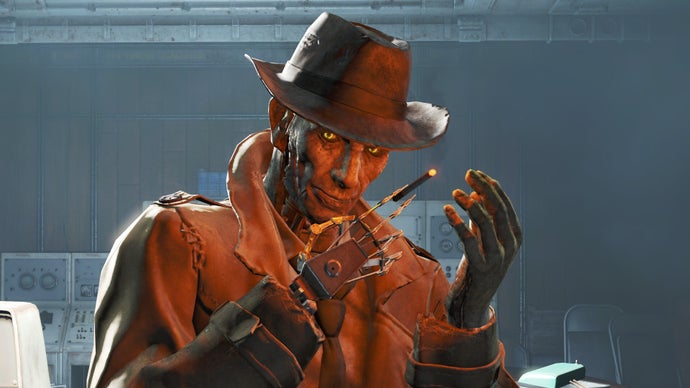
Decades later, as Bethesda Game Studios shifted into full production on Fallout 4, Pagliarulo drew on those memories to bring a post-apocalyptic Boston to life. “The game was missing something, as far as one of the overall themes,” he says. “I remember having a conversation with Todd Howard that there should be this overriding sense of paranoia that people have, and they don’t know who to trust.”
Slay the Spire 2 has enjoyed an enormous early access launch on Steam, breaking into the top 20 most-played games of all time on Valve’s platform.
Mega Crit’s sequel had already become the most-played roguelike ever on Steam after it launched last week, but now, after hitting an astonishing 574,638 peak concurrent players over the weekend, it’s joined the special top 20 club — and there are some big hitters within its sights.
Chief among them in the indie space is Team Cherry’s Hollow Knight: Silksong, which hit a peak of 587,150. And it’s that game the developers at MegaCrit cheekily pointed out as its target in a social media post celebrating their success.
“Our team is TOTALLY blown away by the amount of people who have been playing and sharing their love for the game we’ve been working on for the past half decade,” MegaCrit tweeted. “We’re excited to continue to make StS2 the best that it can be!! Also obligatory joke: we’ll getcha one day Silksong.”
Mega Crit had already playfully took aim at Bungie’s Marathon, which came out the same day as Slay the Spire 2, in a tweet they eventually admitted came off meaner than intended. But the truth is Slay the Spire 2 is the hottest video game on Steam right now, and is behind only the eternally popular PUBG, Dota 2, and Counter-Strike 2 in terms of current popularity.
You might be wondering what MegaCrit will do to capitalize on its success. Many developers would go hard on microtransactions, but it doesn’t sound like they’re coming to Slay the Spire 2. “We’re microtransaction haters,” Casey Yano, MegaCrit co-founder, told Destructoid, despite the fact that “a lot of our players threaten to buy all and any cosmetics we may ever release.”
Not only are a huge number of people playing Slay the Spire 2, but the vast majority are loving it. On Steam it enjoys a user review rating of ‘overwhelmingly positive,’ with nearly 14,000 user reviews already online. Check out IGN’s Slay the Spire 2 Early Access Review So Far to find out what we think.
Wesley is Director, News at IGN. Find him on Twitter at @wyp100. You can reach Wesley at wesley_yinpoole@ign.com or confidentially at wyp100@proton.me.
Valve have reworded a Steam blog post after its original, unsure-sounding text left open the possibility of further long-term delays to the new Steam Machine. The 2025 Year in Review article only briefly touches on the Machine, as well as the upcoming Steam Controller redesign and the Steam Frame VR headset, but its previous phrasing of “We hope to ship in 2026” – accompanied by a reminder of ongoing and widespread memory shortages – did have the kind of noncommittal yeah-we’ll-seeism that one might apply when responding to an unwanted dinner party invitation. The grim possibility of another delay, this time into 2027, hung heavy.
Now, however, that passage has been replaced with a more confident and definitive commitment to a 2026 release. “We shared recently that there have been challenges with memory and storage shortages,” Valve’s update reads, “but we will be shipping all three products this year.”
Amazon has unofficially made Pokémon Pokopia an $80 Nintendo Switch 2 game, after the retailer suddenly increased the price for the new life sim’s physical edition amid supply constraints.
Numerous retailers have completely run out of Pokémon Pokopia boxed copies, though Amazon still has availability in the U.S., albeit now at the higher price of $80.
It’s the second time in as many months that Amazon has jacked up the price of a physical Switch 2 game while demand is high. A couple of weeks ago, the retailer was selling Resident Evil Requiem on Switch 2 for $76.84, almost $7 more than its recommended retail price.
Pokémon Pokopia has an RRP of $70, which Amazon has maintained if you just wish to buy a digital download code. But, right now, a boxed copy of the game will cost you $79.99, up $10 for seemingly no reason other than the fact its stock is hard to find.
Physical copies of Pokémon Pokopia appear limited outside the U.S., too. This morning, The Game Business chief Chris Dring wrote on social media that the game was “seriously undersupplied at UK retail,” which has resulted in less than half the Switch 2 physical launch sales of last year’s Pokémon Legends: Z-A.
So, what’s going on here? Has Nintendo intentionally kept physical stock low? Pokémon Pokopia’s physical edition is just a Game-Key Card launch, something the company may have expected would push more people towards its digital version. The game’s Animal Crossing-esque life sim genre may also have been considered more likely to attract digital sales, so that the game is always available as people continue to play for weeks and months to come.
Officially, Nintendo has only marked Switch 2 launch title Mario Kart World as an $80 game, though the full price of several Switch 2 Edition re-releases of existing Switch 1 games have also hit the same high price point (such as The Legend of Zelda: Tears of the Kingdom and Super Mario Party Jamboree – Nintendo Switch 2 Edition + Jamboree TV). Previously, Nintendo has said it will experiment with variable pricing for games on its latest console, while retailers are of course able to charge whatever they like.
IGN’s Pokémon Pokopia review returned a 9/10 score, and dubbed the game as “an enjoyable building and town simulator that capitalizes on the charming personalities of its monsters in a way that appeals to both the creative and collector alike.”
Rejoice, Octopathers! Square Enix has released yet another update for Octopath Traveler 0 on Switch 1 and 2, tweaking some mechanics and squashing some bugs along the way.
The ver. 1.0.7.0 patch was released at the end of last week (thanks for the heads up, Nintendo Everything), and the main focus seems to have been on making things run that bit smoother. There are a bunch of bug fixes to report this time, including impossible bosses, incorrectly-played voice lines and missing items, but the update also increases the number of people you can train, and adds an option to fight a specific boss again.